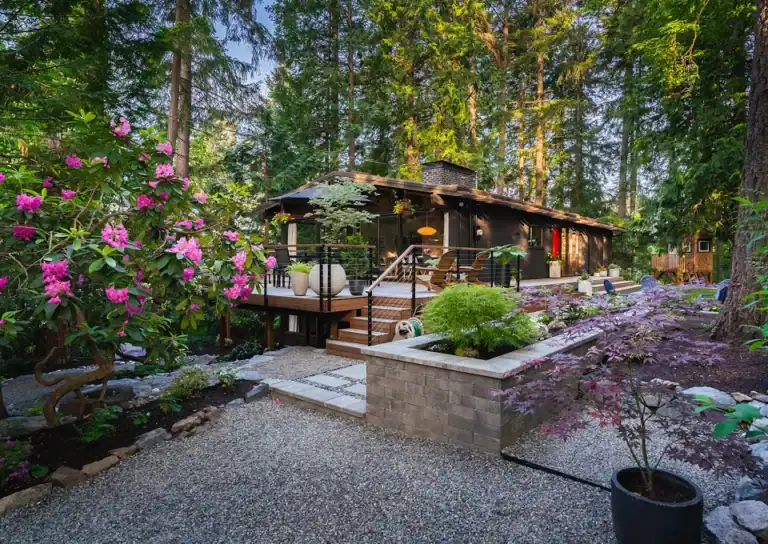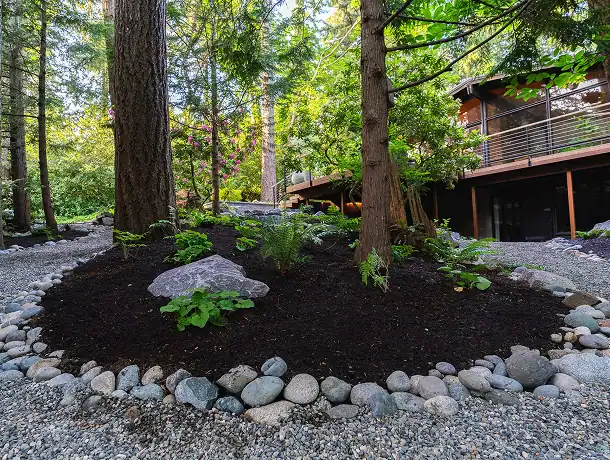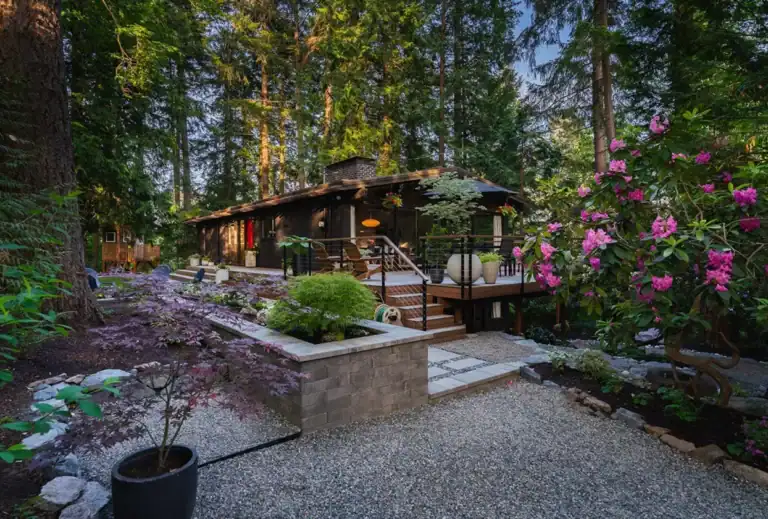
- Classic does not install artificial turf because of its impact on soil health, stormwater absorption, surface temperature, and long-term aesthetics — but we respect that some homeowners make a different choice.
- Seattle's climate is one of the easiest in the country for natural ground cover. The mild, wet conditions that make grass tricky in deep shade also make dozens of low-maintenance alternatives thrive with almost no intervention.
- Low-maintenance does not mean no plants. It means choosing the right plants for your site so the landscape sustains itself without constant inputs.
- Specific alternatives exist for every common complaint — shade, dogs, mud season, mowing fatigue — and they perform better long-term than synthetic surfaces in our climate.
- If you decide artificial turf is right for your property, we will refer you to a company that specializes in that work. We would rather send you to someone who does it well than offer something outside our expertise and values.
Why Does Classic Have a Position on Artificial Turf?
We are not a company that avoids having opinions. Our design manager is a licensed landscape architect, a Certified Professional Horticulturist, a Master Pruner and a Master Composter, trained in ecological restoration and permaculture. When we look at a residential property, we see a living system — soil, water, roots, microbial life, canopy, drainage — and every material choice either supports that system or works against it.
Artificial turf works against it in four specific ways that matter in Greater Seattle environment.
What does artificial turf do to the soil underneath?
Healthy soil is not just dirt. It is a biological community — fungi, bacteria, earthworms, nematodes — that breaks down organic matter, cycles nutrients, retains moisture, and supports root systems. One tablespoon of healthy garden soil contains more microorganisms than there are people on earth. That biology is what makes a landscape regenerative rather than dependent on constant inputs.
When you cover soil with artificial turf, you seal it off. The installation process typically involves removing the existing topsoil, laying a compacted aggregate base, and placing the synthetic surface on top. The soil biology underneath dies. Not gradually — within a season. The ground beneath artificial turf becomes biologically inert.
For a homeowner who might want to change their landscape in five or ten years — plant a garden, install a patio with surrounding beds, add a tree — the soil beneath former artificial turf needs significant rehabilitation before it will support healthy plant growth again. In our experience across more than 3,000 Seattle-area landscapes, restoring dead soil is one of the most expensive and time-consuming parts of any renovation. It is far easier and cheaper to maintain living soil than to rebuild it.
How does artificial turf affect stormwater in King County?
This matters more in our region than in most. King County and many Greater Seattle municipalities — Kirkland, Bellevue, Redmond, Sammamish — have regulations governing impervious surface coverage on residential properties. The intent is straightforward: when rain falls on a surface that absorbs it, the water filters slowly into the ground, recharges the water table, and reaches streams and lakes gradually. When rain falls on a surface that repels it, the water runs off quickly, picks up pollutants, and overwhelms storm systems.
Artificial turf is not technically classified as impervious surface in every jurisdiction, but functionally, it behaves like one. The compacted base layer beneath synthetic turf does not absorb water the way natural soil does. On a property where the lot coverage is already near the regulatory limit — which is common in Greater Seattle, especially on smaller lots in Kirkland, Bellevue, and Redmond — replacing a natural lawn with artificial turf can push stormwater management in the wrong direction. It may not trigger a code violation, but it creates the drainage conditions that code violations are designed to prevent.
Natural lawn, by contrast, is one of the most effective stormwater management surfaces on a residential property. A healthy lawn with 4-6 inches of topsoil absorbs rainfall at a rate that significantly reduces runoff. In a region where we receive 37-40 inches of rain per year, that absorption is doing real work — quietly, continuously, and without any mechanical system to maintain.
What happens to artificial turf temperature in summer?
This is the one that surprises homeowners the most. On a sunny July afternoon in Seattle — and we get plenty of those from mid-June through September — artificial turf surface temperatures routinely reach 140-170 degrees Fahrenheit. Research from Brigham Young University’s turf studies has measured synthetic surfaces at 60-80 degrees hotter than natural grass under the same conditions.
A natural lawn cools itself through evapotranspiration — water moving from the soil through the grass blades and evaporating. That process actively reduces ambient temperature in the surrounding area. Artificial turf does the opposite: it absorbs solar radiation and re-emits it as heat. Homeowners who install synthetic turf expecting a usable outdoor surface in summer often find that their kids and dogs cannot comfortably walk on it barefoot during the warmest part of the day.
For families in Sammamish, Issaquah, or Redmond — where summer afternoons are often warmer than Seattle proper due to less marine influence — this temperature differential is not academic. It determines whether the backyard is actually usable when you most want to use it.
How does artificial turf age compared to natural alternatives?
A well-maintained natural lawn or ground cover planting improves over time. Root systems deepen, soil biology matures, the surface becomes more resilient to foot traffic and weather. A five-year-old established lawn is healthier and more durable than a one-year-old lawn.
Artificial turf follows the opposite trajectory. UV exposure degrades the fibers. The infill compacts and migrates. Seams separate. The color fades, often unevenly. Moss and algae colonize the surface — a particular problem west of the Cascades, where our cool, damp conditions are a paradise for biological growth on synthetic surfaces. The manufacturer warranty typically covers 8-15 years, but the aesthetic decline is visible well before that. We have seen properties across Greater Seattle where three-year-old artificial turf already looks flat, discolored, and matted in high-traffic areas.
Replacement is not cheap. Removing and disposing of artificial turf — which is not recyclable through standard municipal programs in King County — and reinstalling it runs $12-$25 per square foot, depending on access and site conditions. Over a 20-year period, the total cost of ownership often exceeds what natural lawn care would have cost, with none of the soil health or stormwater benefits.
What Do We Recommend for Homeowners Who Want Less Lawn Maintenance?
This is the question behind the question. Most homeowners who ask about artificial turf are not passionate about synthetic grass. They are frustrated with their current lawn — the mowing, the bare patches, the mud in winter, the moss in shade — and they want something that looks green without demanding their weekends. That is a completely reasonable goal, and there are better ways to achieve it.
What works in heavy shade where grass will not grow?
This is the most common trigger for the artificial turf conversation, and it is where natural alternatives perform the best. The stretch from Kirkland to Woodinville to Sammamish is dominated by mature Douglas fir and Western red cedar canopy. Underneath that canopy, conventional lawn grass — Kentucky bluegrass, perennial ryegrass — struggles or fails entirely. Homeowners see bare dirt and mud from October through April and assume the only options are live with it or cover it with plastic.
In our experience, the opposite is true. The same shade and moisture conditions that defeat lawn grass are exactly what makes Pacific Northwest native and adapted ground covers thrive with almost no care.
Ground covers we use regularly in deep shade on Greater Seattle properties:
- Corsican mint (Mentha requienii) — flat, fragrant when stepped on, tolerates light foot traffic, stays under 1 inch tall. Works beautifully between pavers and stepping stones. Performs well in the clay soils common across Kirkland and Bellevue.
- Irish moss (Sagina subulata) — not actually a moss, but a low, dense, evergreen mat that tolerates moderate foot traffic. Stays green year-round in our climate. Prefers consistent moisture, which it gets naturally from October through June.
- Sweet woodruff (Galium odoratum) — a classic Pacific Northwest shade ground cover that spreads reliably, produces white spring flowers, and creates a dense, weed-suppressing mat once established. Reaches 6-8 inches. Low to zero maintenance after the first year.
- Kinnikinnick (Arctostaphylos uva-ursi) — native, evergreen, drought-tolerant once established. Excellent on slopes where both lawn and artificial turf struggle. The leathery leaves and red berries add year-round texture that no synthetic surface can replicate.
- Western sword fern (Polystichum munitum) — the anchor plant for shaded Greater Seattle landscapes. Not a ground cover in the traditional sense, but mass plantings of sword fern create a maintenance-free understory that looks intentional, lush, and distinctly Pacific Northwest twelve months a year.
The key insight is that these are not consolation prizes. A well-designed shade garden with layered ground covers, ferns, and understory shrubs is more visually interesting than a lawn — and it requires significantly less ongoing effort. Our Certified Professional Horticulturist selects specific cultivars and species based on each property’s shade density, soil conditions, and drainage patterns, which is why our 1-year plant guarantee rarely needs to be honored.
What about yards with dogs?
Dogs and lawns are a real challenge — we will not pretend otherwise. A 70-pound Labrador running the same path from the back door to the fence line every day will wear through any living surface. Urine burns create yellow spots. Digging creates craters. Winter mud becomes a tracking problem inside the house.
But artificial turf creates its own dog problems that sellers do not always mention. Synthetic surfaces absorb and hold odors from pet waste. Urine does not biodegrade on plastic the way it does in soil, where microorganisms break it down. Hosing helps temporarily, but the infill retains smell — especially during warm weather. We have walked properties with two-year-old artificial turf in dog runs that smelled noticeably from ten feet away.
What we design instead for dog-heavy properties:
- Dedicated dog run areas with pea gravel or decomposed granite over drainage fabric — easy to clean, drains instantly, does not hold odor, and costs a fraction of synthetic turf
- Hardscape pathways along the routes dogs actually use (we watch the wear patterns during site assessment and design the paths to match, rather than fighting the dog’s preferred route)
- Resilient turf grass mixes in the areas where dogs play but do not run repetitive laps — fine fescue blends bred for shade and traffic tolerance perform well in our climate
- Separation by design — the landscape plan accounts for dog zones and display zones, so the areas guests see are not the same areas the dog uses daily
This approach works with a dog’s actual behavior rather than assuming a synthetic surface will survive it unchanged. And when a gravel run or a turf area needs refreshing in three years, the cost is a fraction of replacing degraded artificial turf.
What if I genuinely do not want to mow — ever?
Fair enough. Some homeowners do not want lawn maintenance in any form. That is a design conversation, not a materials conversation.
When a homeowner tells us they want zero mowing, our design-build team looks at the entire property and asks: what is the lawn actually doing? In many cases, half or more of a residential lawn in Greater Seattle is not being used for anything — it is just green space between the house and the fence that gets mowed every week out of habit.
We can replace unused lawn areas with:
- Planted beds with mulch paths — a designed planting of native shrubs and perennials that requires one or two maintenance visits per year, not weekly mowing
- Permeable paver patios and pathways that extend usable outdoor living space while maintaining stormwater absorption
- Gravel gardens with drought-tolerant plantings — an aesthetic that works particularly well on south-facing slopes in Bellevue and Sammamish where summer irrigation demand is highest
- Moss lawns — intentional moss surfaces are gaining traction in our climate because moss thrives naturally west of the Cascades. It requires no mowing, no fertilizer, no irrigation, and stays green from October through June. The challenge is accepting that it goes dormant and browns slightly in dry summer months — but many homeowners find that trade-off worthwhile
The result is a property that looks designed, not neglected — and that requires dramatically less weekly upkeep than a conventional lawn without covering a single square foot of soil in plastic.
What If I Still Want Artificial Turf After Reading This?
Then we will help you find someone who does that work well. This is not a judgment. We have explained our reasoning — soil health, stormwater function, temperature, long-term aesthetics and cost — and we stand behind it. But we also recognize that every homeowner’s situation is different. Some properties have conditions or constraints where a homeowner decides synthetic turf is the right answer for their family.
When that happens, we would rather refer you to a company that specializes in artificial turf installation and does it to a high standard than try to talk you out of a decision you have already made. That is what Commandment #4 in our approach to design actually means in practice: strong opinion, open hands.
What we will not do is install it ourselves. Our team’s expertise is in living landscapes — soil, plants, water, and the systems that connect them. Artificial turf is a different discipline with different installation standards, and we believe homeowners deserve a contractor whose core competency matches the scope of work.
Where Classic's Position Comes From
This is not a marketing stance we adopted to differentiate ourselves. It comes from our nursery-trade roots. Classic started in 1985 as a nursery operation, and that horticultural DNA runs through everything we do — how our designers evaluate a site, how our Certified Professional Horticulturist selects plant material, how our Master Pruner approaches an established tree canopy. When you spend four decades working with living plants and living soil, you develop a deep respect for the biological systems that make a landscape self-sustaining.
Artificial turf asks you to replace a biological system with a manufactured surface. In some climates — desert regions with severe water restrictions, athletic facilities with specific performance requirements — that trade-off may make sense. In western Washington, where we receive enough rainfall to sustain ground cover ten months of the year, where our mild temperatures allow evergreen plantings to stay green through winter, and where our soils support rich microbial communities that make plants thrive with minimal intervention, the trade-off does not pencil out for most residential properties.
We would rather spend our expertise helping you find the living solution that fits your property, your family, and your tolerance for maintenance. That is the conversation we are built for. And if it turns out artificial turf really is the right answer for your situation, we will tell you that honestly and point you toward someone who does it well.
If your property has a lawn that is frustrating you — bare patches, shade struggles, mud season, weekend mowing that never ends — we are happy to take a look and walk through what the alternatives actually look like for your specific site.