- The biggest pre-project fear — cost spiraling out of control — is almost always eliminated by having an honest budget conversation before design begins, not after the plan is drawn.
- The design phase is consistently the part homeowners value most in hindsight, even though most initially viewed it as a formality to get through before construction.
- Starting the design conversation 4-6 months before your target construction window gives you time to design thoughtfully and secure scheduling with an established crew — starting in spring for a summer build usually means compromising on one or both.
- Homeowners who phase their project into separate engagements most commonly regret not doing it all at once — the second phase often costs more, integrates less cleanly, or never happens.
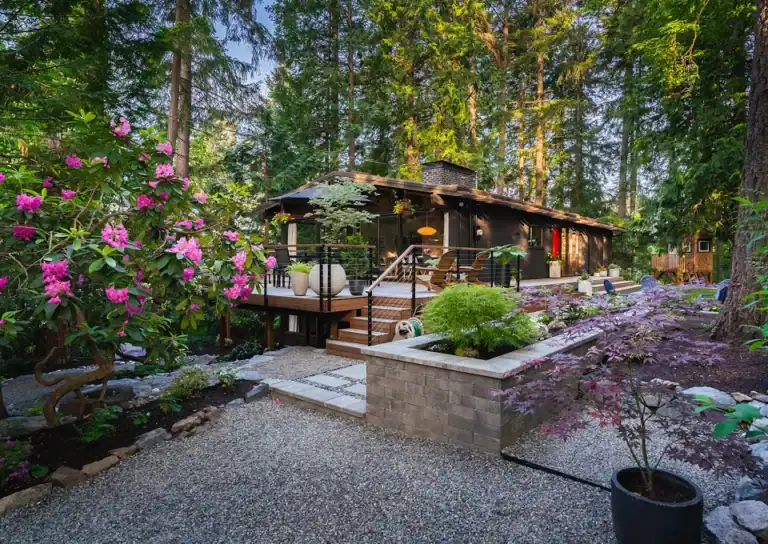
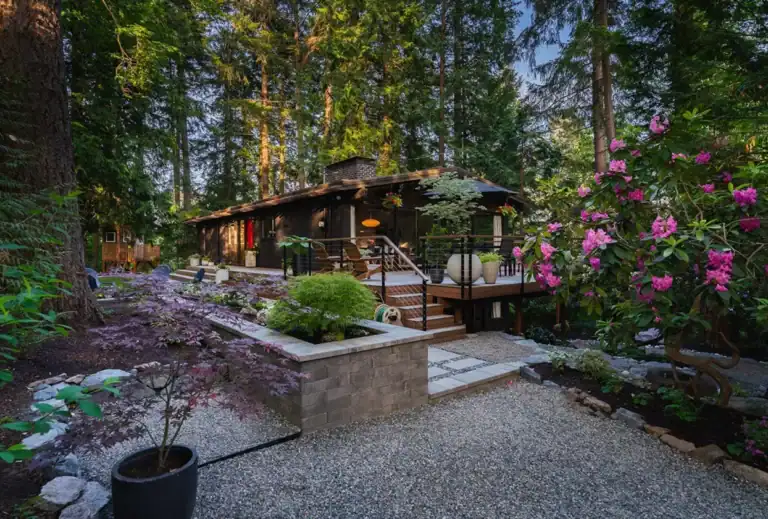
- The plantings, not the hardscape, are what homeowners say they love most two or three years after completion — a finding that often surprises people who assumed the patio or retaining wall would be the defining element.
- Working with a design-build company eliminates the mental energy of managing separate designers and contractors — for time-pressed Greater Seattle families, this structural simplicity is frequently the reason they moved forward at all.
What Were You Most Worried About Before Starting — and Was It Worth the Worry?
The number one pre-project concern Classic hears from Seattle homeowners has nothing to do with plants, design, or construction timelines. It’s cost — specifically, the fear that the project will somehow spiral beyond what was discussed, that hidden expenses will emerge mid-build, and that they’ll feel trapped once work begins.
In Classic’s experience across thousands of projects, this fear is almost always disproportionate to reality — when the homeowner works with a design-build company that separates the design conversation from the construction commitment. The reason cost anxiety dominates the pre-project period is that most homeowners have never spent $30,000 to $100,000+ on something they can’t test-drive, return, or comparison-shop the way they would a car or kitchen remodel. A landscape is site-specific, custom, and unfamiliar as a purchase category. That unfamiliarity breeds worry.
What homeowners consistently report afterward: the budget conversation before design — when handled honestly and early — eliminated most of that anxiety. The projects that produce cost surprises are almost always ones where budget was never discussed openly, where the homeowner received a design they loved without understanding what it would cost to build, or where the company avoided the money conversation until the estimate arrived.
The worries that were unfounded
Three fears come up repeatedly in pre-project consultations that, in our observation, almost never materialize for homeowners who choose an established design-build firm:
“They’ll start and then disappear for weeks.” This is a valid concern for homeowners who’ve hired individual contractors or small crews for past home improvement projects. Landscape construction involves phases — grading, drainage, hardscape, planting, irrigation — and there are natural pauses between some of them. But the fear of abandonment, of a half-finished yard stretching into months of silence, is overwhelmingly a function of who you hire, not what you’re building. Classic operates with employed crews, not subcontractors, and maintains a project communication structure that keeps homeowners informed through every transition. After four decades, we can say with confidence: the homeowners who worried most about communication gaps almost always say afterward that it was more structured than they expected.
“I’ll hate it and be stuck.” The permanence of a landscape — especially hardscape — makes some homeowners hesitate in ways they wouldn’t for interior decisions. A patio can’t be returned. A retaining wall can’t be repositioned easily. But what this worry overlooks is the design process itself. By the time construction begins on a well-managed design-build project, the homeowner has seen scaled drawings, walked through material samples, discussed sight lines on-site, and had multiple revision opportunities. The “stuck with something I hate” scenario almost exclusively happens when design was rushed, skipped, or treated as a formality — not when it was treated as the foundation of the project.
“The neighbors will complain about the noise and disruption.” Construction is disruptive. There’s no honest way around that — equipment, material deliveries, crew vehicles, and dust are part of the process. But in Classic’s experience across Greater Seattle neighborhoods from Kirkland to Sammamish, neighbor issues are remarkably rare when the crew is professional, the site is maintained daily, and work hours respect local regulations. Multiple homeowners have told us their neighbors were more curious than annoyed — and some ended up calling Classic afterward.
What Surprised You Most — in a Good Way?
The positive surprises homeowners report are, in some ways, more instructive than the worries. They reveal what people don’t expect from the process — and what changes their relationship with their property after completion.
The design process was the most valuable part
This is the surprise Classic hears most often, and it catches homeowners off guard because they initially viewed design as a cost line item — something to get through on the way to construction. What they discover is that the design phase is where the project actually takes shape, where their vague vision becomes specific and buildable, and where potential mistakes get caught on paper instead of in the ground.
Homeowners who’ve been through Classic’s design process — from site assessment to plan — consistently say the same thing: “I didn’t know what I wanted until I saw what was possible.” That’s not because they lacked vision. It’s because translating a feeling (“I want my backyard to feel like a retreat”) into a buildable plan requires someone who knows the site constraints, the plant palette, the grading realities, and the budget mathematics. The design conversation is where those worlds meet.
They used the space more than they expected
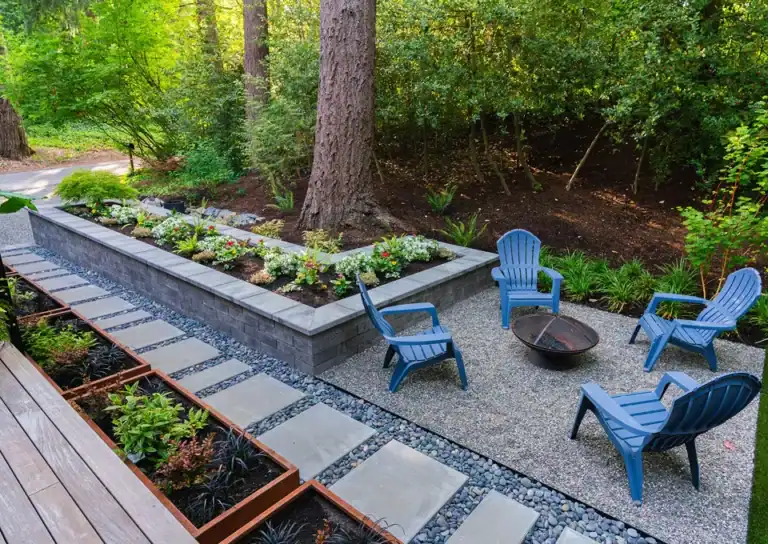
Before construction, many homeowners describe their yards as spaces they look at through windows but rarely inhabit. After a thoughtful landscape project, the pattern reverses. The patio gets used for weeknight dinners. The fire pit area becomes the default gathering spot. The garden path becomes the morning coffee route. In our experience, the homeowners who are most surprised by this shift are the ones who initially framed the project as an aesthetic improvement — “I just want it to look better” — and discovered that good design doesn’t just change how a space looks. It changes how you live.
The plantings matured faster than they thought
New plantings look sparse at installation. Every homeowner knows this intellectually, but seeing bare mulch between small shrubs still produces a moment of doubt. What Classic hears six months, twelve months, and two years later is almost always some version of relief. The Pacific Northwest’s growing conditions — mild winters, consistent moisture, long growing seasons west of the Cascades — are extraordinarily favorable for plant establishment. A landscape installed in fall using properly sized nursery stock can look dramatically different by the following summer. By year three, most homeowners can’t remember what the yard looked like before.
This is also where Classic’s horticultural background — the nursery-trade origins, the Certified Professional Horticulturist on staff, Will Rak’s Master Pruner expertise — pays dividends the homeowner doesn’t see at installation but experiences over years. Plant selection isn’t about what looks good in a five-gallon container. It’s about what performs reliably in your specific site conditions, maintains its form without excessive intervention, and contributes to the design intent at maturity — not just at planting.
What Would You Tell Someone Who's Just Starting to Think About This?
When homeowners reflect on what they’d tell a friend or neighbor who’s earlier in the process, the advice clusters around a handful of consistent themes. These aren’t Classic’s talking points — they’re the patterns that emerge from thousands of post-project conversations.
Start the conversation earlier than you think you need to
This is the single most repeated piece of advice. Homeowners who began their research in spring expecting a summer project consistently wish they’d started in fall or winter. Seattle’s landscape construction calendar fills months in advance, and the best companies — the ones with employed crews, established reputations, and the capacity to handle complex projects — book earliest. Starting the design conversation in January or February for a spring or summer build gives you time to design thoughtfully, revise without pressure, and secure a construction window that works for your family. Starting in April means you’re competing for whatever openings remain.
Classic’s project calendar typically reflects this reality. The best landscape companies in Seattle schedule months ahead, and the homeowners who report the smoothest experiences are almost always the ones who gave themselves — and their design-build team — adequate lead time.
Have the budget conversation before the design conversation
This advice comes from homeowners who learned it the hard way — either with Classic or with a previous company. They fell in love with a design that exceeded their budget, and the resulting revision felt like a loss instead of a refinement.
The budget conversation before design isn’t about limiting creativity. It’s about directing it. When the designer knows the investment range before putting pen to paper, every element of the design is intentional and buildable within that framework. There are no painful cuts, no “value engineering” that strips the design of what made it work. The homeowners who report the highest satisfaction with their finished landscape are consistently the ones who were honest about budget from the first meeting — and who worked with a company that asked about it directly rather than avoiding the subject.
Don’t compare your project to what you see online
Instagram, Pinterest, and Houzz have changed how homeowners envision their landscapes — mostly for the better, because visual reference helps communicate preferences. But those platforms also create unrealistic benchmarks. The images are curated, shot at peak season, often in climates unlike Seattle’s, and almost never include context about budget, site conditions, or what the space looked like two years after the photo was taken.
In Classic’s experience, homeowners who arrive at consultations with flexible inspiration (“I like this feeling”) have better outcomes than those who arrive with rigid expectations (“I want exactly this”). The best designs respond to your specific site — its grade, soil, light exposure, existing trees, views, and microclimate — not to a photo taken in Southern California.
Trust the process more than you trust your anxiety
This is the advice that homeowners deliver with the most conviction, usually accompanied by a slight laugh of recognition. The weeks between signing the contract and seeing the finished landscape involve uncertainty, mess, and moments where the site looks worse than when you started. Grading turns your yard into a mud field. Drainage work exposes trenches. Hardscape installation means pallets of stone blocking the driveway. Every homeowner who’s been through it says the same thing: the middle of construction is not the time to evaluate whether you made the right decision. That evaluation happens when the last plant goes in, the irrigation runs for the first time, and you stand on your new patio watching the evening light hit the stone.
What Do Homeowners Say About Working With a Design-Build Company Specifically?
Homeowners who’ve experienced both models — hiring a separate designer and contractor versus working with a single design-build firm — offer a specific and consistent observation: accountability.
When design and construction live under one roof, there is no gap where problems hide. The designer can’t blame the contractor for misinterpreting the plan. The contractor can’t blame the designer for specifying something unbuildable. And the homeowner doesn’t become the project manager caught between two parties with different interests.
What Classic hears from homeowners who chose design-build after a previous experience with separated services: “I didn’t realize how much mental energy I was spending managing the process until I didn’t have to anymore.” For the busy professionals and dual-income families that make up much of Classic’s clientele in Greater Seattle, this single-point-of-contact structure isn’t a convenience — it’s the reason they moved forward at all.
What's the One Thing You'd Do Differently?
Even satisfied homeowners have a “next time” reflection. The most common regret Classic hears isn’t about the landscape itself — it’s about scope.
“I wish we’d done the whole thing at once instead of phasing it.”
Phasing a landscape project — doing the backyard now, the front yard later, the side yard next year — is a legitimate strategy, and for some budgets it’s the right approach. But homeowners who phase frequently report two frustrations: the second phase never happens (life intervenes, priorities shift, the urgency fades once the primary space is complete), and when it does happen, the cost is higher than it would have been as part of the original project. Mobilization costs, material price increases, and the design challenge of integrating new work with existing work all add up.
The advice from homeowners who’ve lived this: if your budget can accommodate the full scope, even stretched across a longer timeline, doing it as one project almost always produces a better design outcome and a lower total cost than splitting it into separate engagements.
The second most common “do differently” answer: “I would have spent more on the plantings and less on the hardscape.” This one surprises people, because hardscape feels permanent and plantings feel replaceable. But homeowners who’ve watched their landscapes mature consistently report that the plants are what they love most — the seasonal color, the texture, the privacy screening, the sense of living in a garden rather than on a patio. Hardscape provides structure. Plantings provide the experience.