
-

Decades of Expertise
40 years of enhancement work across Greater Seattle. Our crews have handled every site condition the area produces.
-

Designer-Guided Care
Enhancement projects are scoped by landscape designers who understand how new work integrates with what's already there.
-

Priority Scheduling
Maintenance clients get priority scheduling for enhancement projects — coordinated scheduling, no separate contractor needed.
-

Sustainable Practices
Eco-friendly materials and installation practices that protect your soil, drainage, and existing plantings.
Improvements Built to Perform in Seattle Conditions
Enhancement projects in the Pacific Northwest face conditions that punish shortcuts: clay soils that hold water, freeze-thaw cycles that heave improperly set stone, and heavy winter rain that exposes drainage problems fast. Our installation crews are experienced with these site realities. We prep sub-base layers correctly, establish drainage before it’s covered, and select plants with the root systems and cold hardiness to establish without babysitting.We take on enhancement projects as standalone work—you don’t need to have designed with us first. Bring us a scope and a site and we’ll assess what’s feasible, what the real costs look like, and what sequence of work makes sense for your property.
Right-Sized Scope. No Unnecessary Upsells.
We scope enhancement projects to fit what your property actually needs. If a single patio and retaining wall is what your yard requires, that's what we'll price and build. Our estimators tell you directly what a job involves and what it costs — and they'll tell you honestly if your scope is too small to make sense as a standalone visit.
Primary Enhancement Services
Our enhancement work covers the full range of hard and soft landscape improvements. These are the most common project types our teams handle across the Greater Seattle area.
-

Patio & Walkway Installation
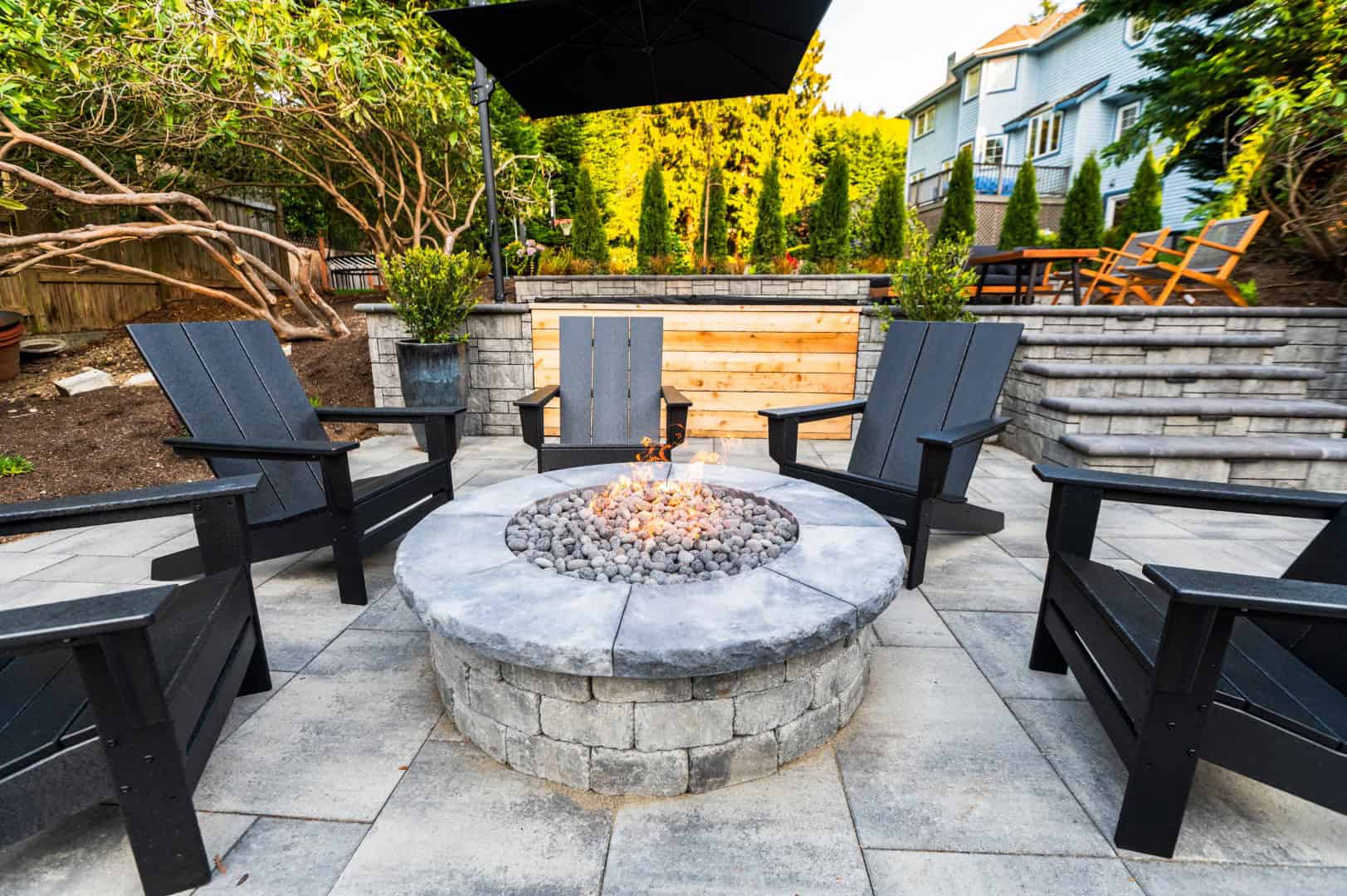
+ -A well-built patio extends your usable living space and changes how a yard feels. We install natural stone, concrete pavers, and flagstone patios on a properly prepared sub-base — base depth, compaction, and edge restraint are what determine whether a patio looks the same in year five as year one. Our installation standards account for Seattle's freeze-thaw cycles and clay soils, so the patio doesn't develop settling, cracking, or edge failure down the line.
 Stone, paver & flagstone
Proper sub-base & compaction
Drainage integrated
Edge restraints installed
New & replacement installs
Stone, paver & flagstone
Proper sub-base & compaction
Drainage integrated
Edge restraints installed
New & replacement installs
-

Retaining Walls & Grading
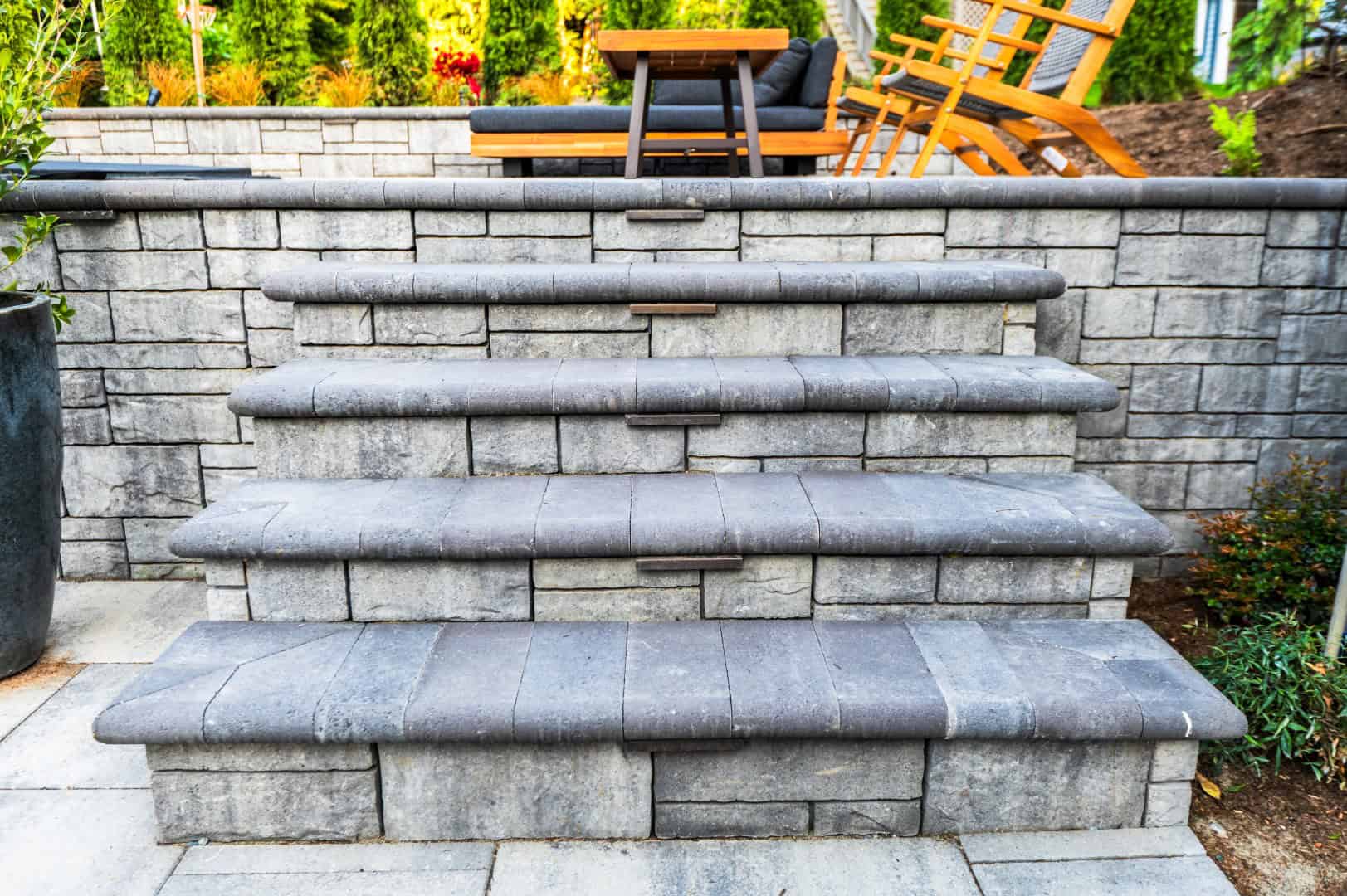
+ -Sloped yards and chronic erosion are common in the Greater Seattle area. Retaining walls solve grade problems while creating level usable areas, but they need to be engineered for the load they’re holding and the drainage behind them. A wall that’s undersized or lacks a drainage layer will fail—often taking the slope with it. Our crews have built walls in the full range of Seattle-area slope conditions and understand what each situation requires.
Block, stone & timber walls
Drainage layer behind walls
Geogrid on tall walls
Grading for water control
Permit coordination included
-

Planting & Garden Beds
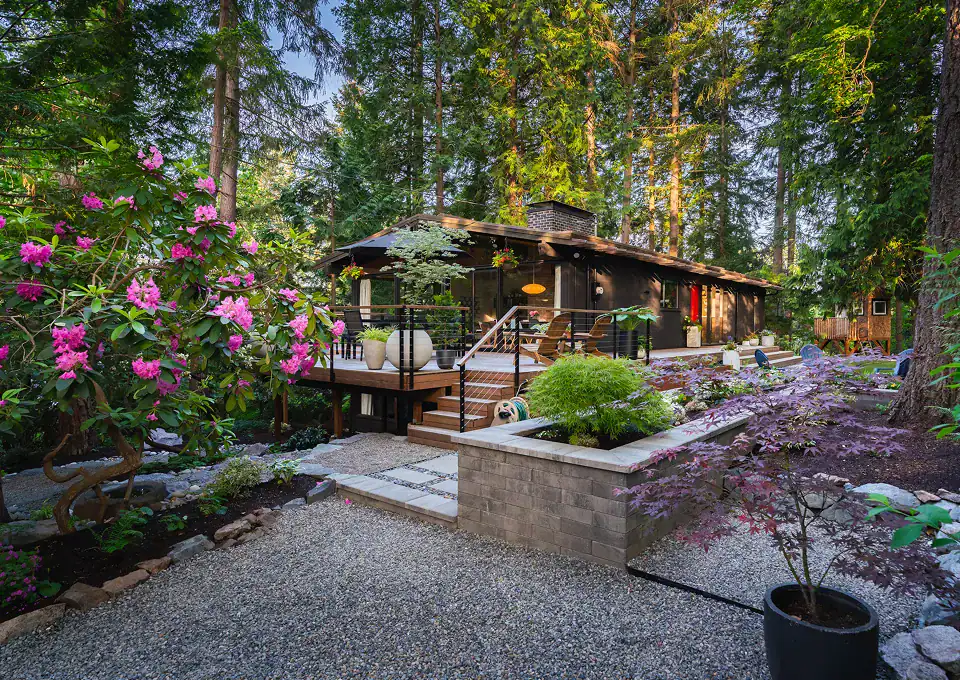
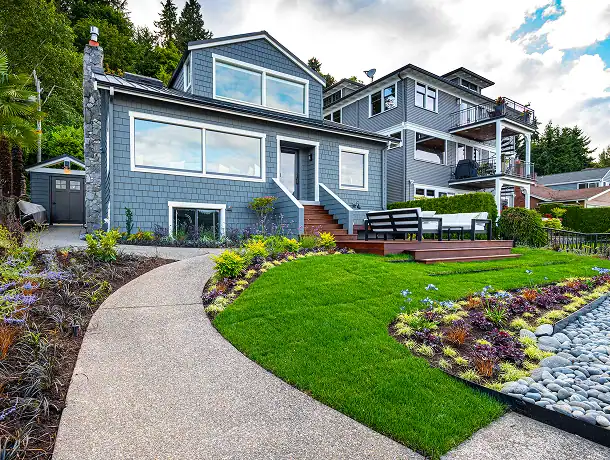
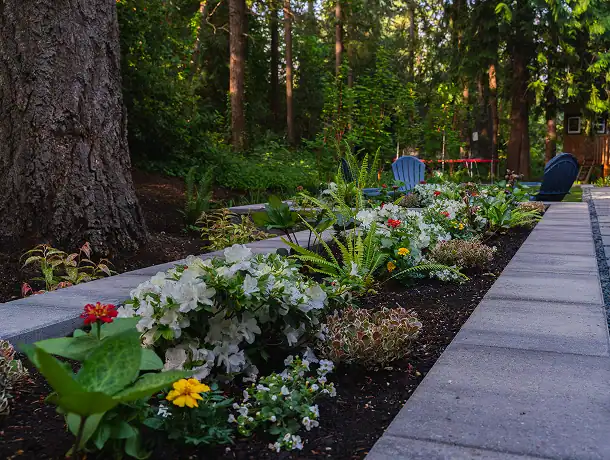
+ -New planting work ranges from filling in bare areas to replanting entire beds with a curated palette. We source plants from reputable regional growers, install with proper soil preparation, and provide irrigation or post-install watering guidance to support establishment. Our designers can help with plant selection if you’re unsure what will perform well in your specific conditions—light, drainage, soil type, and exposure all factor into whether a plant thrives or struggles.
Horticulturist plant selection
Soil prep for each plant
Regional PNW growers
1-year plant warranty
Establishment care guidance
-

Drainage Solutions
+ -Standing water, soggy lawn areas, and water migrating toward foundations are problems worth addressing before they spread. Classic Landscaping installs French drains, catch basins, area drains, and surface channels to intercept and redirect water away from problem zones. Every drainage installation begins with an on-site assessment to trace where the water is coming from and where it needs to go—the only reliable basis for designing a system that actually works.
French drain installation
Catch basins & area drains
Surface channels & swales
Water source traced first
Avoids irrigation & utilities
What Our Enhancement Clients Say

We had a back corner of our yard that had been a drainage problem for eight years. Every spring it turned into a mud pit and every contractor we talke...
Read More Paul & Linda S. Verified Client
The retaining wall they built for us is holding a 6-foot grade change on our Kirkland hillside. We had gotten two other bids—one of them didn’t mentio...
Read More Thomas R.
Verified Client
Our patio installation project required some pretty precise work around an existing tree we wanted to keep. The crew was careful—they worked around th...
Read More Jennifer B.
Verified Client
We needed new planting in three beds after a construction project left them bare and compacted. The plant selections Classic Landscaping proposed were...
Read More Nancy H.
Verified Client
Additional Enhancement Services
Beyond core hardscape and planting work, Classic Landscaping installs a range of specialty features—outdoor lighting, water features, and integrated structural elements—as well as seasonal refresh programs for clients who want to keep their landscape current without managing it themselves.
-
Outdoor Lighting
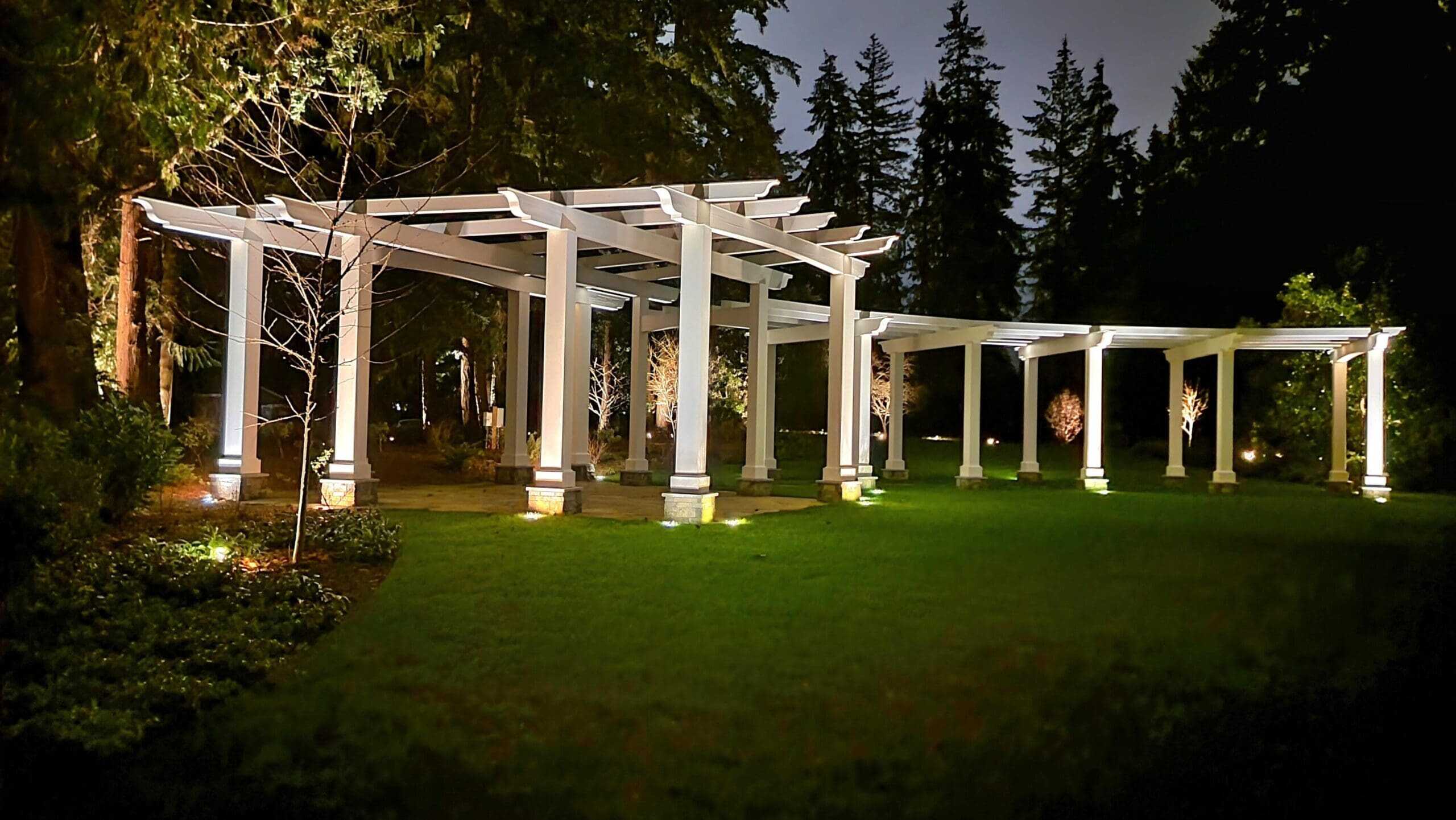
+ -Landscape lighting does three things well: it extends outdoor usability into evening hours, improves site safety along pathways and steps, and highlights architectural and landscape features that deserve attention. We install low-voltage LED systems with separate zones for pathway, accent, and task lighting. Fixtures are chosen for durability in wet Pacific Northwest conditions and positioned to minimize glare while maximizing effect.
Low-voltage LED systems
Multi-zone smart control
Wet-rated Seattle fixtures
Up, down & step lighting
-
Water Features
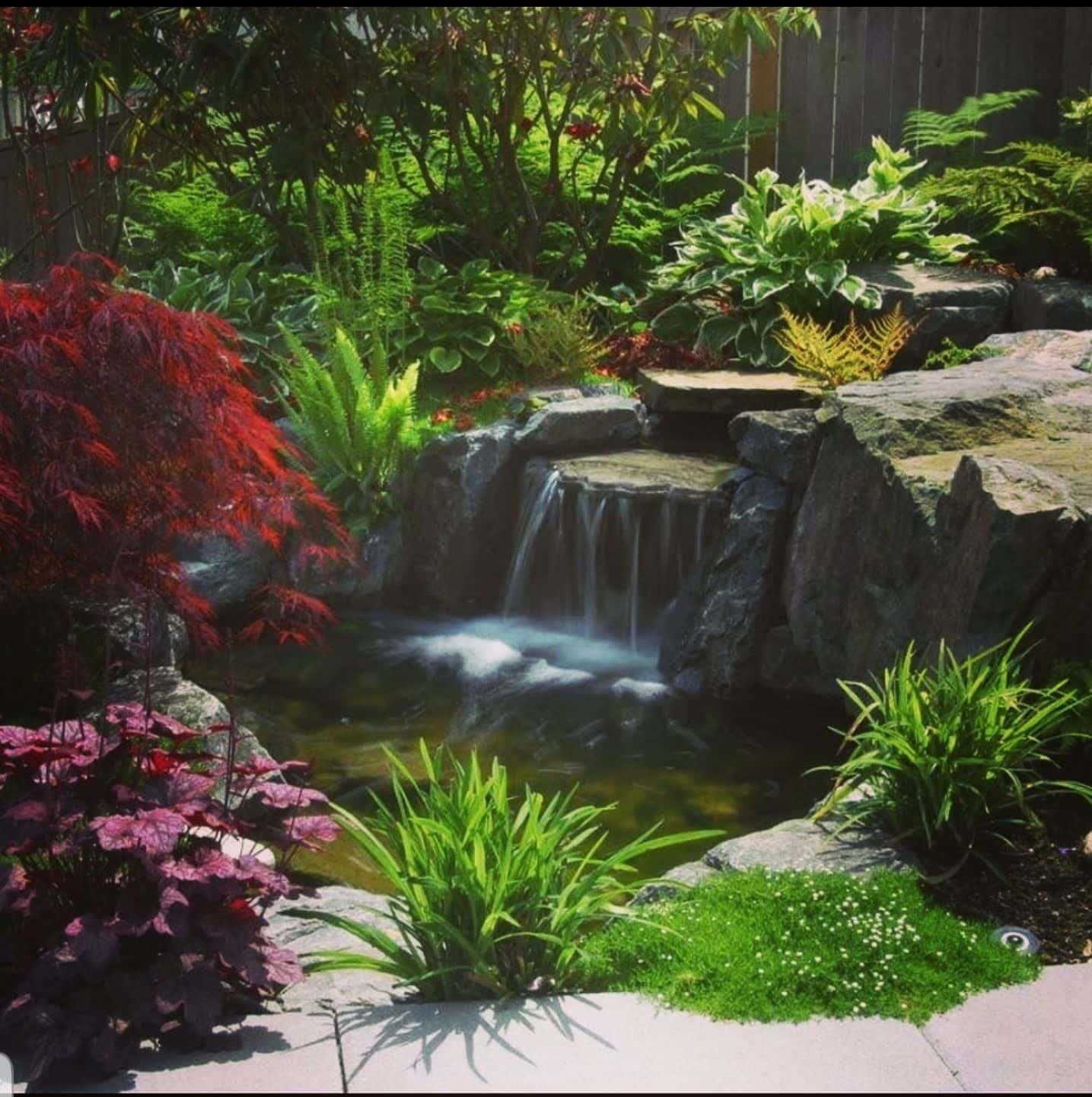
+ -A well-placed water feature—a recirculating fountain, a pondless waterfall, a naturalistic stream channel—changes how a space sounds and feels. Water features are most successful when they’re scaled to the space they’re in and maintained consistently. We install features appropriate to each site and provide honest guidance on maintenance requirements so clients understand what they’re committing to before installation.
Pondless waterfalls & streams
Recirculating fountains
Integrated planting
Care guidance at completion
-
Deck & Fence Integration
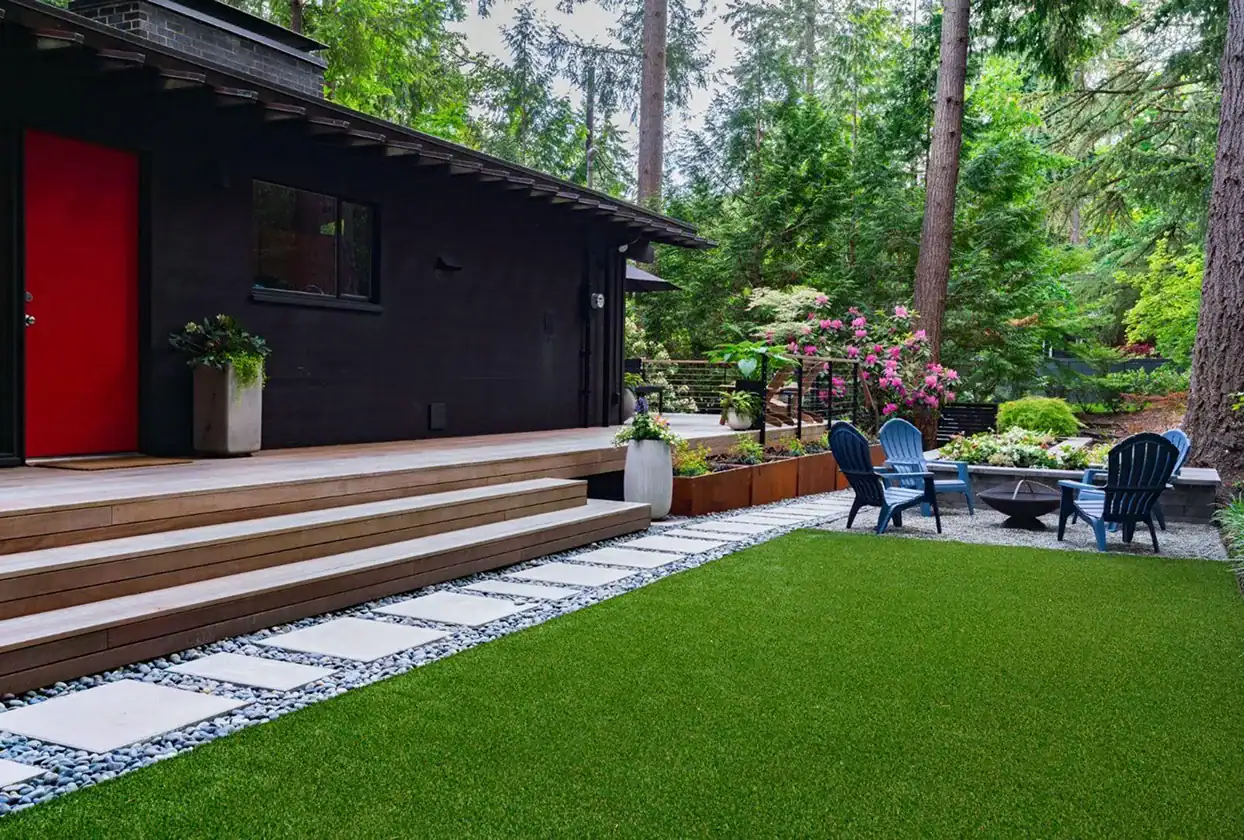
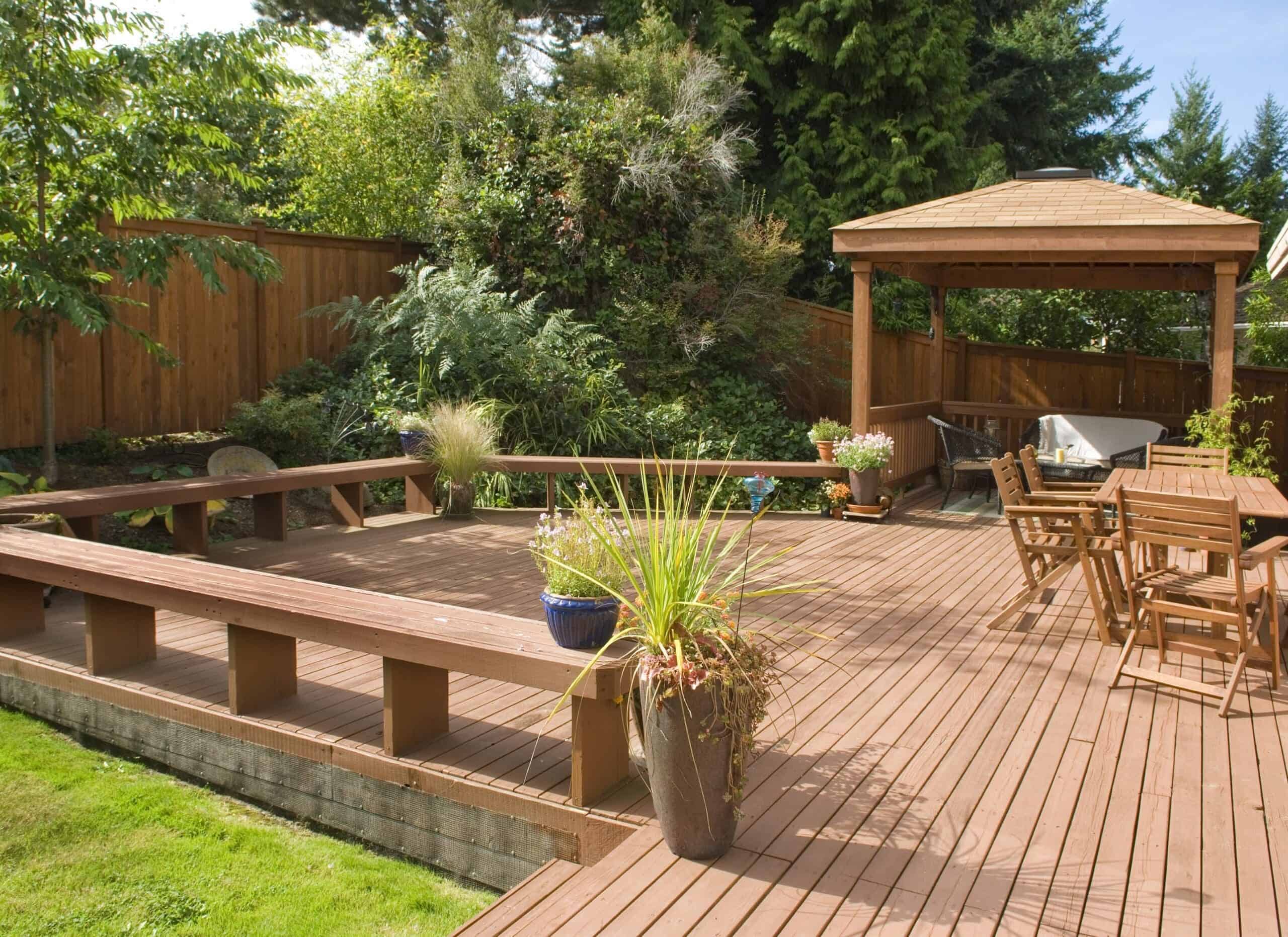
+ -New hardscape and planting often needs to connect with existing decks, fences, and structures. We handle the integration work — planting around deck perimeters, building low walls or raised beds that complement fence lines, and making sure transitions between new and existing elements read as intentional. The result is a landscape that feels like one project, not new additions sitting next to old ones.
Planting around decks
Walls & beds by fence lines
Clean transitions
Consistent materials throughout
-
Seasonal Refresh Programs
+ -Landscapes change through the seasons. A seasonal refresh program keeps your planting current without requiring you to manage it. Twice a year—typically spring and fall—our team assesses the landscape, replaces annuals or seasonally exhausted plants, adjusts mulch depths, and makes minor corrections before they become larger problems. This program suits clients who want their landscape to always look maintained and intentional, not just immediately after a major project.
Spring & fall visits
Seasonal refresh planting
Mulch refresh included
Minor corrections each visit

Recent Landscape Enhancement Projects

Sammamish Patio & Drainage
Installed a 480 sq ft natural stone patio with an integrated French drain system to address chronic surface water pooling in the back yard. Sub-base was excavated 8 inches and compacted before stone setting.
Bothell Hillside Retaining Wall
Three-tier concrete block retaining wall system on a 35-degree slope, creating two level planting terraces. Drainage layer and geogrid reinforcement installed behind the two upper tiers.
Bellevue Outdoor Lighting
Full-property low-voltage LED installation with three independent zones: pathway, garden accent, and tree uplighting. Smart controller with seasonal schedule adjustment.
Redmond Planting Renovation
Complete replanting of three established beds following a deck construction project. Soil amendment, new plant installation, and irrigation adjustment to support establishment.
Kenmore Drainage Installation
Catch basin and perforated pipe system addressing foundation water intrusion from a neighboring slope. System routes water to a storm drain connection at the street.
Landscape Enhancement Questions
-
How much does a landscape enhancement project cost in Seattle?
+ -Enhancement project costs vary significantly by scope. A typical patio installation (400–600 sq ft, natural stone) runs $8,000–$18,000 depending on material and base conditions. Retaining walls commonly run $100–$200 per linear foot for concrete block, and more for natural stone. Drainage systems range from $2,500 for a basic French drain to $8,000+ for a full-property catch basin network. We provide fixed-price estimates after an on-site assessment so there are no surprises.
-
Do you take on small enhancement projects, or is there a minimum scope?
+ -We evaluate projects on their own merits rather than applying a hard minimum. In practice, some very small standalone jobs—a single small garden bed or one tree planting—don’t make economic sense for either party given mobilization costs. But straightforward patio, drainage, or planting projects of most reasonable sizes are worth discussing. Contact us with your scope and we’ll tell you directly whether it’s a fit.
-
How long does a typical patio or retaining wall installation take?
+ -A mid-size patio (300–500 sq ft) typically takes 3–5 working days for installation. A retaining wall project depends heavily on height and total linear footage—a 25-foot wall at 3 feet tall might take 2–3 days; a larger 60-foot multi-tier wall could take 7–10 days. Drainage work varies by system complexity. We provide a project timeline before work begins and communicate any schedule changes with at least 24 hours notice.
-
What causes drainage problems in Seattle yards?
+ -Most Seattle-area drainage problems stem from a combination of factors: dense glacial clay soils that drain slowly, impervious surfaces (roofs, driveways, patios) that generate runoff, and topography that concentrates water in low spots. Seattle’s heavy winter rainfall—often 35–40 inches per year—means even moderate drainage limitations show up as serious problems. Effective drainage solutions address the source of the water, not just where it’s collecting.
-
What type of stone is best for patios in the Seattle area?
+ -Several materials perform well in Seattle’s climate. Concrete pavers offer the most consistent sizing and are relatively easy to replace if settling occurs. Basalt and granite hold up well to freeze-thaw. Sandstone and softer limestone are generally not recommended—they can flake and deteriorate faster in wet climates. Flagstone in bluestone or basalt is a common high-end choice. The best material for any specific project depends on the setting, budget, and how the patio will be used.
-
Will you work around existing trees and plants I want to keep?
+ -Yes. Protecting established trees and valued plants during construction is something that has to be planned before work starts, not managed reactively on the day of installation. We assess root zones during the estimating phase, establish protection barriers if needed, and adjust layout plans to avoid critical roots. If a proposed installation conflicts significantly with a tree you want to keep, we’ll tell you honestly about the tradeoff.