- Every question Classic asks during the on-site consultation (complimentary) directly shapes a design decision — these are not small-talk prompts, and your answers carry real design weight.
- The frustration question often surfaces site conditions like drainage failures or slope erosion that must be resolved before any aesthetic work begins — roughly 40% of Eastside design-build projects involve a structural issue underneath the wish list.
- Budget is a design input, not a qualifying exercise — a $40,000 project and a $120,000 project on the same property require different materials, different scope, and different design strategies from the very first concept.
- Having both decision-makers present at the initial conversation prevents the most common reason landscape projects stall between design and construction.
- You do not need polished answers or a finished vision before the on-site consultation — knowing what frustrates you and roughly how you use the space gives a skilled designer more to work with than any Pinterest board.
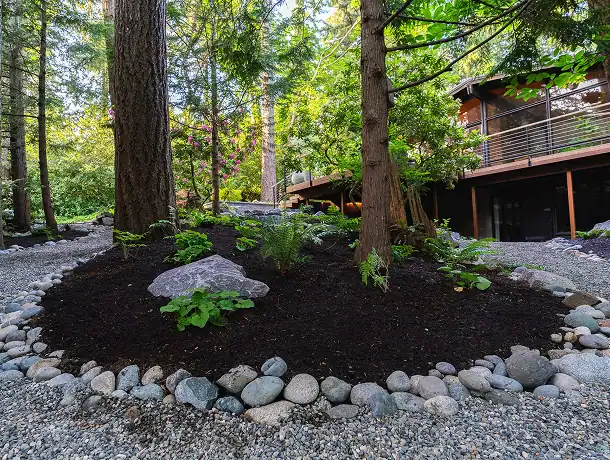
- Mature trees and existing landscape features you want to preserve become anchor points that fundamentally shape the layout, so mentioning them early matters more than most homeowners realize.
Why Does the Discovery Conversation Matter More Than the Design Itself?
A landscape plan is only as good as the information it was built on. When a designer sketches a patio in the wrong corner of the yard, it is almost never because the designer lacked skill — it is because the homeowner’s actual priorities were never fully surfaced. The discovery conversation exists to prevent that disconnect.
At Classic, the designer who walks your property is the same person who draws the plan and oversees construction. That is the design-build model — one company, one point of accountability. It means the questions asked during the on-site consultation are not being filtered through a salesperson before reaching the designer. The person listening is the person designing.
This matters because discovery is not a checklist. A skilled designer follows threads. When you say “I want more privacy,” the follow-up questions — from which rooms, at which times of day, from which neighbors, and whether you want year-round screening or just during the outdoor season — can shift the plant palette, the placement of a structure, or the entire layout of the backyard. That thread cannot be followed by someone reading notes from a meeting they did not attend.
"How Do You Use Your Outdoor Space Right Now?"
This question sounds simple. It is not. What a designer is really asking is: where does your life happen in this yard, and where does it not?
The answer tells the designer which areas are underused, which areas are working, and where the friction points live. A family that only uses the back deck because the rest of the yard is too muddy, too dark, or too disconnected from the house has a fundamentally different project than a family that uses most of the yard but wants it to feel more finished.
In Bellevue and surrounding Eastside cities, property layouts vary enormously — from compact lots in established neighborhoods to sloped half-acre parcels in Sammamish and Issaquah. How people use (or avoid) their yards depends as much on topography, drainage, and tree canopy as it does on personal preference. The designer needs to understand both.
### Why this changes the design
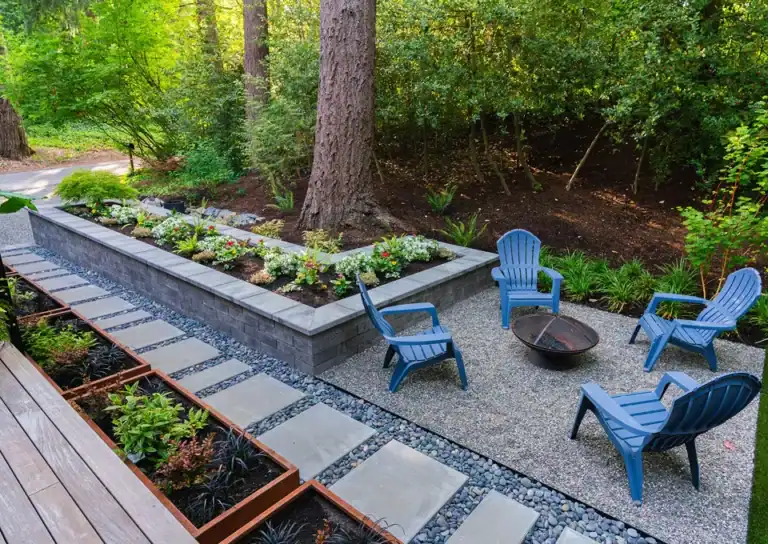
If you eat dinner outside three nights a week in summer, the dining area needs to be within easy reach of the kitchen — not tucked into the far corner of the yard where the view is best. If your teenagers use the backyard for games but you want a quieter space for yourself, the design may need to create distinct zones with separation that goes beyond a row of shrubs. A designer who never asks this question will design from the site, not from the life being lived on it.
"What Frustrates You About This Space?"
The frustration question often surfaces the real project. Homeowners call with a vision — a new patio, a retaining wall, a complete renovation — but underneath the vision is usually a problem they have been living with for years.
Standing water against the foundation after every rain. A slope that erodes every winter. A front yard that looks worn from the street. Privacy that disappeared when the neighbor removed their trees. A backyard that gets so little sun in November that it feels like an extension of the house’s interior — dark and enclosed.
These frustrations matter because they identify the non-negotiable constraints. A drainage problem that causes water to pool against the foundation is not something that can be designed around with a prettier patio on top — it must be addressed structurally before any aesthetic work begins. A designer who asks about frustrations before asking about dreams prevents the costly mistake of designing a beautiful surface over an unresolved problem.
### Why this changes the design
In Classic’s experience, roughly 40% of design-build projects on the Eastside involve a site condition — poor drainage, failing slopes, compacted glacial till soils, or root intrusion from mature conifers — that must be resolved before the homeowner’s vision can be built on top of it. The frustration question finds those conditions early. Without it, they surface during construction, where they are far more expensive to address.
"Who Else Is Involved in This Decision?"
This question is about process, not about the landscape itself — and it is one of the most important questions Classic asks. In our experience, the number-one reason landscape projects stall between design and construction is that a decision-maker was not part of the conversation.
It happens like this: one partner handles the research, meets with the designer, falls in love with the concept, and then presents it to the other partner — who has questions, objections, or a completely different vision. The process resets. Weeks are lost. In some cases, the project dies entirely — not because the design was wrong, but because it was built on half the household’s input.
Classic asks this early so that the on-site consultation can include everyone whose approval matters. That does not always mean both spouses need to be at every meeting, but it does mean the initial discovery conversation should include anyone who will have veto power over the final decision.
### Why this changes the design
When both decision-makers are present, the designer can surface disagreements in real time — and design through them. One partner wants a modern, clean-line patio; the other wants a naturalistic garden feel. A skilled designer can find the intersection. But only if both people are in the conversation.
"What Is Your Comfortable Investment Range?"
Classic asks about budget during the on-site consultation — not to qualify you, but because the number shapes the design from the first pencil stroke. A $40,000 project and a $120,000 project on the same property are not different versions of the same design. They are different projects entirely — different materials, different scope, different level of infrastructure.
In our experience, the single most common source of frustration in the landscape design process is a beautiful plan that the homeowner cannot afford to build. That disconnect is entirely preventable if the budget conversation happens before the design conversation. Classic would rather have a frank discussion about numbers on day one than deliver a proposal that requires painful scope reductions on day forty.
If you do not have a number in mind, that is fine — most homeowners don’t. Classic’s design-build projects typically range from $25,000 to $150,000 or more, depending on scope, site complexity, and materials. Knowing roughly where you see yourself in that range is useful. Having the exact dollar is not necessary at this stage.
### Why this changes the design
Budget determines whether a retaining wall is natural stone or engineered block. Whether a patio is poured concrete, pavers, or flagstone. Whether plantings are 5-gallon containers that need three years to fill in or 15-gallon specimens that establish presence immediately. These are not upgrades and downgrades — they are different design strategies for different investment levels. A designer who knows the range from the start can be creative within it instead of designing in a vacuum and hoping the numbers align.
"What Is Your Timeline — and Is Anything Driving It?"
Timing affects what is possible. A homeowner who wants to host a summer gathering in late July needs a different project approach than a homeowner who says “sometime in the next year or two.” The first scenario may require phasing the work or narrowing the scope to what can be designed, permitted, and built within the available window. The second allows the designer to explore the full range of what the site can support.
In the Seattle area, landscape construction has seasonal rhythms. Hardscape work — patios, walls, paths — can happen year-round in most conditions. Planting is best done in fall through early spring, when roots establish before summer stress. Permit timelines in cities like Bellevue, Kirkland, and Sammamish range from two to eight weeks depending on the scope, and that lead time must be built into any realistic schedule.
### Why this changes the design
A project that needs to break ground by May cannot include elements that require a six-week permit review. A homeowner who is planning to sell the house in 18 months may prioritize curb appeal and front-yard impact over a backyard renovation they will barely enjoy. Timeline is not a scheduling question — it is a scope question, and it belongs in the discovery conversation.
"What Do You Want to Keep?"
Not everything needs to change. Many Eastside properties have mature trees, established hedges, or hardscape elements that are structurally sound and visually worth preserving. A designer who asks what you value in the existing landscape avoids the mistake of proposing a blank-slate renovation when the homeowner’s attachment is to a specific Japanese maple, a stone wall their grandfather built, or the privacy that a 30-year-old Western red cedar hedge provides.
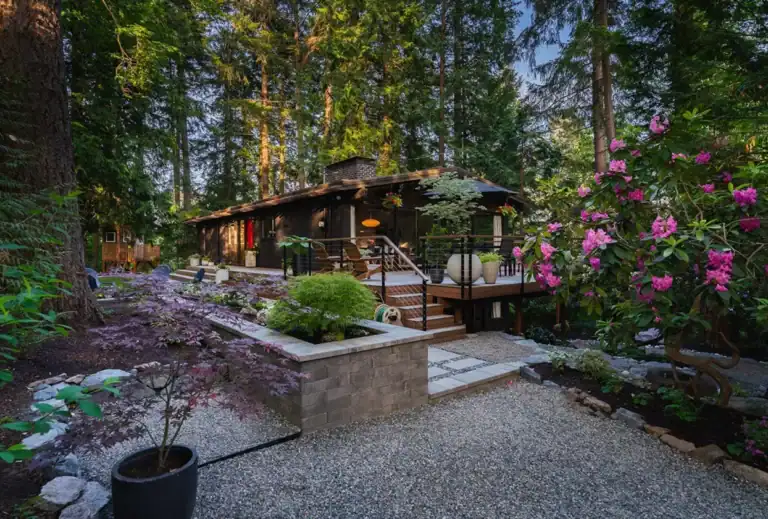
In Classic’s experience, mature plant material is one of the most undervalued assets on a residential property. A 25-year-old Acer palmatum dissectum in the right location cannot be replaced with a nursery purchase — not at any price. The designer needs to know which elements have emotional or functional significance before committing anything to paper.
### Why this changes the design
Preserved elements become anchor points. The design works around them, with them, or because of them. Removing a mature tree changes sun exposure, drainage patterns, privacy, and the entire spatial character of the yard. Preserving it means designing in relationship to its canopy, its root zone, and its seasonal behavior. The question of what stays is as important as the question of what gets built.
"Have You Worked With a Landscape Company Before?"
This question is about expectations, not qualifications. A homeowner who has been through a landscape project before — good or bad — arrives with a reference point. They know what went well, what frustrated them, what they wish had been handled differently. That history tells the designer what this particular homeowner needs from the process, not just the product.
A homeowner who had a previous contractor go over budget by 30% may need more frequent cost check-ins during design development. A homeowner whose last project dragged on for months may need a clear timeline with milestones. A homeowner who has never done this before may need more explanation at each step — and reassurance that not knowing exactly what they want is completely normal.
### Why this changes the design
It does not change the design directly — it changes the process. And for many homeowners, the process is what determines whether a $75,000 investment feels like money well spent or money lost to frustration. Classic’s designers adjust their communication cadence and level of detail based on what each homeowner needs. That adjustment starts with this question.