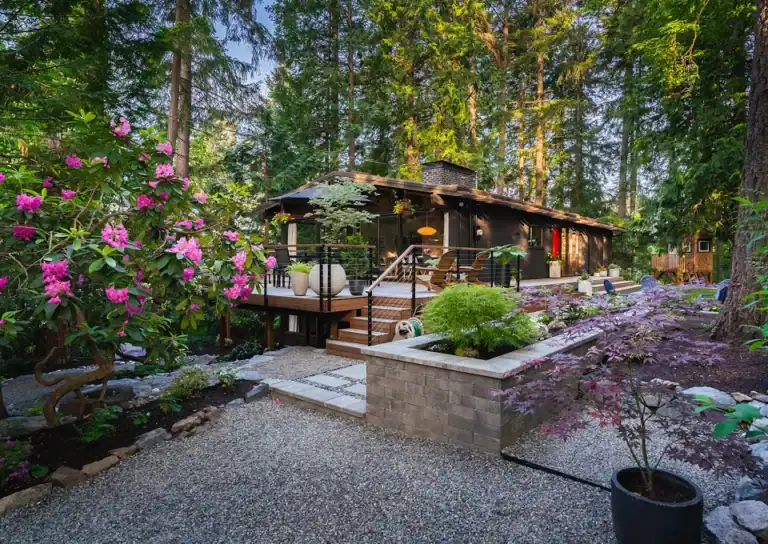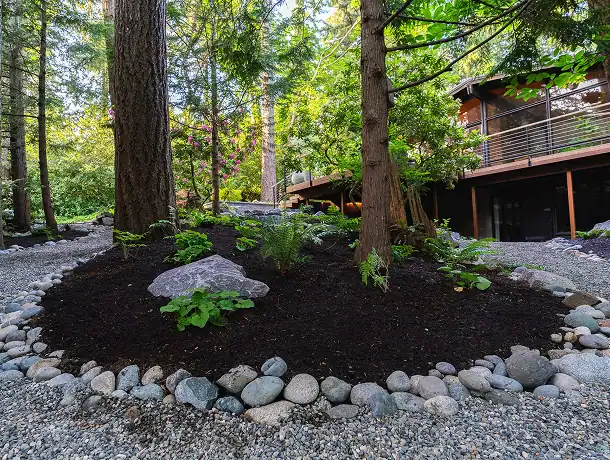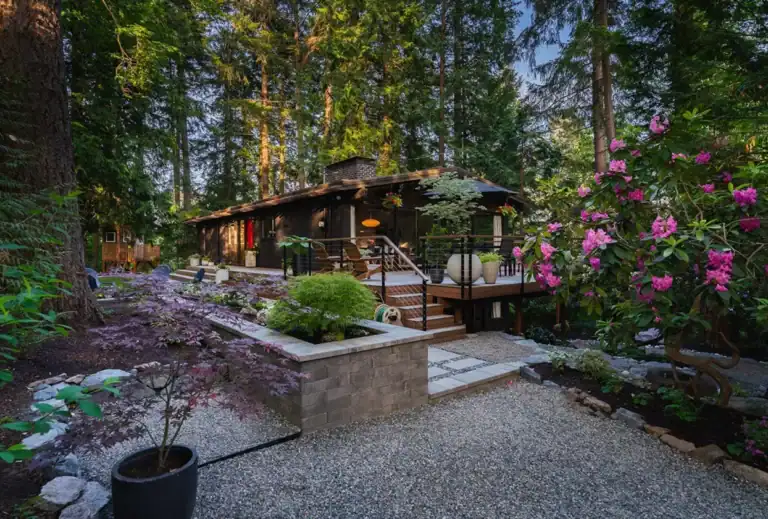
- Classic's growth story is defined as much by what the company chose not to do — no commercial work, no geographic expansion, no rapid crew scaling — as by the 2,000+ projects completed since 1985.
- A 15-city service area isn't a limitation; it's how Classic maintains soil, permitting, and microclimate knowledge deep enough to design for your specific property rather than your general region.
- Staying residential-only means every project is someone's home, and the design care, material specificity, and personal accountability that residential work demands is what the entire team is built around.
- The trade-off is real: Classic's project calendar fills months out, and the company is selective about which projects it takes — but the homeowners who do work with Classic get the full depth of the team's knowledge and attention.
- Two thousand projects over 40 years averages roughly 50 per year — a pace that reflects a deliberate choice to do fewer projects at a higher standard, not a company struggling to grow.
- Personal accountability — where the designer, construction manager, and owner are all reachable and personally invested — only works at a scale small enough for leadership to know every active project.
Why Would a Landscape Company Choose to Stay Small?
The landscape industry rewards growth. Bigger companies can bid on larger contracts, spread overhead across more projects, and negotiate better material pricing. There are real financial incentives to expand — add more crews, cover more territory, take on commercial work, open satellite offices.
Classic has watched other Seattle-area companies follow that path. Some have done it well. But in our experience, the companies that scale aggressively tend to change in ways that are hard to reverse. The owner who used to walk every job site starts reviewing projects from a truck. The designer who knew every plant cultivar that performs in Kirkland’s clay soils gets replaced by a junior designer working from a template. The crews that built institutional knowledge over a decade get diluted by seasonal hires who won’t be here next year.
None of this is inevitable. But the gravitational pull is real — and once a company reaches a certain size, the economics of that size start making decisions that the owner didn’t explicitly choose.
Classic’s decision has been to grow slowly, within constraints that keep the company small enough to maintain direct accountability on every project. That’s not a marketing position. It’s a structural choice that costs us revenue we could otherwise capture.
What Has Classic Deliberately Chosen Not to Do?
The constraints are specific, and each one has a cost:
### We don’t work outside 15 cities
Classic’s service area covers Seattle, Bellevue, Kirkland, Redmond, Woodinville, Bothell, Sammamish, Issaquah, Mercer Island, Kenmore, Shoreline, Lynnwood, Edmonds, Duvall, and Monroe. That’s it. We get inquiries from homeowners in Tacoma, Olympia, and the San Juan Islands. We turn them down.
The reason is practical: 2,000+ projects across these 15 cities means our team carries deep knowledge of the soils, microclimates, municipal permitting processes, and neighborhood patterns in this geography. We know which Bellevue neighborhoods have glacial till six inches below grade. We know Sammamish’s tree retention requirements and Kirkland’s critical areas ordinance — not from reading the code, but from submitting hundreds of permit applications and learning what each city’s review staff actually expects.
Expanding the service area would dilute that knowledge. Every new city means new soils, new codes, new municipal staff, new logistics — and less time maintaining the depth that makes Classic’s work in our existing territory reliable. The trade-off is real: homeowners outside the 15-city boundary can’t hire us, and we lose that work to competitors. But the homeowners inside the boundary get a company that knows their ground.
### We don’t take commercial projects
Commercial landscaping — office parks, apartment complexes, retail developments — is a different business. The design priorities are different (curb appeal and low maintenance vs. lifestyle and personal expression). The client relationship is different (property managers and developers vs. homeowners). The construction standards are different (bid specs and value engineering vs. design intent and long-term performance).
Some companies do both well. In our experience, the companies that try to run residential and commercial operations under one roof eventually optimize for whichever side generates more revenue — and that’s usually commercial, because the contracts are larger and more predictable. The residential side becomes the afterthought.
Classic made the decision early to stay residential. Every project we take is someone’s home — and the level of care, design specificity, and personal accountability that residential work demands is what our team is built for.
### We don’t grow faster than our team can absorb
This is the constraint that’s hardest to explain because it’s the most expensive. In any given year, Classic could take on more projects by hiring more crews. The demand is there. But adding crew members faster than our institutional knowledge can transfer to them means sending people to your property who don’t yet carry the standards that 2,000 projects built.
Classic’s hardscape construction manager, Eric Lemus, has over 20 years of industry experience and more than a decade with Classic. Our design manager, Will Rak, is a Master Pruner with Plant Amnesty training and years of hands-on pruning across Greater Seattle properties. Our Certified Professional Horticulturist carries decades of regional plant performance data. This knowledge doesn’t transfer in a two-week onboarding. It transfers through seasons — through watching how a retaining wall base behaves after its first winter, how a plant selection performs through its first August drought, how a drainage solution handles its first November storm.
Growing faster than that transfer rate means some homeowners would get the “A team” and some wouldn’t. Classic doesn’t operate that way.
What Does Staying Small Actually Cost?
Honesty requires acknowledging what these constraints mean for homeowners who want to work with us:
Longer wait times. Classic’s project calendar fills months in advance. If you call in March hoping to start construction in April, that’s unlikely. The limited crew capacity that protects quality also limits how many projects we can run simultaneously. In our experience, homeowners who begin the design conversation in fall or winter for a spring or summer build get the best scheduling outcomes.
Higher selectivity on projects. Not every project is a good fit. Classic occasionally turns down work that doesn’t align with our scope, our expertise, or the level of investment needed to do the work properly. A homeowner looking for the lowest bid on a simple fence installation will find better options elsewhere — not because we can’t build a fence, but because our process and overhead are designed for projects where design integration, material quality, and long-term performance justify the investment.
No satellite offices or regional managers. Everything runs through one operation. That means one set of standards, one knowledge base, one accountability structure — but it also means we can’t be in Duvall and Mercer Island at the same time with the same senior oversight.
These are real trade-offs. Classic accepts them because the alternative — growing past the point where we can guarantee the experience on every project — would cost more than the revenue we’d gain.
How Does This Show Up in the Homeowner's Experience?
The constraints above are structural. Here’s what they produce on the ground:
### The same people from start to finish
On a Classic project, the designer who walks your property is the same person who develops the plan. The construction team that breaks ground has worked with that designer on dozens of previous projects. The owner of the company is reachable — not through three layers of project coordinators, but directly. This continuity is only possible because the company is small enough that everyone knows every active project.
In a larger company, handoffs are inevitable. The salesperson hands off to the designer, who hands off to the project manager, who hands off to the crew lead. Each handoff is a potential point of information loss. Your preference for natural stone over manufactured pavers gets translated into a spec sheet. Your concern about the neighbor’s sight line gets noted in a file. Your timeline flexibility gets lost entirely.
Classic’s design-build model eliminates most of those handoffs — not through better software or process documentation, but through a team small enough that the context lives in the same people from first meeting to final walkthrough.
### Decisions based on your site, not a template
When a company runs 500 projects a year, standardization isn’t optional — it’s survival. Design templates, pre-approved plant palettes, preferred material vendors: these are the tools that make high-volume production possible. They also produce landscapes that look like they came from the same catalog.
Classic’s volume — significant over 40 years, but measured in dozens per year, not hundreds — allows every project to start from the specific conditions of your property and the specific priorities of your household. The plant palette is built from cultivars that perform in your exposure, your soil, your microclimate. The hardscape materials are selected for how they’ll age in your site’s specific conditions. The design responds to how your family actually uses the space — not how a template assumes families use outdoor space.
This is the practical benefit of a company that chose depth over breadth: your project gets the full weight of 2,000 projects’ worth of knowledge, applied to your site’s specific conditions, without being filtered through a production system designed to maximize throughput.
### Accountability that’s personal, not departmental
In Classic’s experience across four decades, the single biggest differentiator between companies homeowners love and companies they regret hiring is what happens when something goes wrong. Every project has moments that don’t go as planned — a material delivery is delayed, a site condition surprises the crew, a design element doesn’t translate from paper to ground the way everyone expected.
At a larger company, the resolution path goes through a customer service department. At Classic, it goes through the people who made the decision. The designer, the construction manager, the owner. They know your project because they’re working on it — not because they pulled up your file number.
This kind of accountability scales exactly as far as a company’s leadership can personally extend. For Classic, that’s 15 cities and a carefully managed project load. No further.
What Does 2,000 Projects Prove If Not Scale?
Two thousand projects over 40 years is not a story about volume. It’s roughly 50 projects a year — a pace that reflects a company choosing to do fewer things at a higher standard rather than more things at an acceptable one.
What 2,000 projects proves is consistency. It means Classic has maintained the same quality bar through recessions, construction booms, material shortages, labor market shifts, and four decades of Seattle’s relentless growth. It means the company figured out how to sustain itself financially without the compromises that growth usually demands. And it means there are 2,000 properties across 15 Eastside cities where a homeowner can look at a landscape Classic built — some of them 5, 10, or 20 years ago — and see how that work has held up over real time.
That’s the proof that matters. Not the number itself, but what the number represents: a company that found a way to do this 2,000 times without becoming something different in the process.