- Five years of piecemeal landscape fixes on a typical Eastside property runs $32,000 to $66,000 — and the result still lacks design cohesion, integrated drainage, and a unified material palette.
- The same scope as a single design-build project typically costs $55,000 to $110,000 but delivers a unified landscape where every element supports the others — and it's finished in months, not years.
- Mobilization costs multiply with each separate project. Site prep, delivery, and cleanup account for 8 to 15 percent of each individual project, paid repeatedly over five years instead of once.
- 15 to 25 percent of cumulative piecemeal spending goes toward rework — tearing up or correcting earlier work that an integrated design would have sequenced correctly the first time.
- Phasing is not the same as piecemeal. A phased approach starts with a complete design and builds in planned stages, avoiding the waste and incoherence of unplanned incremental fixes.
- If your cumulative spending surprises you, it's time for a design conversation. Most homeowners who've been fixing incrementally have already invested enough to fund a significant portion of a designed project.
How Does Piecemeal Landscape Spending Add Up Over Five Years?
The spending pattern we see most often on Bellevue and Kirkland properties follows a predictable arc. Year one starts modestly — maybe $3,000 to $5,000 on plantings, bark mulch, and basic cleanup. The homeowner is testing the waters, doing what feels manageable. By year two, a bigger problem surfaces: the patio is cracking, drainage is pooling near the foundation, or the existing retaining wall is leaning. That triggers a $8,000 to $15,000 fix. Years three through five follow the same reactive pattern — each project addressing the most urgent issue, each one designed in isolation from the others.
Here’s a representative five-year spending trajectory based on patterns we see repeatedly across the Eastside:
- Year 1: Foundation plantings, bark mulch, minor cleanup — $3,000 to $6,000
- Year 2: Patio replacement or expansion — $10,000 to $18,000
- Year 3: Retaining wall repair or drainage correction — $8,000 to $15,000
- Year 4: Landscape lighting, irrigation upgrade, fence replacement — $5,000 to $12,000
- Year 5: Additional planting, outdoor structure, or redo of year-one work that failed — $6,000 to $15,000
Cumulative total: $32,000 to $66,000 — and that’s before accounting for the projects that need to be redone because they weren’t integrated with what came later.
The problem isn’t any single expenditure. Each one may be reasonable in isolation. The problem is that none of them were planned in relationship to each other.
Why Does Fixing Things One at a Time Cost More Than Doing It Right Once?
Three structural factors make piecemeal work more expensive per dollar of outcome than a designed project.
### Mobilization Costs Multiply
Every time a contractor brings a crew, equipment, and materials to a property, there’s a mobilization cost — delivery, setup, site protection, cleanup. On a design-build project, that mobilization happens once. The crew arrives, works through the full scope over several weeks, and demobilizes once at the end.
With piecemeal fixes, you’re paying mobilization costs three to five separate times over five years. In our experience, mobilization and site preparation account for 8 to 15 percent of a project’s cost. On a $60,000 comprehensive project, that’s roughly $6,000 to $9,000 — paid once. Across five separate $12,000 projects, it’s $5,000 to $9,000 per project, totaling $25,000 to $45,000 in overhead that buys you no additional landscape value.
### Work Gets Undone and Rebuilt
This is the cost that surprises homeowners most. When you install a patio in year two without knowing you’ll need drainage correction in year three, there’s a real chance the drainage work requires tearing up part of the patio you just paid for. When you plant a border garden in year one without a grading plan, those plantings may need to be relocated — or replaced entirely — when the grade changes in year three.
In a designed project, every element is sequenced intentionally. Drainage goes in before hardscape. Grading happens before planting. Irrigation lines are run before the patio is laid, not jackhammered through it later. The design anticipates where everything goes so nothing needs to be undone.
On the Eastside specifically — where clay soils, steep grades, and mature tree root systems create complex site conditions — the risk of rework is even higher. A retaining wall built without accounting for the future patio level, or plantings installed without knowing where the irrigation mainline will eventually run, creates expensive conflicts that a site-wide design would have resolved on paper before construction started.
### No Design Cohesion Means No Compound Value
A designed landscape creates compound value — each element makes the others perform better. The patio elevation relates to the grade, which relates to the drainage, which relates to the planting bed depth, which relates to the irrigation zones. The lighting plan accounts for sight lines that the planting plan created. The material palette is unified.
Piecemeal fixes can’t achieve this. Each contractor (or each trip by the same contractor) makes decisions in a vacuum. The patio material doesn’t relate to the wall cap. The planting style shifts between years because different people recommended different things. The result is a property that feels assembled rather than designed — and that distinction shows up directly in how the space functions, how it photographs, and how it appraises.
What Would a Single Designed Project Have Cost for the Same Scope?
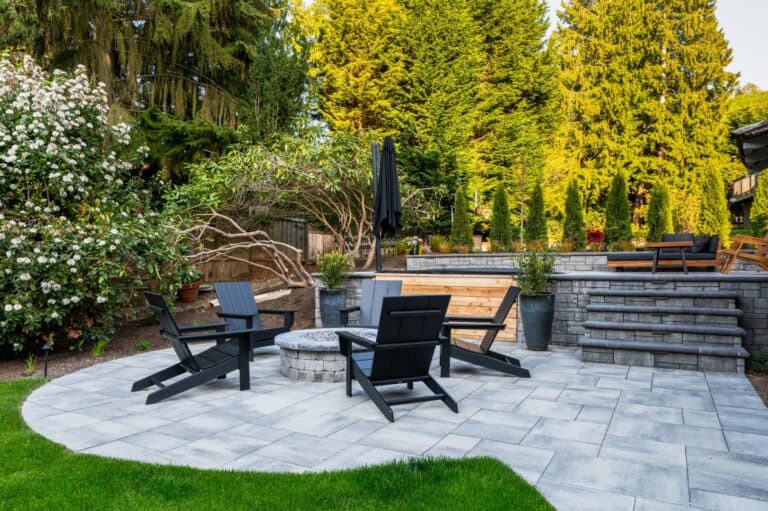
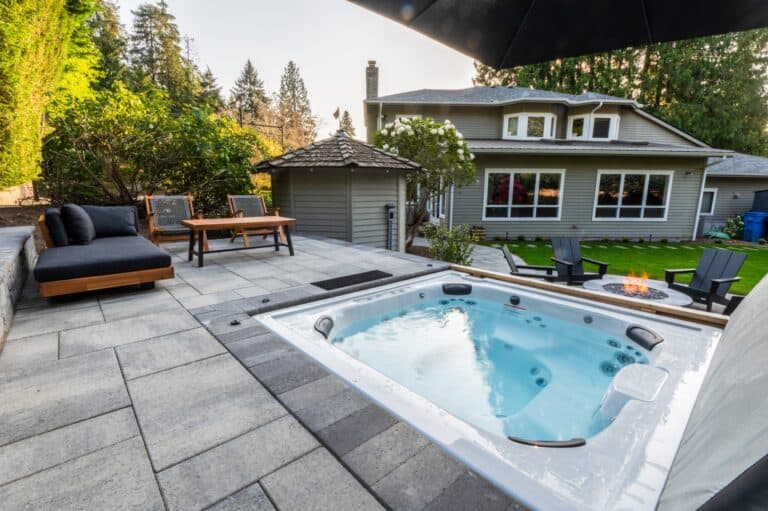
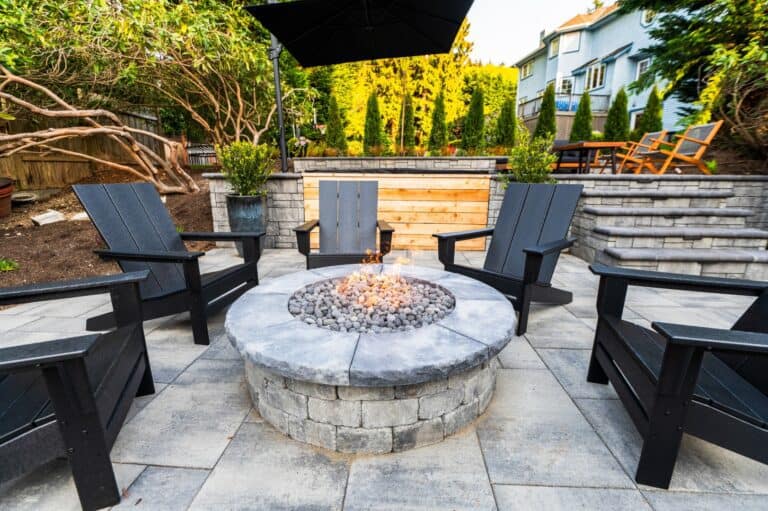
Taking the same scope of work from the five-year piecemeal example above — grading, drainage, patio, retaining wall, planting, lighting, irrigation, and a modest outdoor structure — a comprehensive design-build project would typically range from $55,000 to $110,000 on a Bellevue or Kirkland property, depending on site complexity and material selections.
That range looks comparable to — or even higher than — the piecemeal total at first glance. But the comparison breaks down in three important ways:
You’re comparing different outcomes. The designed project delivers a unified landscape where every element supports the others. The piecemeal total delivers five separate fixes that don’t relate to each other. The functional and aesthetic gap between those two results is significant.
The designed project doesn’t include rework costs. The piecemeal path almost always involves redoing some percentage of earlier work. In our experience, 15 to 25 percent of cumulative piecemeal spending goes toward correcting or replacing work that an integrated design would have gotten right the first time.
The designed project is done in year one, not year five. Five years of landscape enjoyment versus five years of living in a construction zone. That’s not a financial calculation — it’s a quality-of-life calculation. But it matters, especially for homeowners on properties they plan to be in for decades.
What Does the Piecemeal Approach Actually Look Like After Five Years?
We’ve walked hundreds of Eastside properties where the homeowner spent conscientiously over several years and still isn’t satisfied with the result. The pattern is remarkably consistent:
Mismatched materials. The patio pavers don’t complement the retaining wall stone because they were selected two years apart, possibly from different suppliers. The fence style doesn’t relate to the outdoor structure. The overall material language of the property tells no coherent story.
Drainage that was never resolved at the source. The year-three drainage fix addressed symptoms — a French drain here, a catch basin there — without regrading the property to direct water where it belongs. The fixes work partially, which means the homeowner still sees pooling after heavy November rains.
Plantings that don’t compose. Year-one boxwoods next to year-three ornamental grasses next to year-five Japanese maples. Each was a fine choice individually. Together, they create a visual catalog rather than a designed landscape. No layering, no seasonal progression, no intentional sight lines.
Infrastructure that conflicts. Irrigation lines that can’t reach beds installed after the system was designed. Lighting circuits that require extension runs because the transformer was sized for the original scope, not the expanded one. A patio that slopes slightly toward the house because the grade was set before the retaining wall changed the drainage pattern.
None of these problems are catastrophic. The property is functional. But the homeowner knows something is off — and the gap between what they spent and what they got is the cost of not having a plan.
Is Phasing a Designed Project Different From Piecemeal Fixes?
Yes — and this distinction matters enormously. Phasing a landscape project means creating a comprehensive design for the entire property and then building it in planned stages, typically over one to three years. The design is complete. The infrastructure (drainage, irrigation mainlines, electrical conduit) is installed in phase one to support everything that comes later. Each subsequent phase builds on what’s already there rather than working around it.
Piecemeal fixing means there is no master plan. Each project is its own scope, its own design (if there is one), and its own set of decisions. Future work is not anticipated. Past work is not referenced.
The financial difference is substantial. Phased projects avoid the mobilization multiplication, the rework costs, and the design incoherence that drive piecemeal spending upward. In our experience, a phased approach to a $90,000 total project costs roughly $95,000 to $105,000 spread over two to three phases — a 5 to 15 percent premium over doing it all at once, almost entirely attributable to remobilization. The same scope done piecemeal over five years without a master plan typically runs 20 to 40 percent more than the designed-all-at-once number, and delivers a meaningfully inferior result.
If budget requires spreading the investment over time, phasing with a design-build firm is the way to protect both your money and your outcome.
How Do You Know When Piecemeal Has Run Its Course?
A few signals suggest it’s time to stop patching and start designing:
You’re spending on the same problem twice. If the drainage fix from two years ago isn’t fully working, or the plantings from last spring didn’t survive because the irrigation wasn’t adequate, the incremental approach is creating waste.
You can’t describe a vision for the finished product. If someone asked you what your yard will look like when it’s “done,” and you don’t have an answer, there is no plan — and without a plan, spending more won’t get you closer to a result you love.
The total you’ve spent surprises you. Most homeowners we meet who’ve been fixing incrementally have never added up the cumulative cost. When they do, the number is almost always higher than they expected — and almost always in the range of what a designed project would have cost.
You’re avoiding the outdoor space instead of enjoying it. The yard is functional but not inviting. You use the patio but don’t love it. The plantings are alive but don’t inspire. This gap between “working” and “wonderful” is exactly what design closes.
If any of these resonate, a consultation with a design-build firm is the most efficient next step. Not to sell you a project — to give you a clear picture of what a designed approach would look like for your specific property, what it would cost, and how it compares to continuing the incremental path.