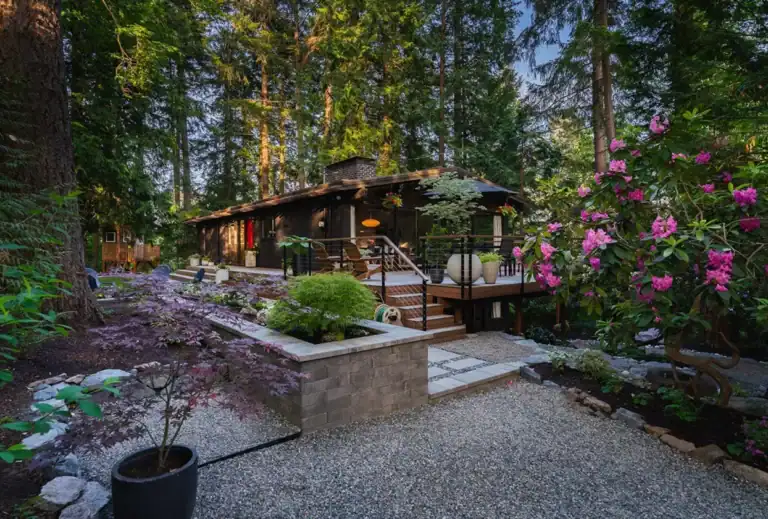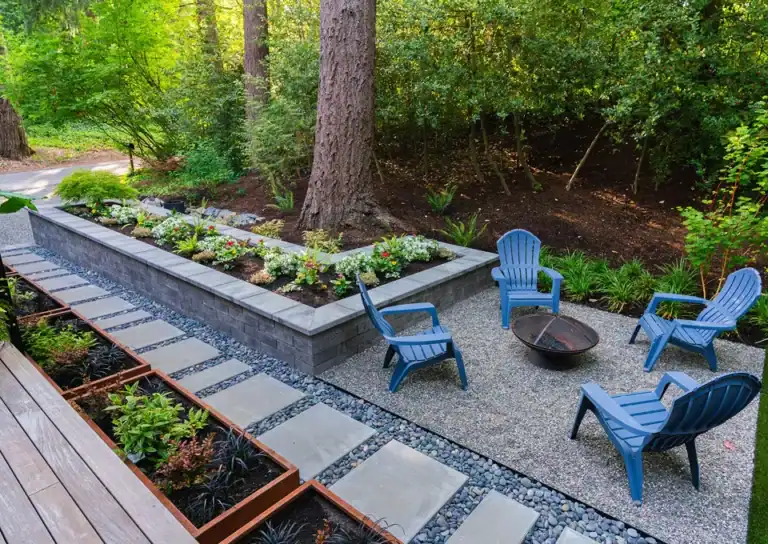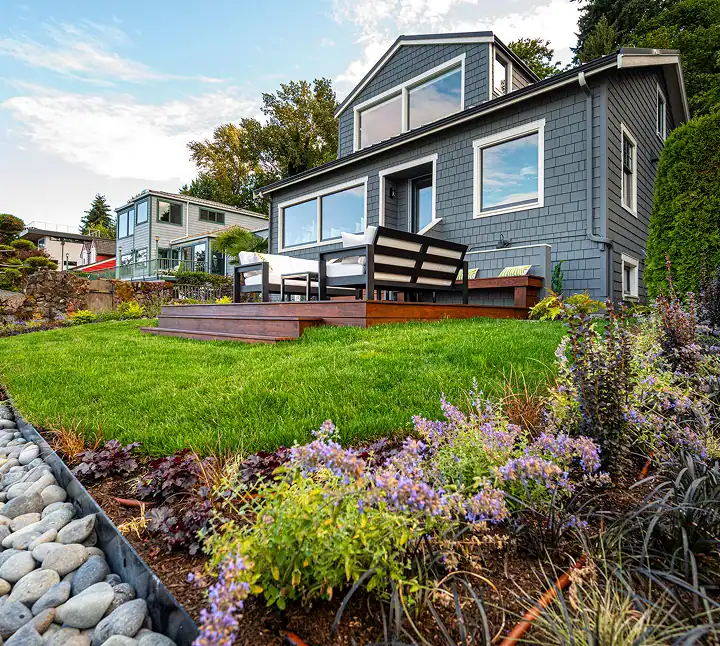
- Classic Landscaping's nursery-trade origins mean plant selection receives the same engineering-level attention as hardscape design — cultivar-specific, site-matched, and informed by decades of observed performance across 2,000+ Seattle-area landscapes.
- The difference between a construction-first company and a nursery-based company shows up most clearly three to ten years after installation, when plant choices either prove themselves or reveal their limitations.
- Cultivar selection — not just species selection — is the highest-leverage decision in a planting plan, affecting sun tolerance, mature size, maintenance demand, seasonal interest, and long-term form.
- Classic's team includes a Certified Professional Horticulturist, a Certified Arborist, and a Master Pruner — credentials that represent real plant science training, not marketing labels.
- Nursery-trade sourcing relationships give Classic access to specific cultivars and specimen-quality stock that construction-focused companies, sourcing from whatever is available at the wholesale yard, typically cannot match.
- Classic's one-year plant guarantee reflects confidence in the cultivar-to-site matching process — not a plan to replace failures.
What Does "Nursery-Trade Origins" Actually Mean for a Landscape Company?
Most landscape companies in the Seattle area started as construction businesses. Grading, walls, patios, drainage — the hard infrastructure that shapes a property. Plants came along as part of the scope, but the company’s expertise, its hiring, its training culture, and its quality standards all evolved around building things.
Classic’s history runs the other direction. The company started with plants — propagating them, sourcing them, understanding their growth habits, their soil preferences, their disease vulnerabilities, their performance across Pacific Northwest seasons. Construction capability was added over time, and today Classic operates as a full design-build company with serious hardscape expertise. But the lens through which every project is evaluated still starts with horticulture.
In practical terms, this means:
- Site assessments begin with living systems. Before discussing patio materials or wall heights, Classic’s team evaluates soil conditions, light patterns, existing root zones, canopy competition, and drainage behavior — because these determine what can thrive on the property, and the planting plan influences where hardscape elements should go, not the other way around.
- Designers carry plant knowledge into every meeting. Classic’s designers are knowledgeable in horticulture — they can discuss cultivar differences, seasonal behavior, mature growth habits, and site-specific plant performance in the same conversation where they’re designing a retaining wall or an outdoor kitchen. At least one team member holds a Certified Professional Horticulturist credential, and that expertise circulates through the entire design process.
- Sourcing relationships run deep. Decades in the nursery trade built supplier connections that a construction company entering the plant business simply does not have. Classic sources from growers we have worked with for years — relationships that give us access to specific cultivars, mature specimen plants, and stock quality we can verify before it arrives on your property.
Why Does Cultivar-Level Plant Knowledge Matter?
Here is where nursery-trade origins produce the most visible difference in your finished landscape.
A construction-first company specifies plants at the species level. The plan calls for “Japanese maple,” “rhododendron,” “sword fern.” The crew picks up whatever the wholesale yard has in stock that week. It looks fine at installation. The homeowner is happy.
Three years later, the Japanese maple — an Acer palmatum ‘Bloodgood’ — is scorching every July on a west-facing Woodinville slope because no one considered that ‘Bloodgood’ is more vulnerable to afternoon sun than ‘Tamukeyama’ or ‘Crimson Queen,’ which handle that exposure dramatically better in our climate. The rhododendron — a generic PJM hybrid — is leggy and sparse because it was placed in deep shade where a Rhododendron ‘Bow Bells’ or a native Rhododendron macrophyllum would have performed with more fullness and better bloom. The sword fern is fine. Sword ferns are almost always fine. But that is not a design decision — it is a default.
In our experience across 2,000+ Seattle-area landscapes, cultivar selection is the single highest-leverage decision in the planting plan — and it is the one most often left to whoever is loading the truck at the nursery yard. When your landscape company comes from the nursery trade, that decision gets the attention it deserves.
Some specific examples of what cultivar-level knowledge produces:
- Japanese maples. There are over 300 cultivars commercially available in the Pacific Northwest. Classic’s team knows which selections tolerate the afternoon sun exposure common on west-facing Eastside properties (‘Seiryu’ and ‘Viridis’ handle heat and light better than many purple-leaf varieties), which hold their fall color longest in our mild autumns, and which maintain structural form without heavy corrective pruning — a distinction that matters enormously when the tree is eight feet tall instead of three.
- Hydrangeas. Hydrangea macrophylla cultivars are everywhere on the Eastside, but bloom reliability varies dramatically by selection. ‘Endless Summer’ rebloom performance depends on winter severity; in a cold Sammamish microclimate, ‘Twist-n-Shout’ or Hydrangea paniculata selections like ‘Limelight’ or ‘Little Lime’ provide far more consistent summer presence because they bloom on new wood.
- Ornamental grasses. A planting plan that calls for “ornamental grass” can produce anything from a well-behaved Hakonechloa macra ‘Aureola’ (golden Japanese forest grass) that stays compact in part shade to a Miscanthus sinensis that self-seeds aggressively into neighboring beds. The difference between a grass that enhances a garden and one that becomes a maintenance headache is a cultivar conversation — one that nursery-trained designers have instinctively.
- Native and adapted conifers. The Pacific Northwest is conifer country, but not every conifer fits every residential site. A Thuja plicata (Western red cedar) left unpruned will dominate a 60-foot lot within 15 years. A Chamaecyparis obtusa ‘Gracilis’ (Hinoki cypress) provides similar evergreen screening at a scale that actually fits the space — but selecting it requires knowing the cultivar exists and understanding its 20-year growth trajectory.
This is not academic knowledge. It is the difference between a landscape that looks intentional in year ten and one that looks overgrown.
How Does a Nursery Background Change the Design Conversation?
When you sit down with a Classic designer, the conversation about plants is not an afterthought at the end of the hardscape discussion. It is woven into the design from the first meeting.
A construction-first company often designs the hardscape layout first — patio here, wall there, walkway connecting them — and then fills the remaining spaces with plants. The planting plan is constrained by the built elements. In our experience, this approach produces landscapes where the plants feel like decoration rather than an integrated part of the design.
Classic’s process inverts that sequence. The site’s living conditions — what the soil supports, where the sun falls at different seasons, which existing trees create root competition, where seasonal moisture collects — inform the overall design before hardscape locations are finalized. Sometimes the best place for a patio is determined by where the best planting opportunities are. Sometimes a retaining wall location shifts because the root zone of a mature Douglas fir demands more protection than the original layout provided.
This is what it means to design through a horticultural lens. The built elements and the living elements are designed as one system, not as separate layers assembled in sequence.
### What does this look like in practice?
On a recent Woodinville project, the homeowner’s priority was a private outdoor entertaining space surrounded by year-round greenery. A construction-first approach would have started with the patio footprint and the privacy screen locations. Classic’s team started with the site’s light and soil conditions, identified which areas could support the layered evergreen planting the homeowner wanted — Sarcococca confusa (sweet box) at ground level, Pieris japonica ‘Mountain Fire’ at mid-height, Cryptomeria japonica ‘Yoshino’ for tall screening — and then designed the hardscape around the zones where those plants would perform best. The result is a space where the plants and the structure feel like they belong together, because they were designed together.
That is a design decision a nursery-based team makes naturally. It is not something a construction-first company typically considers, because their training and their instincts run in the other direction.
What Happens When Plant Decisions Are Made by People Without Horticultural Training?
This is not a criticism of construction-focused companies. Many of them do excellent structural work. But plant decisions made without horticultural depth follow predictable patterns that Classic’s team sees regularly on properties we are called in to redesign:
- Overplanting for immediate impact. Plants spaced too close together look full at installation but become tangled, competitive, and unhealthy within three to five years — requiring expensive removal, thinning, or replacement.
- Species confusion. A planting plan that calls for Prunus laurocerasus (English laurel) when the space needed Prunus lusitanica (Portuguese laurel) — similar names, very different mature size, growth rate, and maintenance demand.
- Ignoring mature canopy competition. New plantings installed under or near existing large trees without accounting for root competition and light reduction. The new plants struggle from day one, and no amount of watering or fertilizing overcomes the structural disadvantage.
- Defaulting to availability. Whatever the wholesale yard has in stock becomes the plant list. This produces landscapes that look like every other landscape installed that month — because they are made from the same inventory, regardless of site conditions.
- No seasonal succession planning. A landscape that looks spectacular in June and bare in January because every plant was selected for summer bloom with no thought to winter structure, fall color, or early spring interest.
These are not catastrophic failures. They are slow-developing disappointments — the kind that make a homeowner look at their yard after five years and feel like something is off without being able to name exactly what.
How Do Nursery-Trade Credentials Show Up on Your Project?
Classic’s team includes specific horticultural credentials that directly affect the work on your property:
Certified Professional Horticulturist (CPH). This is a credential issued by the American Society for Horticultural Science. It requires demonstrated plant science knowledge — not just design sense, not just installation experience, but the biology, pathology, and ecology of plants. At least one member of Classic’s team holds this credential, and their expertise informs plant specifications across every project.
Certified Arborist and Master Pruner (Will Rak). Will holds ISA Certified Arborist credentials and a Master Pruner certification through Plant Amnesty. His role encompasses assessing existing trees on project sites, making preservation and removal recommendations based on tree health and structural integrity, and ensuring that new construction and new plantings do not compromise existing tree health. On properties with mature Pacific Northwest conifers — Douglas fir, Western red cedar, big-leaf maple — this expertise is the difference between protecting a tree worth thousands of dollars and inadvertently killing it through construction-related root damage.
Designers knowledgeable in horticulture. Classic’s design team brings training in ecological restoration, permaculture principles, and landscape architecture — disciplines that treat plant communities as systems rather than decoration. This means your planting plan accounts for how plants interact with each other, how they will compete for light and moisture over time, and how the composition will evolve across seasons and years.
These are not marketing labels. They are the qualifications that allow Classic to make the cultivar-level, site-specific plant decisions described throughout this article — and to stand behind them with a one-year plant guarantee.
What Does Classic's Plant Guarantee Actually Reflect?
Classic offers a one-year plant guarantee, and we rarely need to honor it. That is not a boast — it is a direct reflection of the nursery-trade knowledge behind every plant selection.
When you match the right cultivar to the right site conditions — correct light exposure, appropriate soil drainage, compatible root zone competition, proper planting depth and method — plants establish. They do not just survive; they grow into the role the design intended for them. The guarantee exists because we are confident in the matching process, not because we plan to replace failures.
Construction-first companies that do not have this horticultural depth in their selection process tend to experience higher plant mortality — not because their crews install improperly, but because the plant was wrong for the site before it left the truck. No amount of careful planting technique can overcome a cultivar mismatch.