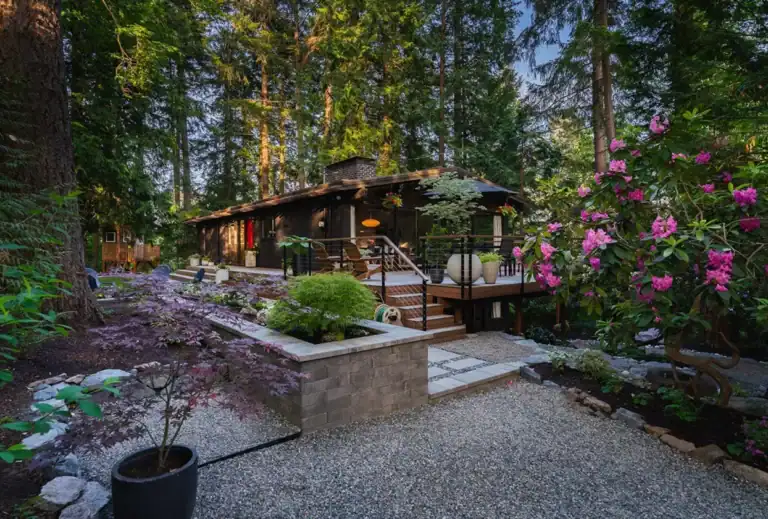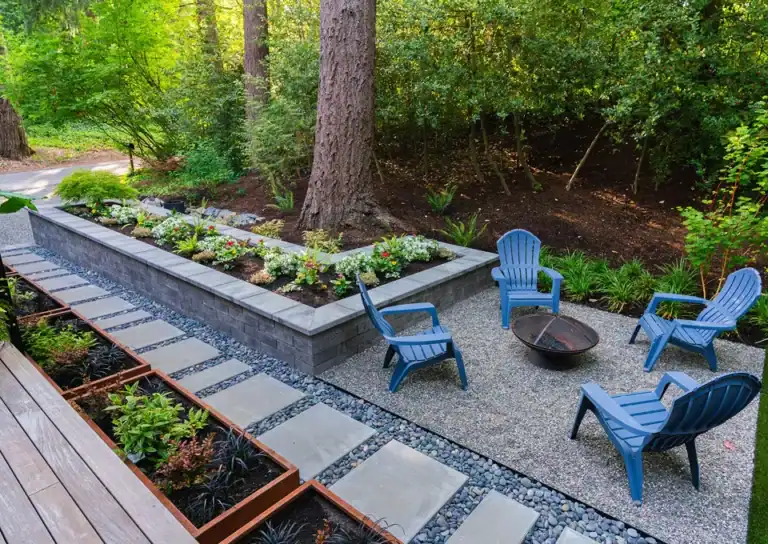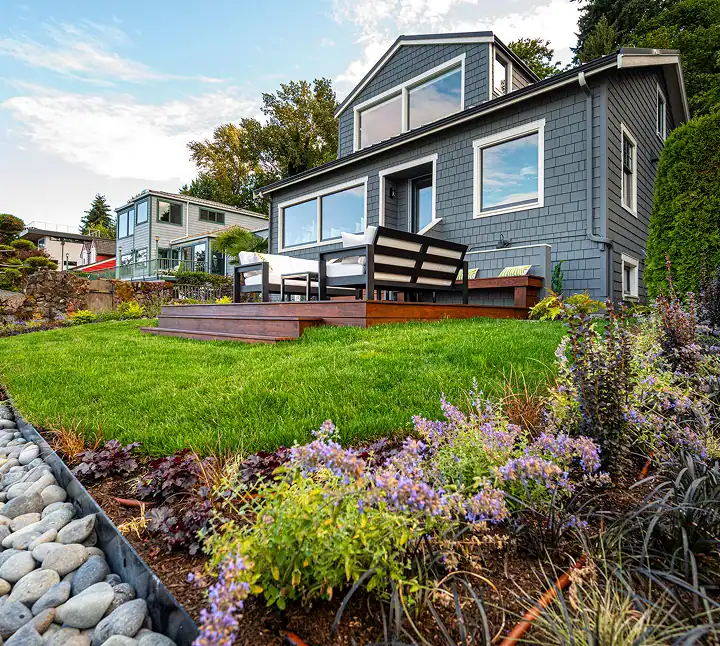
- Forty years of field work builds soil, plant, and construction knowledge that no certification, catalog, or technology can replicate — it requires thousands of projects across specific Eastside neighborhoods over real time.
- Plant selection based on decades of observed performance produces landscapes that improve with age rather than outgrowing their design intent within five years.
- Construction techniques refined through 2,000+ installations in Seattle's clay soils and freeze-thaw cycles result in hardscape that holds its integrity for decades, not just years.
- Permitting familiarity across 15 Eastside municipalities eliminates the revision cycles and review delays that cost homeowners weeks of construction season.
- Pattern recognition — the ability to read a site for problems before they manifest — is the single most valuable product of long experience, and the hardest for newer companies to replicate.
- Nursery-trade origins mean Classic evaluates every site through a horticultural lens first, treating living systems with the same engineering rigor as structural ones.
Forty years and 2,000+ landscapes produce something that no amount of talent, ambition, or technology can substitute: pattern recognition. Classic Landscaping has been building residential landscapes across Seattle’s Eastside since 1985 — long enough to watch three-year-old plantings mature into twenty-year canopies, long enough to see which retaining wall techniques survive decades of freeze-thaw cycles and which crack within five, long enough to know what’s under the soil in specific neighborhoods before breaking ground. This isn’t a company timeline. It’s an explanation of what accumulated local knowledge actually produces and why it matters for the homeowner choosing between a landscaping company in Seattle with decades of field data and one that’s still building its first generation of reference points. The difference shows up in your project — in the plants that thrive instead of struggle, the walls that hold instead of lean, and the design that improves with age instead of demanding replacement.
What Does a Company Actually Learn After 2,000 Landscapes?
Most homeowners assume experience means “they’ve done this before.” That’s true but incomplete. What 2,000+ projects across 15 Eastside cities really accumulates is a layered mental map — of soils, microclimates, municipal processes, plant performance, and construction behavior — that no catalog, textbook, or certification exam can replicate.
A newer company might know that clay soil drains poorly. Classic’s team knows how that clay behaves differently from one Eastside neighborhood to the next — which areas tend toward seasonal water table issues, where old construction fill creates unpredictable conditions below grade, and how soil composition changes as you move from the lakeshore up to the plateau. These are the kinds of distinctions that only surface after digging — literally — across four decades and thousands of sites. Every project deposits another data point into a collective understanding that makes the next project more precise.
What Does Classic Know About Seattle Soils That Newer Companies Don't?
Seattle’s Eastside is not one soil type. It’s a patchwork of glacial till, alluvial deposits, clay lenses, and construction fill that can change dramatically within a single city block. Classic’s crews have worked this ground since 1985, and the accumulated soil knowledge shapes every design decision before a shovel breaks the surface.
In our experience across thousands of Eastside properties, soil conditions vary dramatically — not just city to city, but block to block. The Eastside is a patchwork of glacial till, clay, alluvial deposits, and construction fill that can change within a single property. What 40 years of working this ground teaches is where to expect those changes and how to design for them before they become expensive surprises.
Our team approaches every site assessment carrying that accumulated knowledge — which neighborhoods tend toward drainage complexity, where soils resist root penetration without proper bed-level amendment, where old fill creates unpredictable conditions below grade, and where seasonal water patterns affect what you can build and how you need to build it.
A company in its first decade is still encountering these patterns for the first time. Classic’s team carries them as baseline assumptions — built into every site assessment before the design conversation begins.
How Does 40 Years of Plant Data Change What Goes Into Your Landscape?
Nursery catalogs describe how plants are supposed to perform. Forty years in the field shows how they actually perform — in specific Eastside conditions, over real time, through actual winters.
Classic’s origins are in the nursery trade. The company was founded in 1985 with horticultural roots, and that DNA persists in how our Certified Professional Horticulturist and team evaluate plant selections today. We don’t choose plants based on what looks good in a container at the nursery. We choose based on decades of observation about what establishes reliably, what maintains its form without excessive pruning, what handles the specific light and moisture conditions of your site, and what still looks right in year ten — not just year one.
Some examples of what 40 years of observation produces:
- Cultivar-level precision. There are dozens of Japanese maple cultivars available in the Pacific Northwest. In our experience, certain selections handle the afternoon sun exposure common on west-facing Eastside properties dramatically better than others — even within the same species. That distinction doesn’t appear in catalog descriptions. It appears after watching hundreds of installations age.
- Honest plant performance conversations. When a homeowner requests a specific plant that we’ve watched fail repeatedly in conditions matching their site, we say so. Not to override their preference — to give them information they can’t get from a photo on Instagram. Will Rak, our Certified Arborist and Master Pruner with a Plant Amnesty background, brings this perspective to every project where existing trees and new plantings need to coexist.
- Long-term form and scale predictions. A five-gallon shrub looks manageable at installation. Classic’s team can show you — from properties we built 15 or 20 years ago — exactly what that plant becomes at maturity and whether it will still fit the space, the sightlines, and the maintenance reality a decade from now.
This is the advantage of a landscaping company with genuine horticultural depth — not just design sense, but the botanical knowledge to make designs that improve with age rather than outgrow their intent.
Why Does Construction Experience Matter More Than Most Homeowners Realize?
Hardscape — patios, retaining walls, steps, outdoor structures — is where construction knowledge separates experienced companies from competent ones. The difference often isn’t visible at project completion. It shows up three, five, or ten years later.
Seattle’s climate is deceptively hard on hardscape. The combination of heavy seasonal rainfall, clay soils that expand and contract, periodic freeze-thaw cycles, and root pressure from the region’s aggressive tree canopy creates conditions that punish shortcuts.
Eric Lemus, Classic’s hardscape construction manager with over 20 years of industry experience and 10+ years with Classic, oversees every hardscape installation. But the knowledge he applies is institutional — accumulated across 2,000+ projects and four decades of observing how structures perform over time in specific Eastside conditions.
What that experience teaches:
- Base preparation is non-negotiable. The gravel base beneath a patio or walkway is invisible after installation, but its depth, compaction, and drainage capacity determine whether that surface stays flat or develops trip hazards within five years. Classic’s specifications for base preparation in clay-heavy areas like Kirkland exceed industry minimums — because we’ve observed over decades what industry minimums tend to produce after years of Eastside weather.
- Drainage behind retaining walls is where most failures start. A wall can look structurally sound for years while water accumulates behind it, building hydrostatic pressure that eventually causes tilting or failure. Classic designs drainage into every retaining wall system — not as an add-on, but as a structural component equal in importance to the wall itself.
- Material behavior varies by exposure. The same natural stone performs differently on a south-facing patio in Bellevue than on a north-facing pathway in Woodinville. Forty years of installations across different exposures, grades, and microclimates means Classic specifies materials based on observed performance — not manufacturer claims.
This is also why Classic operates as a design-build company. The designer who specifies a retaining wall system and the construction manager who builds it work in the same company, share the same institutional knowledge, and are accountable for the same long-term outcome. There is no gap between the design intent and the construction reality.
How Does Permitting Experience Save Homeowners Time and Money?
Every city on Seattle’s Eastside has its own permitting requirements, review timelines, and municipal preferences. Kirkland’s critical areas ordinance. Bellevue’s land use review process. Sammamish’s tree retention requirements. Mercer Island’s design standards. Each municipality has its own interpretation of state and county codes, its own preferred documentation formats, and its own review staff with individual expectations.
A company that has submitted hundreds of permit applications across these jurisdictions knows the practical reality — not just the published requirements, but the unstated expectations that determine whether an application moves through review smoothly or gets kicked back for revisions.
In Classic’s experience:
- Pre-application conversations with city staff save weeks. Knowing which cities welcome them, which departments to contact, and what level of documentation to bring to those conversations is knowledge that only comes from years of repeat interactions.
- Site plan accuracy reduces revision cycles. Classic’s designers produce permit drawings that anticipate the specific callouts each municipality wants to see — setback dimensions, tree protection zones, stormwater management details — because we’ve learned what triggers review comments in each city.
- Seasonal timing affects review speed. Certain Eastside cities experience permit review backlogs at predictable times of year. Knowing those patterns allows Classic to advise homeowners on project timing that avoids unnecessary delays.
For homeowners, this translates directly to time and money. Every week a project spends in permit review is a week it’s not under construction — and in Seattle’s limited construction season, that delay can cascade into months.
What Does "Pattern Recognition" Mean for Your Specific Project?
Perhaps the most valuable product of 40 years is the ability to see problems before they become problems. Newer companies react to site conditions as they encounter them. An experienced team recognizes early warning signs because they’ve seen the full progression — from subtle indicator to costly repair — hundreds of times before.
On a typical Classic site assessment, our team is looking at two things simultaneously: how this property can be transformed to elevate the homeowner’s outdoor lifestyle, and what site conditions need to be addressed to make that transformation last.
The first question is the one that matters most — how does this family actually use their outdoor space, and what would make it better? That’s the design conversation. But it’s informed by the second question, which is where experience becomes irreplaceable:
- Moss patterns on hardscape that indicate subsurface drainage issues, not just shade.
- Subtle grade changes near foundations that suggest settling — and the soil conditions causing it.
- Tree lean and canopy asymmetry that reveal prevailing wind loads relevant to structure placement.
- Neighbor property grading that will direct stormwater onto the project site after construction.
- Existing plant health as an indicator of soil conditions, light availability, and irrigation history — before any testing.
This is what 2,000+ projects teaches you that nothing else can. Not just how to build a landscape, but how to read a site so thoroughly that the design delivers the outdoor life the homeowner wants while accounting for conditions they didn’t know existed — conditions that, if addressed now, protect that investment for decades.
It’s also why Classic occasionally turns down projects that aren’t a good fit — because experience also teaches you to recognize when a project’s scope, budget, or expectations don’t align with what the site actually requires. Saying no to the wrong project is a skill that takes decades to develop and costs nothing compared to saying yes to a project that’s set up to disappoint.
How Do Nursery-Trade Origins Show Up in a Modern Landscape Company?
Classic was founded in 1985 with roots in the nursery trade. The company no longer operates a retail nursery, but that horticultural DNA persists in ways that matter for every project.
Most landscape companies are construction companies that happen to install plants. Classic is a horticultural company that happens to build. The distinction shapes everything from how we evaluate a site (plant health and soil biology first, hardscape second) to how we spec materials (living systems get as much engineering attention as structural ones) to how we guarantee outcomes (Classic’s one-year plant guarantee reflects confidence in plant selection, not just installation technique).
Our team includes a Certified Professional Horticulturist, a Certified Arborist, and a Master Pruner — credentials that represent real expertise, not marketing labels. When these professionals evaluate your property, they’re drawing on both formal training and decades of regional plant performance data that no certification program teaches.
This matters practically: the plants in your landscape are the only elements that change over time. Hardscape stays largely static. Plants grow, spread, compete for light and water, respond to seasonal cycles, and either thrive or decline based on how well they were matched to the site’s specific conditions. Getting plant selection right requires exactly the kind of deep local knowledge that only accumulates over decades of observation — and it’s the difference between a landscape that looks better every year and one that requires constant intervention to maintain the original design intent.