- Your designer — or dedicated field manager — serves as your primary point of contact from scope approval through final walkthrough — the person who knows your goals, your site, and the intent behind every design decision.
- During construction, Classic keeps you informed at meaningful intervals with prompt communication whenever scope, budget, or schedule changes — silence is never the default.
- You only make decisions that genuinely require your input — design intent, budget impacts, and timing tradeoffs. Crew logistics, supplier coordination, and construction sequencing are Classic's responsibility, not yours.
- Every scope or budget change is communicated promptly with context, options, and a professional recommendation — never a surprise at the end of the project.
- The design-build model eliminates the telephone game — your designer and construction manager share an office, which means field questions get answered with design intent, not interpretation.
- Communication preferences are set at the pre-construction meeting — channel, frequency, and contact person are tailored to you. The structure behind it stays consistent.
Why Does Communication Break Down on Landscape Projects?
Most landscape project frustrations are not about the work itself — they are about not knowing what is happening or why. In Classic’s experience across 2,000+ projects on Seattle’s Eastside, communication failures almost always stem from one of three structural problems:
The company has no single owner of the relationship. You talked to a salesperson, then a designer, then a project manager, then a crew foreman — and none of them have the full picture. Each handoff loses context. By the time you have a question about why a retaining wall moved 18 inches, no one remembers the conversation where you discussed the drainage constraint.
Updates happen only when there’s a problem. The company goes silent during the weeks when everything is on track, then suddenly calls with a change order or delay. The homeowner is left interpreting silence — is no news good news, or has the project stalled?
The homeowner is looped into every decision, regardless of whether they should be. Some companies involve the homeowner in decisions that are properly the builder’s responsibility — material substitutions that are functionally equivalent, crew scheduling logistics, subcontractor coordination. This creates the illusion of collaboration while actually shifting project management burden to the person who hired a company specifically to avoid it.
Classic’s communication model is designed to prevent all three.
Who Is Your Point of Contact at Classic?
Your designer is your primary point of contact from the moment you formally approve an initial scope of work through the day your project is complete. This is not a customer service representative or an office coordinator. It is the person who walked your property, heard your goals, developed the design, and understands the intent behind every decision in the plan.
During construction, you also interact with Classic’s construction team — specifically the project manager overseeing your build. But your designer remains the person who translates between your vision and the field reality. If something needs to change, your designer is the one who calls you, explains the situation, and presents options.
Why this structure matters:
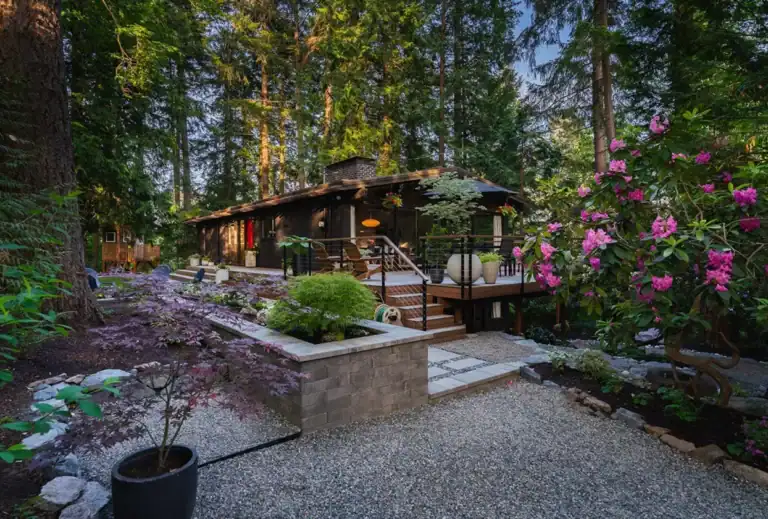
- Your designer knows why the Japanese maple was placed in that specific location — not just that it was in the plan
- When a field condition requires an adjustment, your designer can evaluate whether the change affects the design intent or is purely structural
- You never have to re-explain your goals or preferences to a new person mid-project
For homeowners in Bellevue and across the Eastside who have experienced the revolving-door staffing of larger companies, this single-thread model eliminates the most common source of project frustration.
What Does Communication Look Like During Design Development?
Design development is the phase between your on-site consultation and the construction start — the period when Classic turns your goals and your site’s conditions into a buildable plan. This phase typically runs 4-8 weeks, depending on project complexity, permitting requirements, and how quickly design reviews are scheduled.
What you will hear from Classic during this phase:
- Confirmation of scope and investment range. Before significant design time begins, your designer confirms the preliminary scope and the investment range discussed at the on-site consultation. No surprises.
- Design review invitations. You will be invited to 1-2 design review meetings (typically 60 minutes each) where Classic presents the proposed plan, walks through the reasoning behind key decisions, and asks for your feedback. These are working meetings with specific agendas — not open-ended brainstorming sessions.
- Specific questions when they arise. If the design team needs a decision from you — a preference between two retaining wall materials that affect budget differently, a question about whether you want to preserve a particular view line — they ask directly with the context needed to make the decision. No ambiguous “what do you think about…” emails.
- Timeline updates. If permitting, site analysis, or internal review pushes the design timeline, your designer communicates the new expectation and the reason for the shift.
What you will not hear during this phase:
- Requests to research materials or products yourself
- Pressure to make decisions faster
- Generic “checking in” calls with no specific purpose
In our experience, the best outcomes come from communication that is purposeful, not frequent for its own sake. Every touchpoint during design has a reason.
What Does Communication Look Like During Construction?
Construction is where communication matters most and where most companies fail. Crews are on your property. Equipment is arriving. Neighbors are noticing. The stakes feel higher because the work is visible and tangible.
Classic’s construction communication cadence:
- Pre-construction meeting. Before any crew arrives, you meet with your designer and project manager to walk through the construction sequence, discuss access logistics, review the anticipated timeline, and address any questions. This meeting covers what will happen first, what to expect in the first week, and how the site will be managed during construction.
- Progress updates. Classic’s standard is to keep you informed at meaningful intervals — what was completed, what is scheduled next, and any items that need your attention. The frequency is set during your pre-construction meeting based on your preferences and project complexity. For larger projects, this may include brief photo documentation.
- Prompt communication on changes. If the crew encounters an unexpected site condition — buried concrete, a utility line not marked on the locate, rock at a depth that changes the grading plan — your project lead communicates what was found, how it affects the plan, and what the options are. Classic does not proceed with changes that affect scope, budget, or design intent without your explicit approval.
- Access and scheduling coordination. Classic coordinates crew arrival times, equipment delivery, and any access requirements (gates, driveways, neighboring properties) directly. If something changes — a rain delay, a material delivery pushed back a day — you are informed with enough lead time to adjust if needed.
- Milestone confirmations. At key phase transitions — hardscape complete, planting underway, irrigation tested — your project manager confirms completion and previews the next phase.
What Classic handles without involving you:
- Crew scheduling and daily task assignments
- Material deliveries and supplier coordination
- Subcontractor scheduling for specialty trades (plumbing, electrical, masonry)
- Equipment logistics
- Routine quality checks during installation
These are properly the builder’s responsibility. Involving the homeowner in these operational details creates noise, not transparency.
What Decisions Will You Actually Need to Make?
Not every question that comes up during a project requires the homeowner’s input. In our experience, the decisions that genuinely need you fall into three categories:
Design-intent decisions. These affect how the finished project looks and functions. Examples: choosing between two stone colors, deciding whether to extend a patio by four feet, confirming a lighting placement that changes the evening atmosphere. Your designer presents these with visual references, cost implications, and their professional recommendation — you are never handed a decision without context.
Budget-impact decisions. Anything that changes the approved investment requires your explicit approval before Classic proceeds. If an unexpected condition adds cost, your designer presents the situation, explains the options (including the option to adjust elsewhere in the scope), and waits for your answer. There are no post-project surprises.
Timing decisions. If a change in weather, material availability, or permit timing creates a scheduling decision — start the patio phase now with the alternative stone that’s in stock, or wait two weeks for the original selection — you decide. Classic provides the tradeoff clearly: what you gain, what you lose, and what they would recommend.
Everything else — crew management, supplier negotiations, construction sequencing, code compliance verification — Classic handles without asking.
How Does Classic Handle Delays or Problems?
Every project encounters something unexpected. Seattle’s Eastside is particularly prone to site surprises — clay soil layers, buried debris from previous construction, drainage conditions that only reveal themselves after grading. The question is not whether something will come up, but how the company communicates when it does.
Classic’s approach:
- Prompt notification. You learn about the issue as soon as it is assessed — not at the next scheduled update, and not when it becomes a bigger problem.
- Context, not just facts. Your designer explains what was found, why it matters, and how it affects the project — not just “we found rock.” Instead: “We found a basalt shelf 14 inches below grade where the retaining wall footing is planned. This means the original footing design needs to be modified, which adds approximately $X to the structural budget. Here are the options.”
- Options with recommendations. Classic presents options — typically 2-3 viable paths — with cost implications and the team’s recommendation. You are not asked to figure out the solution. You are asked to choose between solutions that the design and construction team has already vetted.
- Written documentation. Any scope change or budget adjustment is documented in writing before work proceeds. This is not bureaucracy — it is protection for both sides.
The goal is to keep you genuinely informed without turning you into the project manager. You hired Classic so someone else would handle the complexity. Communication about problems should reduce your stress, not add to it.
How Is Classic's Communication Different From Other Companies?
The structural difference is the design-build model. When the same company designs and builds the project, communication flows through fewer people with more context. Your designer understands both the vision and the field reality. The construction manager can walk down the hall and ask the designer why a planting bed was shaped that way before deciding to adjust it.
Companies that separate design from construction — where you hire an independent designer and a separate contractor — create an inherent communication gap. The contractor interprets the design based on their own experience, which may differ from the designer’s intent. When questions arise, the homeowner becomes the middleman, relaying information between two companies that may never speak directly.
At Classic, the designer, the construction manager, and the horticultural team share an office, share project files, and share accountability. When something changes in the field, the person who designed it is part of the conversation before you are. You hear about the solution, not the internal debate.
For homeowners who have lived through a project where they became the unpaid coordinator between their designer and their contractor, this difference is not theoretical. It is the reason they called Classic.
What If You Want More (or Less) Communication?
Every homeowner has a different comfort level. Some want a photo every evening. Others prefer to hear from Classic only when there is a decision to make.
During the pre-construction meeting, Classic asks about your communication preferences:
- Preferred channel. Phone, email, or text — and whether that preference changes for urgent items versus routine updates
- Update frequency. Weekly is the default; some homeowners prefer twice weekly during active construction
- Who should be contacted. Both decision-makers, or one primary contact who relays to the other
- Timing preferences. Morning updates before you leave for work, or end-of-day summaries
Classic adapts within the structure. The structure itself — a dedicated point of contact, milestone confirmations, prompt change communication, written documentation — does not change. That is what keeps the project on track regardless of whether you prefer daily photos or weekly summaries.