- National data supports landscaping as a high-ROI investment: NAR reports 100-217% cost recovery for landscape maintenance, and NALP research shows a well-designed landscape adds 10-12% to home value — but Seattle-specific conditions shift these numbers meaningfully.
- Curb appeal is the highest-leverage spend at any price point: A $3,000-$8,000 curb appeal refresh — professional pruning, fresh mulch, seasonal color, clean edging — reliably returns 2-4x the investment because listing photos are the first showing.
- Not all landscape investments are ROI plays, and that is fine: Outdoor kitchens, water features, and highly personalized designs are quality-of-life investments that support value secondarily — understand the distinction before you set expectations.
- Drainage and structural work is Seattle's hidden ROI category: On Eastside properties with clay soils and slopes, resolving drainage issues removes the single most common reason buyers renegotiate price downward after inspection.
- Landscape value requires ongoing maintenance to hold: A $50,000 landscape neglected for five years may need $15,000 in remediation — the investment compounds only when paired with professional care.
- The gap between interior and exterior quality is where ROI lives: If the kitchen has been remodeled but the yard looks like 2005, landscaping is the most impactful dollar you can spend before listing.
What Does the National Data Actually Say About Landscaping and Home Value?
The two most frequently cited sources are the National Association of Realtors (NAR) and the National Association of Landscape Professionals (NALP). Here is what they report and what to understand about the numbers.
NAR’s Remodeling Impact Report (2023): Landscape maintenance — professional pruning, lawn care, mulching, and seasonal cleanup — recovers an estimated 100% of cost at resale. Standard lawn care services recover 217% of cost, making them the single highest-ROI home improvement in NAR’s data. An overall landscape upgrade recovers approximately 150% of investment.
NALP’s research: A well-maintained, professionally designed landscape can add 10-12% to a home’s value. This figure has been consistent across multiple studies and is widely referenced in real estate appraisal practice.
Virginia Tech research (published in the Journal of Environmental Horticulture): Sophisticated planting designs with a mix of plant sizes and types increased perceived home value by 10.4-12.7% compared to homes with minimal landscaping.
These are useful baselines. But they aggregate data from markets as different as Phoenix and Portland, on homes ranging from $200K to $2M. In Greater Seattle — where clay soils, heavy rainfall, tree canopy, and a compressed construction season all affect what a landscape costs and how it performs — the local picture is more specific.
Which Landscape Investments Return the Most in Seattle?
Not all landscape spending is equal. In Classic Landscaping’s experience across 2,000+ Eastside projects since 1985, certain categories of work consistently move perceived value more than others.
### Curb appeal: The highest-leverage dollar you can spend
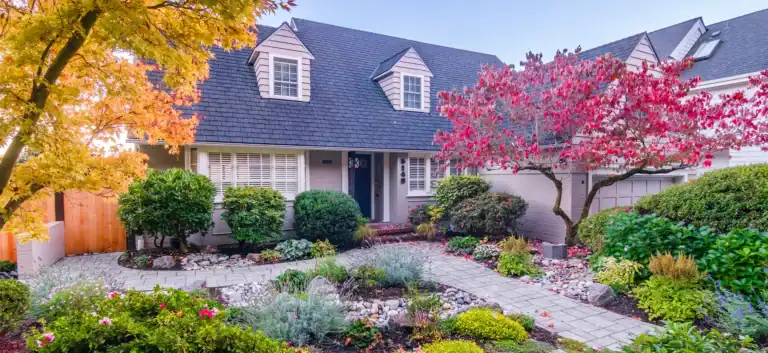
Curb appeal sets the price anchor before a buyer walks through the front door. In a market where listing photos are the first showing, a clean front landscape with defined beds, healthy plantings, and a clear entry path does more per dollar than almost any other improvement.
What this includes in practice:
- Professional pruning — not hedge-trimmed into balls, but properly shaped to reveal the home’s architecture
- Fresh bark mulch (3-inch depth, dark hemlock or aged compost) in all visible beds
- Seasonal color at the front entry — Helleborus for winter, Erica for spring, annual rotations for summer
- Clean edging between lawn, beds, and hardscape
- Pressure-washed walkways and driveway
Cost range: $3,000-$8,000. Estimated value impact: $10,000-$25,000. This is the tier where ROI is most reliably strong because the investment is small and the visual impact is immediate.
### Defined outdoor living space
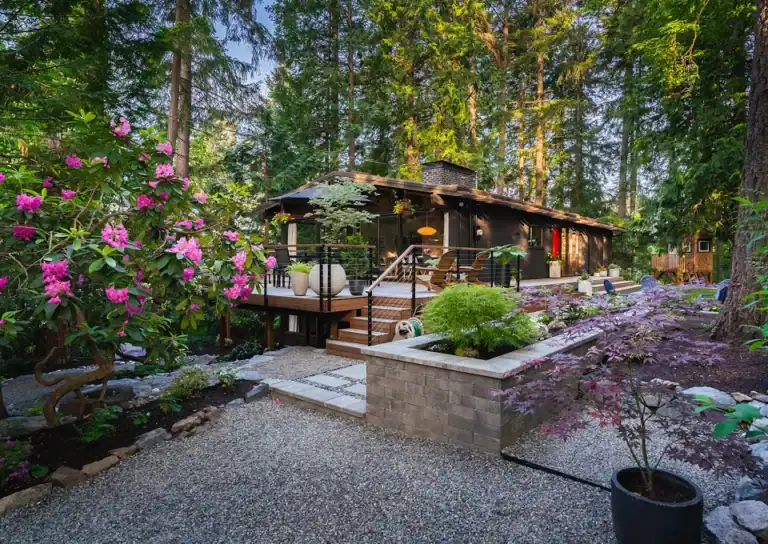
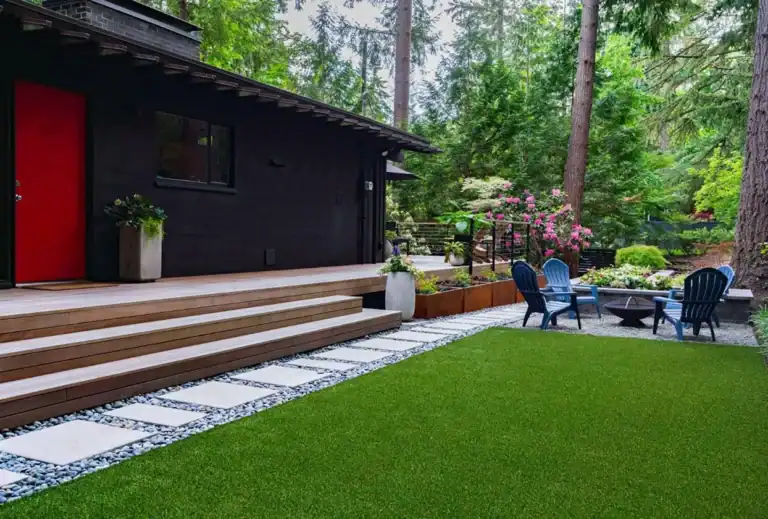
In Seattle’s real estate market, a usable outdoor area — a patio, a fire pit, a covered seating zone — effectively extends the home’s livable square footage. Buyers at price points above $600K on the Eastside expect a backyard that functions as a room, not just a lawn.
A paver patio with integrated seating, landscape lighting, and privacy plantings transforms how a property photographs and how buyers perceive it during showings. In Bellevue and Kirkland, where lot sizes are often modest and every square foot matters, a well-designed outdoor living area can shift a home from “nice interior, nothing outside” to “complete property.”
Cost range: $15,000-$50,000 depending on materials and complexity. Estimated value impact: $25,000-$75,000+ on properties above $1M.
### Drainage and structural work: Invisible but foundational
This is where the Seattle market diverges from national data. On Eastside properties with clay-heavy soils, slopes, and seasonal water tables, unresolved drainage problems are red flags in home inspections. A professionally engineered drainage system or properly constructed retaining wall does not photograph well, but it removes a negotiation liability that can cost sellers tens of thousands.
Buyers — and their inspectors — notice standing water, foundation moisture, and retaining walls that lean. Addressing these issues before listing eliminates the single most common reason Seattle-area buyers renegotiate price downward after inspection.
### Mature plantings and trees
Trees are the only landscape element that appreciates in value over time. The Council of Tree and Landscape Appraisers has documented that mature trees can contribute $1,000 to $10,000 each to property value, depending on species, health, and placement. In Seattle’s tree-canopy neighborhoods — from Mercer Island to Woodinville — a property with healthy, well-maintained mature trees is perceived as more established and more desirable than one with young or sparse plantings.
The caveat: tree value depends heavily on species, condition, and placement relative to structures. A healthy Western red cedar or Douglas fir in the right location adds value. An overgrown Prunus laurocerasus (English laurel) blocking the view or crowding the foundation does the opposite.
Which Investments Are Quality-of-Life Decisions That Support Value Secondarily?
This is the honest part of the conversation that most ROI articles skip. Some landscape investments are excellent decisions for how you live in your home, but their return at resale is uncertain or modest. Understanding this distinction matters because it changes how you think about the investment — and that is a healthier starting point than chasing ROI numbers that may not materialize.
### Outdoor kitchens and elaborate entertaining spaces
An outdoor kitchen with built-in grill, countertops, and a covered structure can cost $30,000-$80,000+. Buyers appreciate these features, but they are highly personal — the next owner may not cook outdoors, may not entertain the same way, or may want a different layout. In Classic’s experience, outdoor kitchens add value in the sense that they make a property more attractive, but they rarely return dollar-for-dollar at resale the way simpler improvements do.
The better framing: if you plan to live in the home for five or more years and you will use the outdoor kitchen regularly, the investment makes sense as a lifestyle decision. The value it adds at resale is a bonus, not the business case.
### Water features
A well-designed water feature adds beauty and sound. It also adds perceived maintenance — and in Seattle’s rainy climate, some buyers wonder why they need more water in their yard. Water features can enhance a property’s appeal to the right buyer, but they can also make a segment of buyers nervous about upkeep. This is a quality-of-life investment for people who value it, not a reliable ROI play.
### Highly personal or stylized designs
A Japanese-inspired garden, an extensive edible garden, or an ornamental grass meadow can be stunning and deeply satisfying to live in. At resale, they appeal strongly to some buyers and not at all to others. The more personalized the design, the narrower the audience — which can mean fewer competing offers and less upward price pressure.
For homeowners who plan to enjoy their landscape for years, this is not an argument against personal expression. It is simply an argument for understanding that personalized landscapes are investments in your life, with resale value as a secondary benefit rather than the primary justification.
How Does Seattle's Market Make Landscaping Value Different From National Averages?
Several factors specific to the Pacific Northwest shift the ROI equation in ways that national data does not capture.
### Outdoor living is a 12-month proposition
Seattle’s mild winters — rarely below freezing, with long stretches of 45-55 degree days — mean outdoor spaces are usable more months per year than buyers from other regions might assume. Covered patios, fire pits, and landscape lighting extend the outdoor season further. Buyers here factor outdoor living into their purchase decisions year-round, which makes landscape investment more impactful on perceived value than in markets with four months of snow.
### Soil and drainage conditions add cost — and value
The clay-heavy soils across Seattle’s Eastside — from Sammamish to Bothell — create drainage challenges that are expensive to solve but critical to property integrity. A home with professionally managed drainage is worth meaningfully more than one with standing water in the yard or moisture in the crawl space. This is a Seattle-specific dynamic: in sandy-soil markets like Phoenix, drainage is rarely a major factor. Here, it can be a deal-breaker.
### Tree canopy is part of neighborhood identity
In established Eastside neighborhoods, mature trees define the streetscape. Properties that have lost trees — to storms, disease, or aggressive clearing — look conspicuously different. Maintaining existing tree health through certified arborist care (Classic’s team includes a Certified Arborist and Master Pruner) and replacing lost trees with appropriate species protects both property value and neighborhood fit.
### Construction costs are higher, but so are home values
Seattle-area landscape construction costs run 15-30% above national averages due to labor rates, material transport, and the structural work required by our soil and slope conditions. But home values are also well above national averages. A $20,000 landscape investment on an $850,000 home represents 2.4% of the property’s value — a relatively modest commitment that can shift perceived value by 5-10%.
How Do You Think About Landscaping ROI When You Are Not Selling?
Most people reading this article are not listing their home next month. They are considering a landscape investment and want to know whether it makes financial sense in addition to making their life better. This is the right question, and the honest answer is more nuanced than “landscaping always increases home value.”
What holds value reliably:
- Healthy, well-maintained plantings and trees
- Functional hardscape (patios, walkways, retaining walls) built with durable materials
- Drainage infrastructure that protects the home’s foundation
- A design that is cohesive with the home’s architecture and the neighborhood
What depreciates without maintenance:
- Lawns revert within a season of neglect
- Plantings overgrow, decline, or die without care
- Hardscape settles, cracks, or stains without periodic attention
- Irrigation systems fail if not winterized and serviced annually
The most important insight from Classic’s 40 years building Seattle landscapes: landscape value is not a one-time event. It is the cumulative result of good design, quality construction, and ongoing maintenance. A $50,000 landscape that is maintained professionally retains and grows its value. The same $50,000 landscape neglected for five years may need $15,000 in remediation just to get back to where it started.
If you are investing in a design-build project with Classic, we build landscapes intended to perform over decades — species selected for Seattle conditions, materials chosen for our freeze-thaw cycles and rainfall, and drainage engineered for our clay soils. That long-view approach is what makes the investment hold.
What Should You Actually Do With This Information?
If you are planning to sell within 12 months, focus your landscape investment on curb appeal and closing the gap between your home’s interior quality and its exterior presentation. This is where ROI is most predictable and where the data is most consistent. We have written a detailed guide to pre-sale landscape strategy that covers scope, timing, and financing.
If you are planning to stay in your home for years, invest in the landscape you want to live in — and understand that the value you build is real but depends on continued maintenance. A well-designed landscape makes your daily life better today and supports your home’s value over time. Those are two separate benefits, and both matter.
If you are somewhere in between — considering a move in 2-3 years — the design-build model lets you enjoy the improved space now and sell at a higher price later. The key is designing with enough universality that the next owner sees value rather than a project they need to undo.
In all three scenarios, the first step is the same: an honest assessment of what your property needs, what the neighborhood expects, and what your investment range supports. Classic Landscaping has been having that conversation with Eastside homeowners since 1985 — and we are straightforward about what makes sense and what does not.