- The order you invest in landscape elements matters more than the total dollar amount — foundation work (drainage, grading, soil prep) must come first because correcting it after the fact typically costs two to three times as much.
- Specimen trees and structural evergreens are among the highest-impact-per-dollar investments because they create immediate maturity that smaller plants take five to seven years to achieve.
- A master plan for the entire property — even when building in phases — prevents the most expensive budget mistake: discovering that one phase conflicts with another and requires rework.
- Irrigation infrastructure installed during construction costs dramatically less than a retrofit, and the plant losses from inadequate watering in the interim compound the savings gap further.
- Decorative planting in secondary beds, outdoor kitchen features, and lawn can all be deferred without penalty as long as the grading, drainage, and utility rough-ins are completed in Phase 1.
- Being transparent about your budget range with the designer leads to better sequencing, more realistic phasing, and a result that delivers more value per dollar than withholding the number and hoping for a lower bid.
Why Does the Order of Investment Matter More Than the Total Budget?
A $75,000 landscape invested in the right sequence will outperform a $100,000 landscape where money was spread evenly or allocated to the wrong things first. The reason is structural: certain landscape elements are prerequisites for others, and disturbing finished work to address something that should have been done earlier is one of the most expensive mistakes in residential construction.
Here’s a pattern Classic’s crews see regularly on the Eastside. A homeowner installs a beautiful paver patio, then realizes a year later that the grading around it sends water toward the house. Correcting the drainage means tearing up the patio edge, regrading the surrounding soil, installing a French drain or catch basin, and re-laying the pavers. That’s not a maintenance issue — it’s a sequencing issue. The drainage work should have come first. It would have cost a fraction of what it costs now.
This principle applies across every landscape element. Soil amendment before planting. Grading before hardscape. Irrigation infrastructure before lawn installation. The elements that go underground or create the contour of your property have to happen first, whether or not they’re the most exciting part of the project.
Which Landscape Elements Deliver the Most Impact Per Dollar?
Not every dollar produces the same visible result, and understanding this helps homeowners make trade-offs that feel less like compromise and more like strategy.
### Foundation Elements — Invisible but Non-Negotiable
These are the elements that don’t photograph well and won’t impress your neighbors at first glance. But without them, everything built on top will underperform or fail.
Drainage and grading. In the clay-heavy soils west of the Cascades — particularly in Kirkland, Bellevue, Redmond, and Sammamish — water management is the single most important foundation investment. Proper grading away from the house, subsurface drainage where needed, and swale or rain garden design for natural water movement protect the structure, prevent erosion, and create the conditions that plants need to establish. In Classic’s experience, drainage corrections after the fact typically cost two to three times what they would have cost during initial construction because of the demolition and restoration work involved.
Soil preparation. The native clay soils across most of the Eastside compact heavily, drain poorly, and don’t support the root development that landscape plants need. Amending the top eight to twelve inches of soil in planting beds — incorporating organic compost and improving drainage characteristics — is one of the highest-return investments in any landscape project. Well-prepared soil means plants establish faster, require less supplemental watering within two to three years, and develop the root systems that make them resilient through dry summers. Skipping soil prep to save on the front end means slower growth, higher replacement rates, and irrigation dependency that never goes away.
Irrigation infrastructure. Installing an irrigation system before planting — and before hardscape, where lines need to cross under patios or walkways — is dramatically less expensive than retrofitting one later. Trenching through an established lawn or running lines under a finished patio is the kind of avoidable cost that proper sequencing eliminates entirely.
### High-Impact, High-Visibility Elements
Once the foundation is set, certain investments produce disproportionate impact relative to their cost.
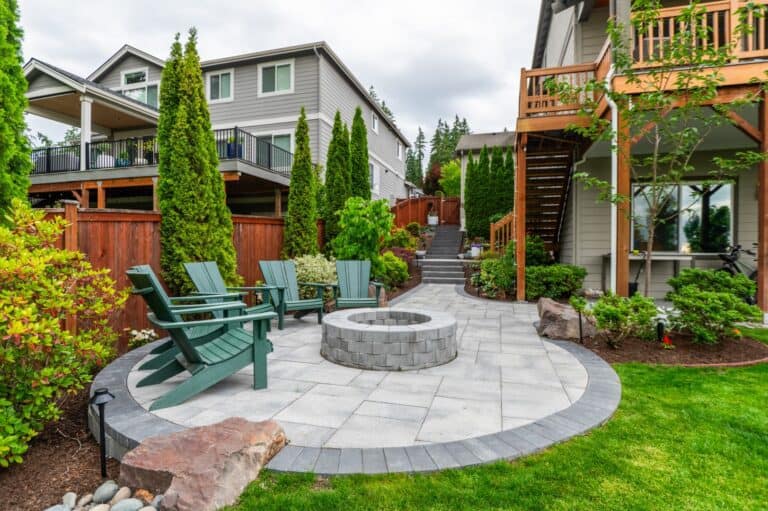
Anchor planting — specimen trees and structural evergreens. A single well-placed specimen tree — a large-caliper ‘Autumn Blaze’ maple, a multi-stem vine maple, or a mature Japanese maple — does more for the feel of a landscape than almost any other single investment. These trees take years to grow. Buying a larger specimen now, even at a premium, means your landscape looks established immediately rather than in five to seven years. The same applies to structural evergreens — a well-sited group of ‘Emerald Green’ arborvitae or a mature ‘Viridis’ Japanese laceleaf commands a space in a way that dozens of smaller plants cannot.
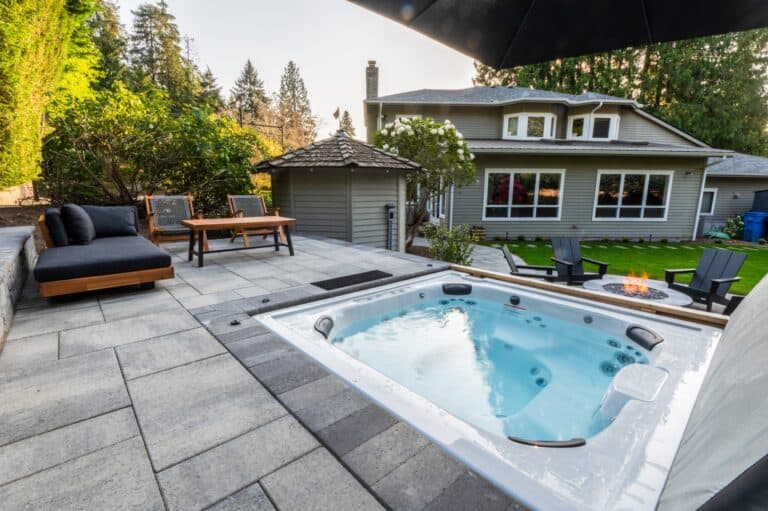
Primary outdoor living surface. Whether it’s a natural stone patio, a paver dining terrace, or a well-built composite deck, the primary surface where your family actually gathers is usually the highest-impact hardscape investment. In Classic’s projects across the Eastside, the outdoor living surface is the element homeowners use most and notice most. It defines how the yard functions, not just how it looks.
Landscape lighting. Lighting is one of the most under-prioritized elements we see, and one of the highest-impact-per-dollar investments once the bones of the landscape are in place. A professional-grade low-voltage system — path lighting, uplighting on key trees, and step or wall wash lighting on the patio — extends the usable hours of your outdoor space through Seattle’s long fall and winter evenings. Running the wiring during initial construction, even if the fixtures go in later, avoids trenching through finished beds and hardscape.
### Elements That Can Wait Without Penalty
This is where strategic patience saves real money — elements that are desirable but not foundational, and that don’t become more expensive if deferred by a season or two.
Decorative planting in secondary beds. The beds along the side yard, the strip between your property and the neighbor’s fence, the area around the utility boxes — these can be planted in a later phase with seasonal color, groundcover, or filler shrubs without affecting the landscape’s core function or appearance.
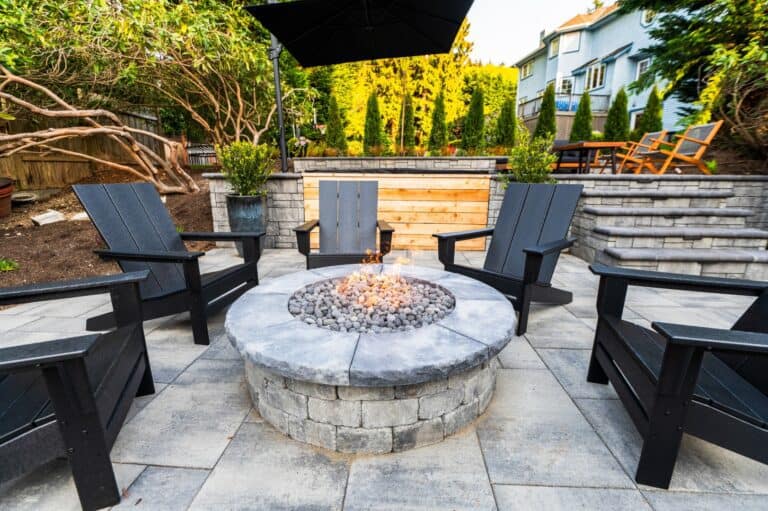
Outdoor kitchen and built-in features. If the patio is sized and graded correctly from the start, an outdoor kitchen, fire pit, or water feature can be added in a subsequent phase. The key is designing for the future addition now — running gas, water, and electrical stubs during initial construction — so the later addition connects cleanly instead of requiring demolition.
Fence and screen planting. Privacy screening with arborvitae, laurel, or other hedge material is often a high priority for homeowners, but it’s also one of the easiest elements to add later. As long as the irrigation zone is planned for it, the screening can go in a season or two after the primary landscape is complete.
Fine grading and lawn installation. If the rough grading and drainage are correct, lawn can be the last element installed. Sod or seed goes down quickly and establishes within weeks. Deferring lawn to the final phase also protects it from construction traffic — a common frustration when lawn goes in too early and gets compacted or damaged by crews finishing adjacent work.
How Should You Think About Phasing a Landscape Project?
Phasing is the practical application of sequencing. Not every homeowner can — or should — do everything at once. The question is how to divide the work into phases that each stand on their own while building toward the complete vision.
In Classic’s design-build process, the designer develops a master plan for the entire property regardless of whether the homeowner intends to build it all at once. That master plan is the map. Phasing is the route.
A well-structured phasing plan follows three principles:
Phase 1 handles everything underground and everything structural. Drainage, grading, retaining walls, irrigation mainline and zone valves, and utility rough-ins for future features. This is the least glamorous phase but the one that prevents the most expensive mistakes.
Phase 2 builds the primary living spaces and anchor planting. The patio or deck, the primary walkways, the specimen trees and structural evergreens that define the landscape’s framework. After Phase 2, the property looks and feels like a finished landscape — even though more can be added later.
Phase 3 adds refinement. Secondary planting, decorative features, the outdoor kitchen, the fire pit, the lawn, the final layer of landscape lighting. Each of these elements enhances what’s already there without requiring any rework of earlier phases.
The gap between phases can be a few weeks or a few years. The master plan holds it all together. Homeowners who invest in that plan upfront — even when they’re building in phases — avoid the most common budget-killing mistake: designing each phase independently and discovering that Phase 2 conflicts with what Phase 1 already built.
What Are the Most Common Budget Mistakes Classic Sees on Eastside Properties?
After four decades of building landscapes across Seattle and the Eastside, certain patterns come up again and again.
### Spending on Finishes Before Fixing the Foundation
The most expensive mistake is cosmetic investment over functional investment. Flagstone patios over poorly graded soil. Extensive planting in unamended clay. Outdoor structures on sites with unresolved water issues. Every one of these eventually requires correction, and correction means paying twice.
### Designing Phase by Phase Instead of Master Planning First
Homeowners who skip the master plan and design each phase independently end up with a landscape that feels assembled rather than designed. The walkway from Phase 1 doesn’t align with the patio from Phase 2. The drainage solution from Phase 3 conflicts with the retaining wall from Phase 1. A master plan costs a fraction of the rework it prevents.
### Choosing Materials Based on Price Per Square Foot Alone
A less expensive paver installed on an inadequate base will cost more over ten years than a premium paver installed correctly. In Seattle’s freeze-thaw cycles and clay soils, the base preparation and installation method matter more than the material itself. Classic’s crews build to the same base standards regardless of the surface material — because the ground underneath doesn’t care what’s on top of it.
### Deferring Irrigation to Save Money Now
Retrofitting irrigation after planting means trenching through root zones, disturbing established plants, and running lines in suboptimal paths because the ideal routes are already occupied. The cost difference between installing irrigation during construction versus retrofitting it two years later is significant — and the plant losses from inadequate watering in the interim compound the cost further.
How Does the Budget Conversation Work at Classic?
One of the most productive conversations in Classic’s design-build process happens before any design work starts. The designer asks about budget — not to upsell, but to understand the scope of what’s realistic and to start the sequencing conversation early.
In our experience, homeowners who are transparent about their budget range get better results than homeowners who hold the number back. When the designer knows the budget, they can prioritize the elements that matter most to the homeowner within that range, sequence the work correctly, and identify what to phase for later. When the budget is unknown, the designer either designs to an assumed number — which may be too high or too low — or produces a plan that looks beautiful on paper but doesn’t match what the homeowner is prepared to invest.
This isn’t about spending more. It’s about spending deliberately. A homeowner in Kirkland with a $50,000 budget who invests it in the right sequence — drainage, soil, primary patio, anchor trees, and irrigation — will have a landscape that looks and performs better in year three than a homeowner who spread $70,000 across every element without prioritizing the foundation.