- Lawn care looks after grass; landscape maintenance looks after the whole yard, from pruning and beds to irrigation and leaves.
- Estate gardening goes further: seasonal color in pots, bulbs and annuals, deadheading and detailed work on ornamental trees and shrubs.
- The biggest difference between lawn care and landscape maintenance is pruning: we schedule pruning by plant type, so each species is cut at the right time of year.
- Every garden we maintain has a written care plan, reviewed every year and adjusted when the garden needs it.
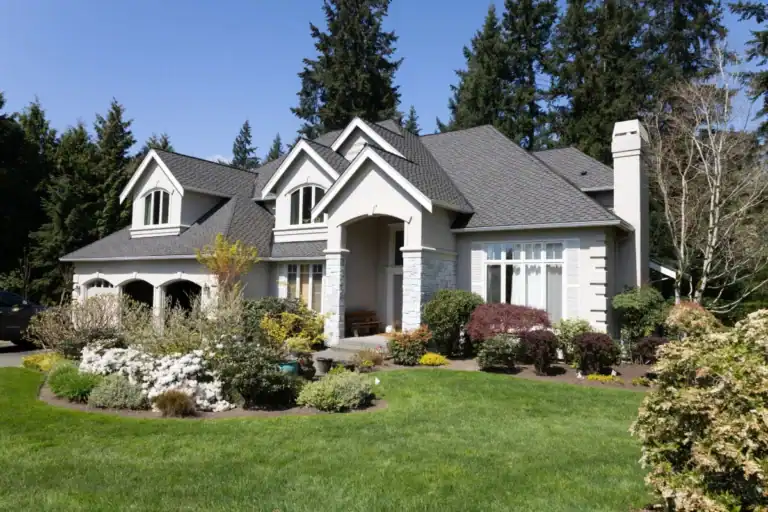
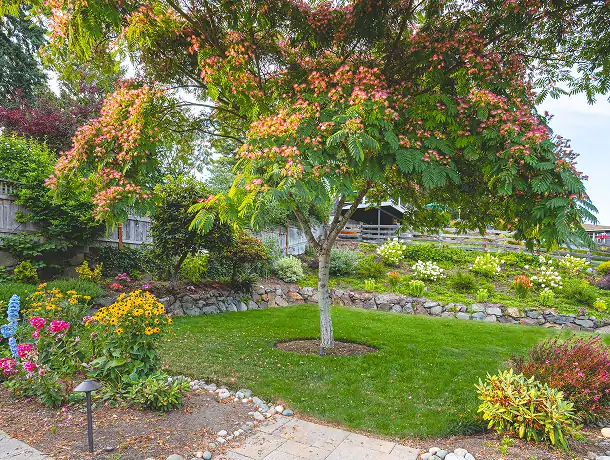
Three houses on the same street. The first is mostly lawn: a rectangle of grass front and back, a hedge along the property line, a couple of shrubs by the door. The second has almost no lawn at all. Beds wrap the house, full of rhododendrons, hydrangeas, a Japanese maple, ferns under the trees, grasses along the walk.
The third looks like the second, until you get closer. The pots by the front door change color with the seasons. There are tulips along the path in April and annuals in the same spot by June. Nothing in the beds is ever past its bloom for long.
Same street, same weather. The first house needs about the same thing every week. The second needs something different almost every month. The third needs something different almost every visit. So what does each of them actually need?
What's the difference between lawn care and landscape maintenance?
Lawn care looks after grass: mowing, edging, blowing and feeding the lawn. Landscape maintenance looks after the whole yard, which means pruning each plant at the right time, keeping beds under control, watching the irrigation and doing each seasonal task when it’s due.
Go task by task and the gap is clear.
Mowing and edging. Both get it. For the first house, it’s most of the job. For the second, it’s a few minutes along the walk.
Pruning. The lawn house has a hedge and a couple of shrubs, and a trim now and then keeps them in bounds. The planted garden has dozens of plants that each flower on their own schedule. Cut a rhododendron or a hydrangea at the wrong time and you cut off next year’s flowers.
Beds. In a lawn garden, beds are the strip along the fence. In a planted garden, beds are the garden. Weed control and keeping plants out of the paths is regular work, not a spring job.
Irrigation and leaves. A planted garden lives or dies on water in August, and in fall its leaves land in the beds and between shrubs, not just on the lawn.
What does landscape maintenance include?
On our properties, a regular visit follows the same order: mow and edge the lawns, weed and tidy the beds, do the seasonal task that’s due, then rake and blow before leaving. Around that routine sit irrigation, fertilization, fall leaf cleanup and advice on the seasonal work that keeps the whole yard doing well.
The seasonal task is where the planted garden gets what a lawn doesn’t. Pruning in winter. Fertilizer and weed control in spring. Keeping up with peak growth in summer, when the beds grow fastest. Leaf raking and hauling in fall.
Irrigation is part of it too. Our crews check your irrigation as part of regular visits, so a broken head gets found before a bed dries out. Your irrigation gets a spring start-up and a fall winterization, so the system is ready when the dry weeks come and safe when the freeze does. We adjust the schedule as the seasons change when the controller is made available to us.
Then there’s advice. Aeration, overseeding, mulching and specialty pruning aren’t part of the regular visit. They’re seasonal Enhancements, and we suggest them when they’re due, so the whole yard keeps doing well rather than just the lawn. Whether to go ahead is your call.
That calendar only works if someone writes it down. Every garden we maintain has a written care plan, reviewed every year and adjusted when the garden needs it. The crew stays the same, too. Each maintenance property keeps the same crew, so the people caring for your garden in March are the same ones there in November.
Why pruning is the dividing line
Pruning is the task where lawn care and landscape maintenance differ most. A lawn crew trims to keep things tidy; landscape maintenance cuts each plant at the time of year that suits it.
We schedule pruning by plant type, so each species is cut at the right time of year. That sounds obvious, and it’s the step most often skipped, because shearing everything on the same visit is faster and looks neat the day it’s done.
The cost shows up later. Shrubs clipped into boxes and balls for years go bare inside, because the outer layer blocks the light. Flowering shrubs cut at the wrong time lose their buds. Japanese maples trimmed into domes turn into mushrooms. For the timing plant by plant, see our guide to when to prune in the Pacific Northwest.
Where does our plant knowledge come from? Classic started in 1985 as a nursery on Avondale Road in Redmond, and the landscaping business grew out of it. We no longer run a nursery, but we still choose plants the way nursery people do.
What is estate gardening?
Estate gardening is the level above landscape maintenance, for gardens heavy on ornamental trees and shrubs. It adds seasonal color rotation in pots, deadheading spent flowers, splitting mature shrubs, and planting bulbs and annuals, on top of everything regular maintenance does.
That’s the third house on our street. The pots by the door don’t just get watered; they get replanted when the season turns. The tulips along the path were planted the fall before. When a flower is spent, someone takes it off before it browns. This is detailed work, done plant by plant, and it’s the level of care usually offered by master gardeners.
We offer estate gardening to a select group of clients only. It takes far more time on each property than regular maintenance does, and we don’t have the capacity to do it at that level for many gardens. Most of the gardens we care for get landscape maintenance, and for most planted gardens, that’s the right level.
Do I need a gardener or a landscape maintenance company?
Match the service to the garden. A garden that’s mostly lawn needs lawn care; a planted garden needs landscape maintenance; a garden built around ornamentals, seasonal color and annuals may need estate gardening.
Be honest about what the garden asks for. If it’s the first house on our street, almost any reliable lawn service will do. If it’s the second, the questions change: who decides when each shrub gets pruned, who watches the irrigation, and is any of it written down? If it’s the third, you’re looking for someone who will be there often enough, and know the plants well enough, to keep the color going through the year.
Some decisions stay yours at every level. Whether to aerate, overseed or dethatch the lawn: we recommend it when it’s due, and you can have us do it, do it yourself, or skip it, knowing the lawn won’t be at its best. Whether to use a fully organic fertilizer program, which suits a chemical-free garden and can mean somewhat weaker growth and color. Whether and how to treat pests like aphids, a common problem here.
If your garden has shady beds where lawn never took, our guide to ground covers for shade is a good place to start.
Three houses, three different visits
At the first house, this week’s visit looks like last week’s. At the second, it depends on the month: the hydrangeas and the maple in winter, the beds along the walk in June, every leaf out from under the ferns in November. At the third, the pots by the door are about to change again.
That’s the whole difference. Not a better mower. A plan for each plant, at the level the garden asks for, and the same people following it.
See how that works in our landscape maintenance program.