- Monthly landscape maintenance in the Seattle area ranges from $250–$400 for small urban lots (basic care) to $700–$1,500+ for large or complex properties (premium management) — with most established suburban properties falling in the $400–$700 standard tier.
- The difference between price tiers isn't just more tasks — it's the shift from reactive mowing to proactive plant health monitoring, seasonal soil management, and early problem detection that prevents expensive repairs.
- Annual contracts with level monthly billing typically cost 10–15% less than the equivalent per-visit pricing and guarantee priority scheduling during Seattle's high-demand spring and fall seasons.
- Budget an additional $500–$2,000 per year beyond your monthly contract for irrigation repairs, storm cleanup, incidental plant replacement, and pest treatment — these are normal landscape expenses, not failures of maintenance.
- Seattle-area maintenance runs 30–50% above national averages because of the longer growing season (nearly 9 months), clay soil compaction challenges, and higher regional labor costs.
- DIY maintenance costs 8–14 hours per month during the growing season plus $1,100–$2,500 in equipment — comparable in cost to professional service, but without the horticultural expertise that prevents silent, cumulative damage to plant health and landscape structure.
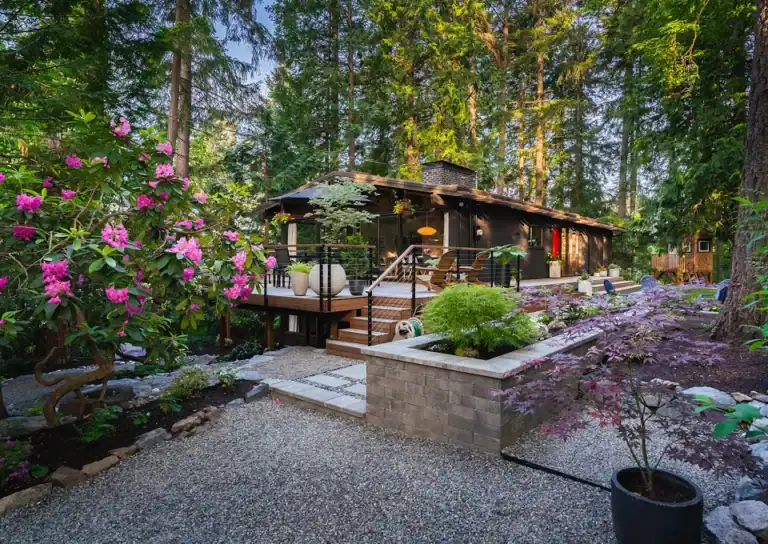
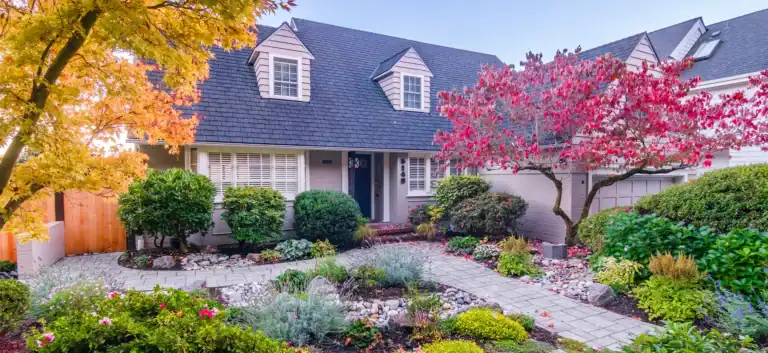
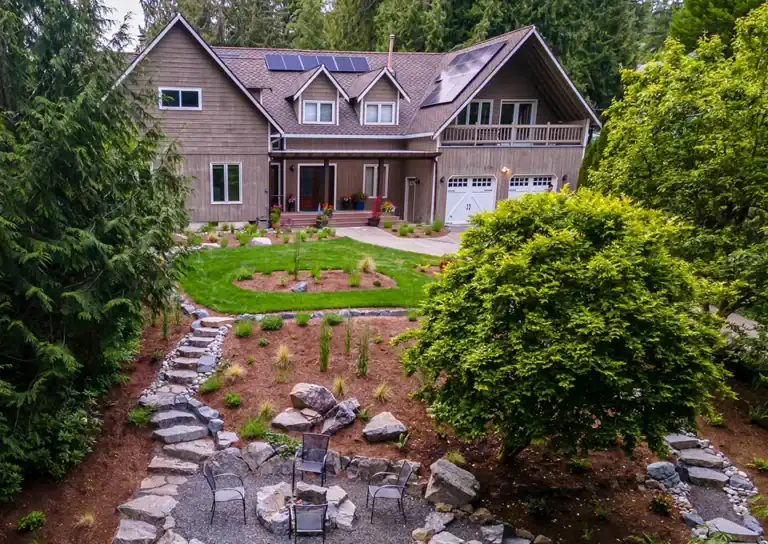
Monthly landscape maintenance service in the Seattle area costs between $250 and $1,500+ for a residential property, depending on lot size, landscape complexity, and what’s actually included. A compact urban lot in Shoreline with a small lawn and foundation plantings might run $250–$400 per month. A standard quarter-acre suburban property in Kirkland or Redmond with established shrub borders, a lawn, and an irrigation system typically falls in the $400–$700 range. Larger or more complex properties in Bellevue, Sammamish, or Mercer Island — those with specimen trees, seasonal color beds, multi-zone irrigation, and hardscape features — commonly run $700–$1,500 or more. What matters isn’t just the monthly number. It’s understanding what you’re actually paying for at each price point, because the line items that separate a $300 bill from an $800 bill reflect fundamentally different levels of care and long-term property protection.
What does each monthly price point actually include?
The difference between maintenance tiers isn’t just “more stuff gets done.” It’s the difference between keeping a property mowed and keeping a landscape healthy. Here’s what each level typically looks like in practice across the Seattle area.
$250–$400 per month: basic care
This tier covers the visible essentials — the work that keeps your property from looking neglected. For a small to mid-size property (under 7,000 square feet of maintained area), basic monthly landscape maintenance service generally includes:
- Lawn mowing — weekly during the growing season (March through October), biweekly November through February when growth slows but rarely stops completely west of the Cascades
- Edging along walkways, driveways, and bed borders
- Hard surface blowing — clearing clippings and debris from patios, walks, and driveways
- Basic weed pulling in visible planting beds
- Seasonal leaf cleanup — critical from October through January, when bigleaf maples and other deciduous canopy species drop heavily across Eastside neighborhoods
At this level, your property stays presentable. But no one is monitoring plant health, managing soil fertility, or watching for the drainage issues and pest pressure that, left unchecked, create expensive problems down the line.
The most common thing we catch on a first visit is irrigation issues — heads that are watering hardscape instead of planting beds, broken lines that have been leaking underground for months, or zones that were never adjusted after plants matured. On one property we took over in Redmond, we found two irrigation zones had been shut off entirely — the previous crew didn’t know how to troubleshoot the controller, so they just turned those zones off and hand-watered sporadically. Half the plants in those zones were stressed and one large rhododendron was already in decline.
$400–$700 per month: standard maintenance
This is where most homeowners with established landscapes settle, and it’s the tier that delivers the strongest return on property value for the typical Eastside residential lot. Standard maintenance adds the proactive layer:
- Shrub and hedge pruning on a seasonal rotation — not hedge-trimmer shearing, but selective pruning that maintains natural plant form and long-term structure
- Fertilization program — lawn and planting beds, typically 4–6 applications per year calibrated to western Washington’s growing cycle
- Weed management — pre-emergent applications in early spring and fall to prevent weeds, not just pull them after they’re established
- Mulch application — annual, usually in March or April, 2–3 inches of arborist chips or fine bark across all planting beds to suppress weeds, retain moisture, and regulate soil temperature
- Irrigation monitoring — seasonal run-time adjustments, basic head and emitter repairs, winterization in November, and spring startup in March
- Seasonal bed cleanup — cutting back perennials, removing spent annual color, light soil amendment in beds
The shift from basic to standard isn’t just additional tasks on a checklist. It’s the difference between a crew that mows and leaves and a crew that’s observing your landscape every visit — noticing when a rhododendron’s leaves curl differently than they did last month, when a section of lawn isn’t responding to irrigation the way it should, when moss is colonizing a patio surface faster than normal. That observational layer is where most of the real value lives.
Why does the monthly price vary so much between properties?
The $250–$1,500+ range is wide, and homeowners understandably want to know why two properties in the same neighborhood can have maintenance bills that differ by $500 a month. The answer comes down to a handful of measurable variables.
Property size and turf area
This is the most straightforward driver. A 4,000-square-foot lawn takes roughly twice the mowing time of a 2,000-square-foot lawn — plus proportionally more edging, more fertilizer, more aeration. Turf is the most labor-intensive element in most residential landscapes, and the amount of it directly scales the monthly cost.
Plant complexity and diversity
A property with 15 mature shrubs that need seasonal pruning, a Japanese maple collection that requires detailed structural work, and mixed perennial borders that need deadheading, dividing, and seasonal cutback costs significantly more to maintain than a property with a row of arborvitae and a few boxwoods. Diversity is beautiful, but it demands more knowledge and more time per visit.
Irrigation system scope
Properties with multi-zone irrigation — especially those mixing pop-up rotors for lawns, drip lines for beds, and micro-spray for containers — require ongoing adjustment, repair, and monitoring. A simple 3-zone system takes 20 minutes to check. An 8-zone system with drip sub-zones and a rain sensor can take an hour or more per inspection, plus the repair time when emitters clog or heads break.
Slope and access
Steep properties common in Kirkland, Sammamish, and parts of Bellevue require more time for every task. Mowing a slope takes longer and wears equipment faster. Hauling mulch, debris, and equipment up hillside properties adds crew-hours. If a crew needs to carry materials 200 feet from the truck to the work area because there’s no vehicle access to the backyard, that labor adds up across 12 months.
Hardscape surface area
Properties with extensive patios, walkways, retaining walls, and stone steps require periodic cleaning, joint maintenance, and inspection. A 400-square-foot patio is a quick blow-and-go. A property with 1,500 square feet of pavers, a stone staircase, and three retaining walls adds meaningful time to every visit and periodic deep-cleaning sessions.
Classic’s team also evaluates tree canopy density — heavy canopy means more leaf debris, more moss, and more shade-related plant health issues to manage. Properties adjacent to wooded areas or greenbelt bring additional pest pressure and debris. The number of distinct garden rooms or separated spaces matters too — a property with a front entry garden, side yard beds, a back patio area, and a separate lower terrace takes more time to maintain than the same square footage in one contiguous area, just because of the transitions and detail work at each edge.
How do annual contracts compare to month-by-month pricing?
Most professional landscape maintenance companies in the Seattle area offer annual contracts with level monthly billing, and there’s a reason: the workload isn’t evenly distributed across the calendar.
Where the work actually falls
In western Washington, landscape maintenance labor concentrates in two periods:
- March through June — spring cleanup, first heavy growth flush, mulch application, irrigation startup, pre-emergent weed treatment, initial pruning. This is the highest-labor period, often requiring 30–40% more crew-hours than mid-summer.
- October through December — leaf cleanup (a major expense in neighborhoods with mature deciduous canopy), fall pruning, irrigation winterization, seasonal color removal, storm debris management.
July through September is moderate — mowing continues, irrigation needs monitoring, and summer pruning occurs, but the overall labor load drops. January and February are the lightest months, with primarily storm response and light winter pruning.
Annual contract: leveled billing, committed service
An annual contract averages these seasonal peaks and valleys into a consistent monthly payment. You pay the same amount in February (when there’s less work) as you do in April (when there’s significantly more). The advantages:
- Predictable budgeting — no surprise invoices during heavy-labor months
- Priority scheduling — contract clients get served first during high-demand periods (and in the Seattle area, every maintenance company is fully booked March through June)
- Better pricing — annual commitment typically runs 10–15% less than the sum of individual monthly charges at per-visit rates
- Continuity — the same crew learns your property, remembers what was done last visit, and catches subtle changes over time
Month-by-month or seasonal pricing
Some homeowners prefer to pay per visit or hire maintenance only during the growing season (March through October). This works, but the math often doesn’t favor it:
- Per-visit rates during peak months (April, May, October, November) run higher than the per-visit equivalent on an annual contract
- Availability is harder to guarantee — per-visit clients get scheduled after contract clients
- The crew that comes in March may not be the crew that comes in July, which means less continuity and less accumulated knowledge of your property
- Properties that go without professional attention from November through February often need a larger (and more expensive) spring cleanup to recover
The majority of Classic’s maintenance clients are on annual contracts with consistent monthly pricing. That structure isn’t arbitrary — it reflects how landscape work actually distributes across the year. Spring visits require significantly more labor than midsummer or winter visits: heavy pruning, bed cleanup, first mowing passes on overgrown turf, soil amendments. Rather than billing higher in spring and lower in winter, annual contracts spread the cost evenly for predictability on both sides.
A related misconception worth addressing: switching from weekly to every-other-week visits doesn’t cut the cost in half. The plants don’t slow down because the crew visits less often. After 14 days, the accumulated growth, debris, and detail work takes longer to address per visit — and less-frequent scheduling makes route logistics less efficient, which adds to the per-visit cost. The actual savings are typically marginal, and the landscape quality drops noticeably.
Seasonal programs are available, but the condition gap between annual and seasonal properties becomes apparent within a couple of years. Annual properties stay ahead of problems through winter — drainage issues get caught early, pruning happens at the right window, and beds stay clean so spring startup is efficient. Seasonal properties often need a larger spring recovery effort, and issues that would have been minor in November can become expensive by March.
What costs catch homeowners off guard?
The monthly maintenance bill covers the recurring, predictable work. But landscapes are living systems, and they generate expenses that fall outside the standard scope. Knowing about these upfront helps with realistic budgeting.
Irrigation repairs beyond basic adjustments
Standard maintenance includes adjusting run times and replacing an occasional broken head. But when a valve fails, a mainline develops a leak, or a zone stops functioning entirely, the repair falls outside the maintenance contract. Budget $200–$800 annually for irrigation repairs on a system older than 10 years. Older systems or those with 8+ zones may run higher.
Standard maintenance includes adjusting run times and replacing an occasional broken head. But when a valve fails, a mainline develops a leak, or a zone stops functioning entirely, the repair falls outside the maintenance contract. Budget $200–$800 annually for irrigation repairs on a system older than 10 years. Older systems or those with 8+ zones may run higher.
Storm damage cleanup
Western Washington’s fall and winter storms bring wind, heavy rain, and occasionally ice. A fallen branch across a planting bed, a section of fence taken out by a leaning tree, or a flooded drainage basin after a heavy rain event — these generate labor that falls outside routine maintenance. Most companies handle storm cleanup at their standard hourly rate ($65–$95 per crew-hour in the Seattle market), billed separately from the monthly contract.
Ready to Talk Budget?
We provide transparent, detailed proposals so you know exactly what to expect.
Request a QuotePlant replacement
Even well-maintained landscapes lose plants. A severe winter, an unusually dry August (which happens more often than Seattle’s reputation suggests), or a disease event can take out a specimen shrub or a section of groundcover. Professional maintenance reduces these losses significantly — our team catches problems earlier — but it doesn’t eliminate them. Budget $300–$1,000 per year for incidental plant replacement on a typical Eastside property.
Pest and disease treatment
Integrated pest management scouting may be included in standard and premium tiers, but the actual treatment — applying targeted controls for aphid outbreaks on your roses, treating a Phytophthora infection in your rhododendrons, or managing a crane fly infestation in the lawn — often carries additional cost. Individual treatments typically run $75–$250 depending on scope, and a property might need 2–4 treatments annually.
Soil amendment and lawn renovation
After several years, even maintained lawns in Seattle’s clay soils benefit from core aeration ($150–$400), overseeding ($200–$500), or top-dressing with compost ($300–$800). These aren’t monthly tasks, but they’re part of the real cost of keeping a lawn healthy in soil conditions that naturally compact and acidify.
How do you know if you're getting value from your maintenance company?
The monthly number matters less than what’s behind it. Here are the questions that reveal whether a maintenance agreement is delivering real value or just keeping the grass short.
What to look for
- Consistency of crew. The same people showing up every visit means accumulated knowledge of your property — they’ll notice when something changes. High crew turnover is a red flag.
- Proactive communication. A good maintenance team tells you about problems before you see them. If you’re always the one discovering issues, the crew is performing tasks without observing.
- Pruning quality. Look at your shrubs. Are they being sheared into geometric shapes, or are they being selectively pruned to maintain their natural growth habit? Shearing is faster (cheaper) but damages plant structure over time. Proper pruning takes more time and requires horticultural knowledge.
- Soil and plant health trending upward. After 2–3 years of quality maintenance, your landscape should look better than when the service started — denser lawn, healthier plants, fewer weed issues. If it looks the same or worse, the maintenance isn’t maintaining.
Questions to ask before signing a contract
- What certifications does your crew hold? (A Certified Professional Horticulturist or Certified Arborist on staff changes the quality of decisions being made on your property.)
- How many properties does each crew maintain per day? (More than 8–10 suggests rush work.)
- What’s included in the base contract versus billed separately? (Get specifics on irrigation repairs, plant replacement, and storm cleanup.)
- Do you provide visit reports or photos? (Documentation creates accountability.)
- What happens if I’m unhappy with a specific visit? (Look for a clear re-service policy.)
The question Classic wishes more homeowners would ask is: “Who specifically will be on my property, and how do you train them?” If the answer is “whoever is available that day” or the company can’t describe their training process, that tells you the crew rotating through your yard may not know your property, your plants, or your preferences. The best maintenance relationships are built on continuity — the same crew learning your landscape over time.
How does the cost compare to doing it yourself?
For homeowners considering DIY as an alternative, here’s the honest math.
Equipment investment
Maintaining a typical Eastside residential landscape requires, at minimum:
- Push or self-propelled mower: $400–$800
- String trimmer: $150–$300
- Leaf blower: $150–$400
- Pruning tools (hand pruners, loppers, hedge shears, pole saw): $200–$400
- Spreader (for fertilizer and seed): $50–$150
- Wheelbarrow: $80–$150
- Miscellaneous (rakes, shovels, tarps, hose attachments): $100–$300
That’s $1,100–$2,500 in equipment before you start, plus replacement and maintenance costs as items wear. Gas-powered tools need annual servicing. Battery-powered alternatives cost more upfront but less to maintain.
Time investment
During the active growing season (March through October in western Washington), realistic DIY maintenance on a quarter-acre property requires:
- Weekly mowing, edging, blowing: 1.5–2 hours
- Biweekly weeding: 1–2 hours
- Monthly pruning and plant care: 2–3 hours
- Seasonal tasks (mulch, fertilization, aeration, leaf cleanup): 4–8 hours per occurrence
That adds up to roughly 8–14 hours per month during the growing season. If you value your weekend time at even $30 per hour, that’s $240–$420 per month in opportunity cost — before materials.
The knowledge gap
Time and equipment are the visible costs of DIY. The invisible cost is what you don’t know. Identifying early signs of root rot in a ‘PJM’ rhododendron, distinguishing between a fungal lawn disease and drought stress, knowing which month to prune hydrangeas versus which month will destroy next year’s blooms — these require horticultural knowledge that takes years to develop.
The consequences of knowledge gaps tend to be silent and cumulative. An improperly pruned Japanese maple doesn’t die immediately. It develops structural weaknesses over 3–5 years that eventually require corrective work — or removal — that costs far more than the maintenance would have.
In our experience across 40 years of maintaining properties from Shoreline to Issaquah, the homeowners who successfully maintain their own landscapes tend to be avid gardeners who genuinely enjoy the work and invest time in learning proper technique. For homeowners who see yard work as a chore to get through, professional maintenance almost always delivers better outcomes and — when you factor in time, equipment, materials, and the cost of preventable mistakes — comparable or better value.
What makes Seattle-area maintenance different from national averages?
If you’ve checked HomeAdvisor or Angi, you’ve seen national average monthly maintenance figures in the $150–$300 range. Seattle-area pricing runs 30–50% above those numbers, and the reasons are specific.
The growing season runs longer than most homeowners expect. West of the Cascades, active growth extends from late February through November — close to nine months. Lawns rarely go fully dormant. Moss colonizes any surface that stays damp for more than a few weeks. This means more months of labor, more mowing cycles per year, and additional tasks (moss treatment, extended leaf cleanup) that properties in shorter-season climates don’t face.
Clay soils create ongoing work. The glacial till soils that underlie most Eastside cities — Kirkland, Bellevue, Redmond, Woodinville — compact readily under wet conditions. Annual aeration isn’t optional here the way it might be in sandier soils. Drainage management is a constant concern, not a one-time installation.
Labor costs reflect the Seattle market. Experienced landscape maintenance crews in the metro area earn significantly more than national averages, driven by cost of living and competition for skilled workers. A crew led by a certified horticulturist or arborist costs more to employ — and that expertise shows up in the quality of care your property receives.
The Bottom Line
If you’ve checked HomeAdvisor or Angi, you’ve seen national average monthly maintenance figures in the $150–$300 range. Seattle-area pricing runs 30–50% above those numbers, and the reasons are specific.
The growing season runs longer than most homeowners expect. West of the Cascades, active growth extends from late February through November — close to nine months. Lawns rarely go fully dormant. Moss colonizes any surface that stays damp for more than a few weeks. This means more months of labor, more mowing cycles per year, and additional tasks (moss treatment, extended leaf cleanup) that properties in shorter-season climates don’t face.
Clay soils create ongoing work. The glacial till soils that underlie most Eastside cities — Kirkland, Bellevue, Redmond, Woodinville — compact readily under wet conditions. Annual aeration isn’t optional here the way it might be in sandier soils. Drainage management is a constant concern, not a one-time installation.
Labor costs reflect the Seattle market. Experienced landscape maintenance crews in the metro area earn significantly more than national averages, driven by cost of living and competition for skilled workers. A crew led by a certified horticulturist or arborist costs more to employ — and that expertise shows up in the quality of care your property receives.