- Hardscape installation cost in the Seattle Metro Area varies widely by material; paver patios typically run $25-$55 per sq ft installed.
- Natural stone patios typically run $35-$80+ per sq ft; a standard 400-600 sq ft natural stone patio runs $8,000-$18,000.
- Retaining walls run $100-$200 per linear foot for modular block; dry-stack stone runs $250-$500+ per linear foot.
- Six cost drivers within material categories: material spec, site access, excavation requirements, slope and drainage, layout complexity, and edge detailing.
- Cutting corners on base preparation typically doubles project cost over 15 years through remediation; proper installation holds for 25+ years.
- DIY makes sense for small dry-set projects under 100 sq ft on level ground; professional installation makes sense for anything larger, structural, or sloped.
- Material cost typically represents 30-50% of total project cost; labor, equipment, and site work represent the rest.
Hardscape installation cost in the Seattle Metro Area varies substantially by material, square footage, and site complexity. Paver patios typically run $25-$55 per square foot installed; natural stone (flagstone, bluestone, granite) typically runs $35-$80 per square foot. A standard 400-600 sq ft natural stone patio installation typically runs $8,000-$18,000 — a useful baseline for the residential price point. Retaining walls price at $100-$200 per linear foot for concrete block; dry-stack stone and mortared stone walls price higher. Driveways, walkways, fire pits, and steps all have specific pricing drivers that affect the total. The honest reality of hardscape pricing is that ranges are wide because each project’s site conditions, material specifications, and scope vary substantially — the per-square-foot or per-linear-foot rules of thumb get you in the ballpark, but the project-specific quote depends on the property.
What does typical hardscape pricing look like by project type?
The most common residential hardscape projects across the Pacific Northwest fall into a few categories with typical cost ranges:
Paver patios. $25-$55 per square foot installed for standard concrete pavers in residential scopes. Higher-end pavers (premium Belgard lines, oversized format, complex pattern work) push toward the upper end. A typical 400 sq ft paver patio runs $10,000-$22,000.
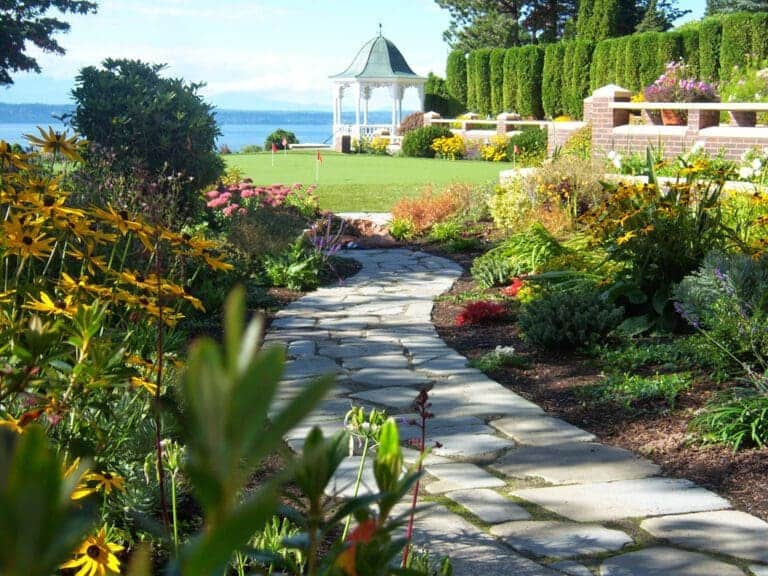
Flagstone patios. $35-$70 per square foot installed for dry-set flagstone; mortared flagstone with stone joints runs higher ($45-$85 per square foot). Pennsylvania bluestone, Connecticut bluestone, and basalt are the common stone choices in PNW work. A typical 400 sq ft flagstone patio runs $14,000-$28,000.
Natural stone patios. $40-$80+ per square foot for full-mortared natural stone (cut bluestone, granite, slate). A typical 400-600 sq ft natural stone patio typically runs $8,000-$18,000 for the lower spec range, higher for premium materials and complex layouts.
Retaining walls (modular block). $100-$200 per linear foot for typical residential heights under 4 feet. Walls over the permit threshold (engineering required) add cost for drawings and structural specifications.
Dry-stack stone walls. $250-$500+ per linear foot. Higher labor cost than modular block; visually distinctive premium aesthetic.
Walkways. Similar per-square-foot pricing to patios for the same material. Width and length determine total scope.
Fire pit surrounds. $3,000-$8,000+ for stone surround installation; prefab insert with custom facing can run lower; built-in masonry fire features run higher.
Driveways. $20-$45 per square foot for paver driveways depending on material, drainage requirements, and load specifications.
What drives the cost difference between similar projects?
Six factors shape hardscape pricing within material categories:
Material spec. Within paver categories, premium lines cost meaningfully more than standard. Within natural stone, source quarry, color rarity, and thickness all affect cost. Material cost typically represents 30-50% of total project cost depending on labor complexity.
Site access. Properties with truck-accessible drop points cost less than properties requiring hand-carry of materials. Material weight (natural stone especially) makes access difficulty a meaningful cost driver.
Excavation depth and base requirements. Heavy load areas (driveways, fire pit pads) require deeper base preparation than patios. Some sites have native conditions that need additional sub-base work to ensure long-term stability.
Slope and drainage integration. Sloped sites require terracing or retaining work alongside the hardscape itself. Drainage integration (catch basins, French drains routing under or around the hardscape) adds cost.
Layout complexity. Square or rectangular patios cost less per square foot than curved, multi-shaped, or stepped layouts. Pattern work (herringbone, complex bond, custom designs) adds labor time.
Edge restraint and detailing. Edge restraint method (concrete curb, metal edge, stone edge) and joint detailing (sand-swept, polymeric sand, mortar) affect both initial cost and long-term maintenance.
The hardscape installation timing guide covers when hardscape work is best scheduled and how that affects project completion.
What's the cost of doing it wrong versus doing it right?
Hardscape installed without proper base preparation is the single most common source of premature failure in residential projects. The cost picture over time:
Doing it right. $25-$55 per square foot for paver patios on properly prepared base typically holds without significant remediation for 25+ years.
Cutting corners on base. Same paver patio installed on inadequate base (4 inches instead of 6, no compaction passes, no edge restraint) saves $3-$8 per square foot upfront. Failure (settling, edge movement, joint heaving) typically shows up within 5-7 years and requires complete or partial reinstallation at full cost.
Cheap material substitution. Bargain pavers from off-brand suppliers save $5-$10 per square foot upfront but often have spalling, color fade, and structural issues within 5-10 years. Premium material on inadequate base fails the same way; cheap material on excellent base also fails. Both have to be right.
The honest math: cutting hardscape costs typically doubles the cost over a 15-year horizon when remediation is included. Spending the proper amount once is cheaper than spending less and rebuilding within a decade. The broader cost and planning context covers how this pattern applies across other landscape categories.
The detailed approach to retaining wall longevity is covered in the retaining wall installation guide.
When does DIY hardscape make sense?
DIY hardscape has narrow viable applications and broad failure modes. The honest assessment:
DIY can work for:
- Small dry-set paver projects under 100 sq ft on stable level ground
- Replacing a worn paver section in an existing properly-installed patio
- Simple flagstone steppers in a planting bed (not load-bearing)
- Small garden walls under 2 feet retaining minimal soil
DIY is risky for:
- Any patio over 100 sq ft (compaction and base work scale beyond hand-tool feasibility)
- Anything mortared (requires masonry experience)
- Anything structural (retaining walls, surcharge loads)
- Anything involving slope or grade change
- Driveways and high-load areas
The cost difference for DIY versus professional installation on a small project ($1,500-$3,000 versus $5,000-$8,000) can favor DIY for the right scope. On larger projects, the cost difference narrows because professional efficiency scales while DIY effort scales linearly.