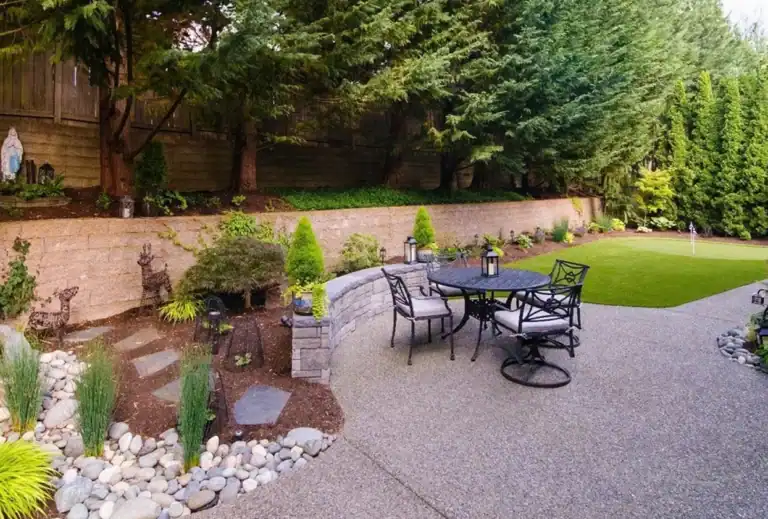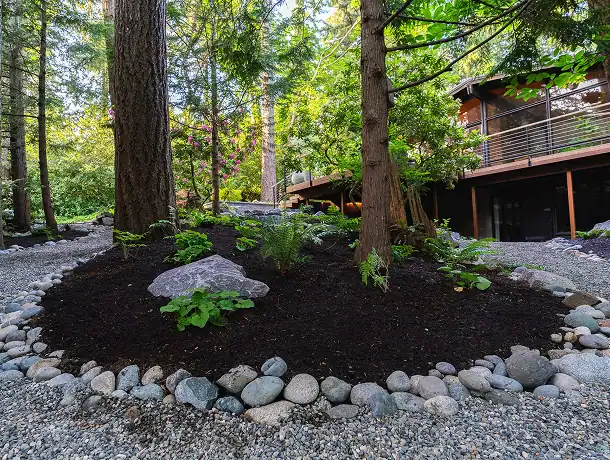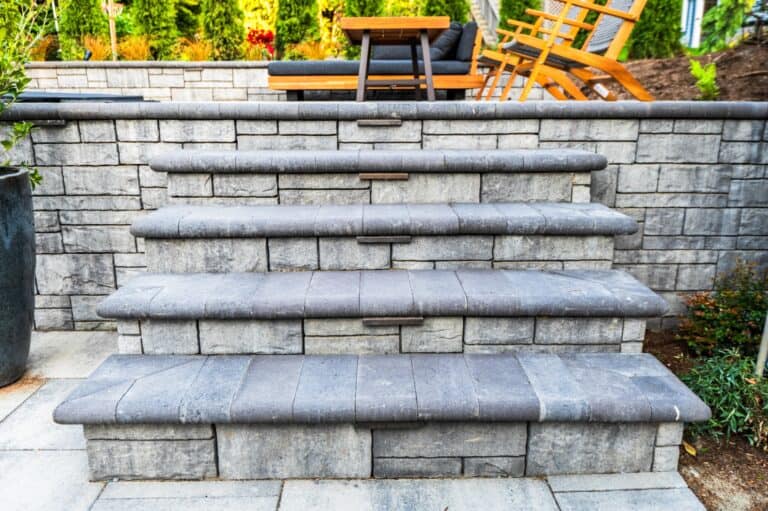
- Portfolio photos show material quality, design style, and scope capability, but they can't tell you how a project looks after three Seattle winters, whether it was completed on budget, or what the client experience was like — always ask for information beyond the photos.
- Red flags include portfolios dominated by close-up shots that hide overall design, the same two or three projects shown repeatedly, stock photos mixed with real work, and no before-and-after comparisons.
- The most revealing portfolio test is asking to visit a completed project that's three or more years old — that's where construction quality, plant selection, and drainage design either prove themselves or don't.
- A company whose portfolio includes construction process photos, projects across diverse scales and neighborhoods, and work specifically in your area of the Greater Seattle region is demonstrating depth that finished-product glamour shots alone can't convey.
- Compare portfolios not by which company has the prettiest photos, but by which company's actual projects most closely match your lot conditions, budget, and design goals — and which company explains the thinking behind their work, not just the result.
A landscape company’s portfolio tells you more than whether they do nice work — it tells you what kind of work they do, what scale they’re comfortable with, how they think about plant selection and hardscape integration, and whether their design sensibility aligns with what you’re envisioning for your property. But portfolio photos are also curated. Every company shows its best angles, its best light, its best projects. The skill is knowing how to read what’s actually there and — just as importantly — noticing what’s missing. After four decades of building landscapes across Seattle, Bellevue, Kirkland, Redmond, and surrounding Eastside cities, we’ve developed strong opinions about what a portfolio should communicate. We also know where our own portfolio falls short, and we’ll be straightforward about that here.
What do portfolio photos actually tell you about a landscape company?
More than you might expect — if you know where to look. The obvious thing is aesthetic style: does this company lean modern or naturalistic? Do they favor clean hardscape lines or layered plantings? But push past the surface impression and start examining specifics.
Material quality and craftsmanship
Look at the joints in paver patios. Are they consistent and tight, or do you see uneven spacing? On retaining walls, check whether the cap stones are level and the courses are straight. On natural stone work, look at how the pieces fit together — skilled stone masons select and place each piece with intention, while rushed work shows irregular gaps filled with excessive mortar. In our experience, one detail most homeowners overlook is the transition between hardscape materials — where a patio meets a retaining wall, or where a walkway transitions to steps. On our projects, Eric Lemus and our hardscape crew set wall cap stones flush and level with the patio surface so water sheets off cleanly rather than pooling at the joint. When we look at competitor work in photos, we often see a visible lip or gap at that transition — sometimes half an inch or more — which traps water, encourages moss and algae growth, and creates a trip hazard that worsens with each freeze-thaw cycle. It’s a small detail, but it tells you whether the crew was thinking about how water moves across the finished surface or just installing each element independently.
Plant selection maturity
This is where a company’s horticultural knowledge — or lack of it — shows up clearly. A portfolio filled with landscapes that look like nursery displays on installation day tells you less than a portfolio showing plants that were selected to mature into a cohesive composition over time. Look for photos where plants have had a year or two to grow in. If you see a Japanese maple (Acer palmatum) placed three feet from a house foundation, that’s a company thinking about what looks good at installation, not what happens when that tree reaches its 15-to-20-foot mature canopy. If you see ‘Otto Luyken’ laurels spaced properly for their 6-to-8-foot spread rather than crammed together for instant fullness, that’s a company thinking in seasons, not just snapshots.
Scope and complexity
Does the portfolio show only simple planting refreshes, or does it include multi-element projects — grading changes, retaining walls, drainage systems, irrigation, lighting, and plantings all integrated into a single design? A company comfortable with a $60,000 backyard renovation in Sammamish operates differently than one whose largest project is a $5,000 front yard planting. Neither is better universally, but the match to your project matters.
Design coherence
In strong portfolios, every element in a project relates to the others. The patio material connects to the walkway connects to the retaining wall cap. The plant palette has a clear logic — not just “shade-tolerant things that were on sale at the nursery.” The outdoor lighting follows the architecture rather than just spotlighting random features. When you look at a finished project photo and everything feels like it belongs together, that’s design thinking at work. When individual elements look fine but the overall composition feels disjointed, that’s installation skill without design vision.
What don't portfolio photos tell you?
This is the more important question, and it’s where most homeowners stop short in their evaluation.
How the project looks three years later
A freshly installed landscape is like a new car — everything gleams. The real test in the Seattle area is how that landscape performs through three cycles of our wet-season-to-dry-season transitions. Does the patio drain properly during November downpours? Did the plantings establish through their first dry summer from mid-June through September? Are the retaining walls showing any movement after freeze-thaw cycles?
We’ve built landscapes across Bellevue, Kirkland, and Woodinville where the three-year photo is actually more impressive than the completion photo — because the design accounted for how plants fill in and mature. We’ve also seen competitors’ work where the three-year photo tells a different story: overgrown shrubs blocking windows, moss-covered pavers that weren’t properly pitched for drainage, and retaining walls with visible lean.
Our Redmond backyard remodel is a good example. At installation, the star jasmine trellises were bare stems, the Kwanzan cherries were nursery-height, and the hydrangea beds looked sparse with proper spacing between plants. Three growing seasons later, the jasmine had covered the trellises and filled the courtyard with fragrance each summer, the cherries provided real canopy shade over the seating area, and the hydrangeas had grown into a continuous mass of lacecap blooms that made the whole space feel enclosed and private. The planting was designed for that three-year-out picture — not the installation-day photo.
What the client experience was like
The most beautiful portfolio in Seattle means nothing if the company was impossible to communicate with, blew past the timeline by three months, or left the homeowner feeling ignored during the process. Photos don’t capture whether the crew showed up on time, whether the project manager returned calls, or whether change orders were handled transparently. That information only comes from talking to past clients directly.
Whether the project was on budget
A stunning outdoor living space photographed in golden-hour light could represent a $45,000 project that came in at $45,000, or it could represent a $45,000 proposal that ballooned to $70,000 with change orders the homeowner felt pressured to approve. The photo is the same either way. At Classic, the majority of our projects finish within the original proposal range. When they don’t, the causes are almost always site conditions discovered during excavation — hitting glacial till or buried concrete from an old foundation, encountering root systems from neighboring trees that weren’t visible during the site visit, or uncovering drainage problems that weren’t apparent on the surface. We handle these through documented change orders with client approval before proceeding, not as invoice surprises after the fact. But that process — and whether it was followed — is invisible in any portfolio photo.
Whether the drainage actually works
This is a Seattle-specific concern that deserves emphasis. You can build a gorgeous patio on a Kirkland hillside, photograph it on a sunny July afternoon, and it looks perfect. Come back in December during a sustained rain event and you might find water pooling against the foundation, runoff eroding the planting beds below, or surface water sheeting across the patio because the grade wasn’t pitched correctly. We see this frequently when evaluating properties that were landscaped by companies without deep local experience — the work looks competent, but it wasn’t designed for western Washington’s 37 inches of annual rainfall concentrated into six months.
What are the red flags in a landscape portfolio?
Not all portfolio presentations are created equal. Here’s what makes us cautious when we’re looking at other companies’ work — and what you should watch for.
Only close-up and detail shots
If every photo is a tight crop on a single plant, a section of stone veneer, or a closeup of landscape lighting, ask yourself: what does the overall project look like? Close-ups can make mediocre work look impressive while hiding design problems that only show up in wider views — poor proportions, awkward transitions between materials, plantings that don’t relate to the architecture, or grading issues.
A strong portfolio shows both the detail and the whole. You should be able to see full-project views that let you evaluate the overall composition, not just individual elements.
The same two or three projects on repeat
If a company’s portfolio is essentially five different angles of the same backyard, that’s not a portfolio — it’s one good project. Look for breadth. A company with 10+ years of experience in the Seattle area should have dozens of distinct projects to show, across different property types, lot sizes, styles, and budgets. If they can only show you a handful, that raises questions about either their volume of work or the consistency of their quality.
Stock photos mixed with real work
This one is more common than you’d think, particularly on websites. If the portfolio includes photos with watermarks, unnaturally perfect lighting, or landscapes that look like they could be anywhere in the country — with no Douglas fir canopy, no moss on the north-facing hardscape, no recognizable Pacific Northwest plant palette — those may not be their projects at all. Look for visual consistency across the portfolio and for details that place the work in the Seattle area specifically.
No before-and-after comparisons
Before-and-after pairs are some of the most useful portfolio content a company can offer. They show you the starting condition of the property, the scope of the transformation, and what the company actually had to work with. A finished photo without context doesn’t tell you whether the company regraded a challenging slope, solved a drainage problem, or worked around mature trees worth preserving. The “before” is where the problem-solving lives.
Our own portfolio includes before-and-after pairs for several projects — and we’ll be the first to admit we don’t have them for every project. That’s a gap we’re actively working to close.
No variety in project scale or type
If every project in the portfolio is a luxury backyard renovation in one zip code, that’s relevant information. It might mean the company does excellent work at that scale — but if your project is a front-yard enhancement in Kenmore or a phased renovation in Shoreline, you’re seeing capability that may not transfer to your specific situation. Look for portfolios that demonstrate range: different lot sizes, different budgets, different neighborhoods, and different design challenges.
What are the green flags in a landscape portfolio?
These are the things that make us pay attention when reviewing another company’s work — or that we try to include in our own.
Evaluating Landscape Companies?
We're happy to answer your questions — even if you're still comparing options.
Talk to Our TeamDiverse project types with consistent quality
A portfolio that shows a $15,000 front-yard replanting in Edmonds, a $75,000 backyard renovation in Bellevue, and a $120,000 multi-phase design-build in Sammamish — all with the same level of craftsmanship and design coherence — tells you the company can scale. The small project isn’t sloppy, and the large project isn’t over-designed. That consistency matters.
Construction process photos
Companies that show the construction process — excavation, base preparation, drainage installation, steel reinforcement in walls — are telling you they understand that what goes under the surface matters as much as what sits on top. A company that only shows finished-product glamour shots may not want you looking too closely at how they get there.
Our Kenmore lakeview project is one where the engineering and construction process was as significant as the finished result — the project required geotechnical engineering, multi-tiered retaining walls with engineered drainage, and King County permitting. We’re working on documenting more of the construction process across current projects, including base preparation, compaction, and drainage installation photos. Historically, our documentation has focused more on the finished result than the process — an honest gap we’re actively closing, because showing the 6-inch compacted gravel base and the perforated drain pipe behind a retaining wall tells a more complete story than the finished wall alone.
Projects in your specific area and climate
A Phoenix landscape portfolio doesn’t tell you much about Seattle capability. Western Washington’s combination of clay soils, sustained winter rainfall, summer drought stress, heavy tree canopy, and specific regulatory environment (King County stormwater codes, critical area ordinances) requires specific experience. Look for projects in cities and conditions similar to yours. A company with 50 completed landscapes in Kirkland and Redmond has navigated the same soil, slope, drainage, and permitting realities your project will face.
Projects that show restraint
Some of the best landscape design isn’t about adding more — it’s about knowing what to leave alone. A portfolio that includes projects where mature trees were preserved rather than removed, where natural grade changes were worked with rather than eliminated, or where a modest scope was executed with precision shows a company that designs for the site, not just for the portfolio photo.
How can you dig deeper than the portfolio photos?
Once you’ve reviewed the portfolio, the next step separates thorough homeowners from ones who end up with regrets.
Ask to visit a completed project in person
Photos flatten three-dimensional spaces. Walking a finished project lets you see the actual scale of a patio, feel the grade changes, check the condition of plantings up close, and notice details that never appear in photos — how the gate hardware feels, whether the pathway is comfortable to walk, whether the seating area actually feels private or just looks private from the camera angle.
Any company confident in their work will welcome this request. If they hesitate, that hesitation is your answer.
Ask for three-year-old project photos
Request photos of completed work that has been living in Seattle’s climate for multiple seasons. Better yet, ask to visit an older project. What you’re evaluating now isn’t just construction quality — it’s material selection, plant choice, and drainage design over time. This is where shortcuts become visible: the paver base that wasn’t deep enough starts to settle, the plants chosen for instant impact start crowding each other, the drainage that “probably won’t be a problem” becomes a standing-water issue every winter.
Ask about specific challenges
When you see a project in the portfolio that resembles yours — similar lot, similar scope, similar neighborhood — ask: “What was the biggest challenge on this project?” A company that built the project will have an immediate, specific answer. “We hit basalt bedrock 18 inches down and had to redesign the retaining wall foundation” is the kind of response that tells you they actually did the work and remember it. Vague answers suggest they may not have been closely involved.
Ask the uncomfortable questions
These are the questions most homeowners feel awkward asking, but they produce the most useful information:
- “Was this project completed on budget?” — The answer, and the way they answer it, tells you volumes about their estimating process and their transparency.
- “Can I speak to this client?” — Willingness to connect you with past clients is a strong trust signal. Reluctance is a yellow flag.
- “What would you do differently on this project?” — A company that can honestly assess its own work demonstrates the kind of self-awareness that leads to continuous improvement. If everything they’ve ever done was “perfect,” be skeptical.
How do you compare portfolios between companies you're evaluating?
If you’re meeting with two or three companies — which we recommend for any project over $15,000 — comparing portfolios requires more than a side-by-side beauty contest.
Look for the company whose portfolio most closely resembles your actual situation: your lot size, your neighborhood’s conditions, your budget range, your aesthetic preferences. A company with a spectacular portfolio of modern minimalist designs in Medina isn’t necessarily the right fit if your Woodinville property calls for a naturalistic, woodland-edge approach.
Pay attention to how each company presents their portfolio during the consultation. Do they walk you through their thinking — why they chose specific materials, how they solved drainage on a slope, what the client’s original priorities were? Or do they simply flip through photos expecting you to be impressed? The explanation is more revealing than the image.
And compare honestly how each company responds when you ask about the limitations of their work or request to visit older projects. That response — more than any photo — tells you who you’re actually hiring.
What does Classic Landscaping's portfolio reveal and what doesn't it?
We’re asking you to evaluate other companies’ portfolios critically, so it’s only fair we apply the same lens to our own.
Our portfolio shows a range of residential projects across the Eastside, from front-yard transformations to multi-phase backyard renovations. We include our Design Plans gallery because we believe design intent matters — seeing how a project was planned alongside how it was built gives a more complete picture than finished photos alone.
What our portfolio does well: it demonstrates range across project types and scales, shows work across multiple Eastside cities, and includes enough full-project views that you can evaluate overall design coherence — not just flattering close-ups.
Where it falls short: we don’t yet have as many before-and-after pairs as we’d like, and our older projects aren’t as well-documented photographically as our recent work. We’re working on revisiting past projects to capture how they’ve matured — because that’s exactly the kind of evidence we’re encouraging you to look for in this article.
One strength worth mentioning: our portfolio spans a genuine range of project scales and neighborhoods — from front-yard refreshes in Edmonds and Shoreline to complex multi-phase renovations in Bellevue and Kenmore — and reflects the different design approaches each property demanded. We also include our Design Plans gallery, which shows the thinking behind the work, not just the finished product. Where we could do better: we don’t yet have enough seasonal documentation showing the same project in July versus January, which would demonstrate how our plant selections perform year-round rather than just during the photogenic months. That’s the kind of evidence that separates a company selecting for four-season interest from one planting for a single photo opportunity.
If what you see in our portfolio resonates — or if you’d like to visit one of our completed projects in person — we’re happy to make that happen.
The Bottom Line
We’re asking you to evaluate other companies’ portfolios critically, so it’s only fair we apply the same lens to our own.
Our portfolio shows a range of residential projects across the Eastside, from front-yard transformations to multi-phase backyard renovations. We include our Design Plans gallery because we believe design intent matters — seeing how a project was planned alongside how it was built gives a more complete picture than finished photos alone.
What our portfolio does well: it demonstrates range across project types and scales, shows work across multiple Eastside cities, and includes enough full-project views that you can evaluate overall design coherence — not just flattering close-ups.
Where it falls short: we don’t yet have as many before-and-after pairs as we’d like, and our older projects aren’t as well-documented photographically as our recent work. We’re working on revisiting past projects to capture how they’ve matured — because that’s exactly the kind of evidence we’re encouraging you to look for in this article.
One strength worth mentioning: our portfolio spans a genuine range of project scales and neighborhoods — from front-yard refreshes in Edmonds and Shoreline to complex multi-phase renovations in Bellevue and Kenmore — and reflects the different design approaches each property demanded. We also include our Design Plans gallery, which shows the thinking behind the work, not just the finished product. Where we could do better: we don’t yet have enough seasonal documentation showing the same project in July versus January, which would demonstrate how our plant selections perform year-round rather than just during the photogenic months. That’s the kind of evidence that separates a company selecting for four-season interest from one planting for a single photo opportunity.
If what you see in our portfolio resonates — or if you’d like to visit one of our completed projects in person — we’re happy to make that happen.