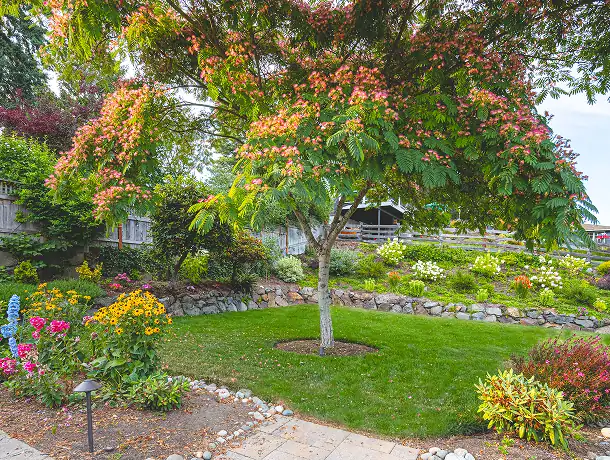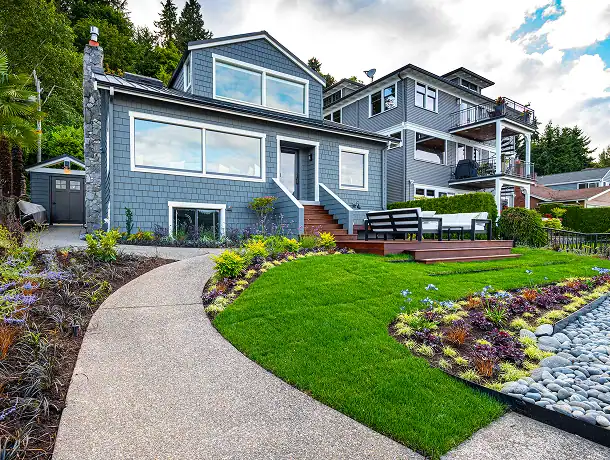
- DIY works well for mowing, weeding, seasonal color, and basic cleanup — these are labor tasks that don't require specialized knowledge, and doing them yourself keeps you connected to your property.
- Pruning is where DIY causes the most lasting damage. Different species require different timing and technique, and incorrect cuts create entry points for disease that are especially problematic in Seattle's wet climate.
- Seattle's clay soils demand professional-grade aeration, soil testing, and targeted amendments — spike aerators, guesswork liming, and repeated moss killer applications don't address the underlying soil conditions on most Eastside properties.
- Diagnostic accuracy separates professional care from DIY care. A yellowing plant can mean six different things, and the wrong treatment is often worse than no treatment.
- The hybrid model is the practical sweet spot — handle the tasks you enjoy and can do well, hire professionals for structural pruning, tree work, soil management, and pest/disease diagnosis.
- Tree work above your head is never a DIY task. Safety, liability, and the structural consequences of improper cuts make this a professional-only category.
Most Seattle-area homeowners can mow their lawn, pull weeds, and plant seasonal color without professional help — and they should. Those tasks are straightforward, satisfying, and don’t require specialized knowledge. But there’s a line where DIY yard care stops being effective and starts doing quiet damage: structural pruning that removes the wrong branches, soil amendments applied without understanding pH, moss treatments that address symptoms instead of causes, and irrigation schedules that don’t account for Seattle’s split personality — nine months of rain followed by three months of near-drought. In our experience across Eastside properties from Kirkland to Sammamish, the gap between homeowner effort and professional-level results almost always comes down to three things: knowledge of plant physiology, diagnostic skills, and specialized equipment. Knowing where that line is saves you time, money, and years of corrective work.
What can homeowners handle well on their own?
This isn’t an article designed to convince you that every yard task requires a professional. That’s not true, and any company that tells you otherwise is selling fear, not expertise.
Here’s what most homeowners can do effectively with basic tools and a reasonable time commitment:
- Mowing. Keep the blade at 3 to 3.5 inches, mow when dry, never cut more than a third of the blade height. A quality rotary mower and consistency are all you need.
- Weeding. Hand-pulling weeds in beds and along borders is effective and doesn’t require chemicals or expertise. Do it regularly — weekly during the growing season — and you’ll stay ahead of most annual weeds.
- Seasonal color. Planting annuals in containers and beds is one of the most rewarding DIY tasks. Pick plants appropriate for your light conditions and swap them out seasonally.
- Basic cleanup. Leaf removal, debris clearing, gutter cleaning. These are labor tasks, not skill tasks.
- Watering newly planted material. If you’ve had a landscape installed, hand-watering new plants deeply during the first two dry seasons is something you can and should do yourself. You’ll learn your property’s microclimates in the process.
If this is where your maintenance needs stop, you probably don’t need a professional on a regular basis. But most Eastside properties — with mature trees, mixed plantings, irrigation systems, and structural elements — eventually present challenges that fall outside this list.
Where does DIY pruning go wrong?
Pruning is the single area where well-intentioned DIY effort causes the most lasting damage. I see it every week on properties across Bellevue, Kirkland, and Redmond — homeowners who care deeply about their landscapes but don’t realize that the way they’re cutting is creating problems that will take years to correct.
The core issue is timing. Different species need pruning at different times of year, and cutting at the wrong time doesn’t just cost you a season of blooms — it can stress the plant, invite disease, or redirect growth in ways that compromise the plant’s long-term structure.
The timing gap most homeowners don't know about
- Spring-blooming shrubs (rhododendrons, azaleas, camellias, lilacs, forsythia) bloom on last year’s wood. Prune them in fall or winter, and you’re removing next spring’s flower buds. The correct window is immediately after bloom, within two to three weeks of flowers fading.
- Summer-blooming shrubs (hydrangeas — but which type matters enormously — butterfly bush, roses, caryopteris) bloom on new wood. Prune these in late winter, before new growth starts.
- Evergreens have their own rules. Arborvitae and boxwood tolerate shearing; rhododendrons and camellias do not. A formal hedge cut on a rhododendron produces that “meatball” shape we’ve all seen — and it destroys the natural growth pattern in a way that takes three to five years of corrective pruning to fix.
- Fruit trees need dormant-season pruning for structure and summer pruning for size control. The goals are different, the cuts are different, and getting it wrong reduces fruit production for multiple seasons.
- Japanese maples — the most frequently damaged tree we encounter — should be pruned in late fall through early winter when the branch structure is fully visible. Pruning in spring, when sap is flowing, causes excessive bleeding and invites bacterial infection.
One example that sticks with me: a homeowner in Bellevue had a beautiful 15-year-old ‘Crimson Queen’ laceleaf Japanese maple — a weeping variety that, when properly maintained, develops cascading layers of lace-like foliage. The homeowner had been “cleaning it up” every spring by cutting out interior branches and removing the lower cascading limbs to keep them off the lawn. Over about four years, this turned the tree into what arborists call a “lion’s tail” — bare interior with tufts of foliage only at the branch tips, and the signature weeping form was gone because the lower branches had been removed. The tree looked like an umbrella instead of a cascade.
Our approach to restoration: we stopped all pruning for the first full year to let the tree recover energy. In year two, we selectively thinned the dense tufts at the branch tips — reducing the weight that was pulling branches into unnatural positions — and left every interior sprout that emerged along the bare branches. Those interior sprouts are the plant’s attempt to rebuild its canopy from the inside out. By year three, enough interior growth had filled in that we could begin shaping again, redirecting growth toward a more natural layered form. The tree will never fully recover the cascading habit it would have had without intervention, but it’s recognizably a laceleaf maple again rather than a disfigured framework. Three years of corrective work — all because the original pruning was well-intentioned but didn’t account for how this particular cultivar grows.
The technique gap
Beyond timing, the cuts themselves matter. A proper pruning cut is made just outside the branch collar — that slightly swollen ring where the branch meets the trunk or parent branch. Cut too close and you damage the trunk; cut too far out and you leave a stub that dies back and invites decay.
Most homeowners don’t know what a branch collar looks like, and that’s not a criticism — it’s specialized knowledge. But the consequence of improper cuts on mature trees and large shrubs accumulates over years. Every bad cut is an entry point for pathogens, and in Seattle’s wet climate, where fungal diseases are already aggressive, those entry points matter more than they would in a drier region.
Why does Seattle's soil make DIY care harder?
The dominant soil type across most of the Eastside — from Bothell down through Issaquah — is glacial till: a dense, compacted clay-silt mixture left by the retreating ice sheets. It drains poorly, compacts easily under foot traffic, and has a natural pH that runs slightly acidic, typically between 5.5 and 6.0.
This creates three specific problems that homeowners struggle to address without professional knowledge:
Compaction and aeration
Clay soil compacts more aggressively than sandy or loam soils. Foot traffic, mower wheels, and even heavy rain drive the soil particles closer together, reducing the pore space that roots and beneficial organisms need. Professional core aeration — pulling actual plugs of soil out of the lawn, not just poking holes with spike aerators — is the standard remedy, and it needs to happen annually on most Eastside lawns. The difference between spike aeration (which actually increases compaction at the sides of each hole) and core aeration is one of those things that seems minor but produces dramatically different results.
The difference is visible within two to three years. On properties where we’ve done annual core aeration — pulling 2.5-to-3-inch plugs with a commercial drum aerator — the lawn has a spongy, resilient feel underfoot. Water from a hose soaks in within seconds. You can push a screwdriver six inches into the soil without much resistance. The turf is thick enough that moss doesn’t have room to establish in most areas.
On properties where homeowners have been using spike aerators — the push-style or strap-on-your-shoes type — the soil tells a different story. Spike aeration punches a hole, but it compresses the soil around each hole rather than removing it. Over time, this actually increases compaction in the zones between the spikes. We regularly see lawns where years of spike aeration have produced a surface that’s nearly impervious — water pools on top during rain, the soil is hard enough that you can barely push a finger into it, and moss has colonized 30-50% of the surface because the turf grass roots can’t penetrate the compacted layer to compete. The homeowner is doing the work, buying or renting the tool, spending the time — and the soil is getting worse, not better. Core aeration is one of those tasks where the equipment difference genuinely determines the outcome.
Soil pH and amendment
Most Eastside soils are naturally suited to acid-loving plants — rhododendrons, blueberries, azaleas, conifers. But lawns prefer a pH closer to 6.5, and many perennials and vegetables need 6.0 to 7.0. Without a soil test, homeowners apply lime or sulfur based on guesswork, which can push pH in the wrong direction or create nutrient lockout where the plant can’t access iron or manganese even though those minerals are present in the soil.
A professional soil test through King County’s Master Gardener program or a private lab like Soiltest Farm Consultants in Moses Lake costs $30 to $50 and tells you exactly what your soil needs. We run soil tests as a standard part of our maintenance program assessments — and the results frequently surprise homeowners who’ve been fertilizing for years without understanding what their soil was actually missing.
Moss: treating the symptom vs. the cause
Moss in Seattle lawns is the single most common maintenance frustration homeowners bring to us. The typical DIY approach — apply iron sulfate or moss killer, rake out the dead moss, reseed — works temporarily. The moss comes back within a season because the treatment addresses the symptom, not the underlying cause.
Moss thrives when three conditions are present: shade, moisture, and compacted or acidic soil with thin turf. Killing the moss without correcting at least one of those conditions is a cycle you’ll repeat indefinitely. In our experience, lasting moss management on Eastside properties usually requires a combination of core aeration (to reduce compaction), targeted overseeding with shade-tolerant fescue blends (to thicken the turf), lime application (to raise pH if soil tests indicate it’s needed), and sometimes selective limbing of overhead trees to increase light penetration. That’s a diagnostic and treatment plan, not a single product application — and getting the sequence right matters.
For a deeper look at the causes and solutions, see our guide to moss in Seattle lawns.
Need Ongoing Landscape Care?
Our maintenance programs keep Seattle landscapes healthy year-round.
Explore Maintenance PlansWhat about pest and disease identification?
Seattle’s wet climate — particularly the extended periods of cool, damp conditions from October through May — creates ideal conditions for fungal diseases. Powdery mildew, black spot on roses, Phytophthora root rot, apple scab, and various needle blights on conifers are all common across the Eastside.
The challenge for homeowners is diagnosis. A yellowing leaf can indicate overwatering, underwatering, nutrient deficiency, root rot, or simply seasonal transition. Bark peeling on a tree might be natural (arbutus, birch, some maples) or a sign of sunscald damage. Brown patches in a lawn could be drought stress, dog urine, grub damage, or a fungal disease like red thread — and each requires a completely different response.
Professional arborists and horticulturists develop diagnostic skills through years of field observation. A Certified Arborist has been trained to distinguish between cosmetic issues and structural threats, between problems that resolve on their own and problems that require intervention. That diagnostic accuracy saves homeowners from both unnecessary treatments (spraying fungicide on a nutrient deficiency) and costly neglect (ignoring early signs of Phytophthora, which can kill established plants within a season).
Two misdiagnoses we see repeatedly on Eastside properties:
The first is homeowners who see yellowing leaves on rhododendrons and assume the plant needs more water — so they water more, which is exactly the wrong response when the actual cause is Phytophthora root rot. Phytophthora thrives in waterlogged soil, and the yellowing is caused by roots that are already drowning and can’t uptake nutrients. Adding more water accelerates the decline. By the time the homeowner calls us, the root system is often too far gone to save. The correct diagnostic step is to check the root crown — if the bark at the soil line is dark, mushy, and peels away easily, it’s root rot, not drought. The treatment is improving drainage, reducing watering, and sometimes applying a phosphonate fungicide (like Agri-Fos). But by the time the leaves are yellowing, the window for effective intervention is narrow.
The second is lawn patches that homeowners treat as drought stress when they’re actually red thread fungus (Laetisaria fuciformis). Red thread is one of the most common lawn diseases across Kirkland, Bellevue, and Redmond — it appears as irregular patches of pinkish-tan grass with small red or pink thread-like growths visible on the blade tips, especially in cool, damp conditions from April through June. Homeowners see the brown patches and water more, which keeps the grass wet longer and feeds the fungus. Red thread is primarily a symptom of nitrogen deficiency — a balanced fertilizer application in spring usually resolves it within a few weeks. But if you’re treating it as drought, you’re making conditions worse while the underlying nutrient deficiency persists.
How does the equipment gap affect results?
Professional landscape maintenance crews use commercial-grade equipment that homeowners generally don’t have access to — and the difference in results is often more significant than people expect.
- Mowers. Commercial mowers produce a cleaner, more consistent cut than most consumer models. The blade speed, deck design, and weight distribution are engineered for turf health, not just appearance. A clean cut heals faster and loses less moisture; a ragged cut (common with dull consumer blades) browns at the tips and creates more disease entry points.
- Aerators. Professional core aerators pull 2.5 to 3-inch plugs across the full lawn surface. Consumer rentals often have fewer tines, lighter weight, and less penetration — especially in compacted clay soils where the machine needs substantial weight to punch through.
- Pruning tools. Professional-grade hand pruners, loppers, and saws produce cleaner cuts with less effort. More importantly, professionals maintain and sterilize their tools between plants — particularly when working with species susceptible to bacterial or viral transmission.
- Sprayers and spreaders. Calibrated commercial spreaders apply fertilizer and amendments at precise rates. Over-application of nitrogen — one of the most common DIY mistakes — produces rapid top growth, weakens the root system, and increases susceptibility to disease and drought stress.
The question isn’t whether you should buy professional equipment — most of it costs thousands of dollars and is impractical for a single residential property. The question is whether the tasks that require this equipment are better handled by someone who already owns it, uses it daily, and maintains it properly.
How much time does DIY maintenance really take?
Here’s a reality check that most homeowners discover within their first season of managing a property with mature landscaping: the time commitment is substantially larger than expected.
A professional maintenance crew — two to three people with commercial equipment — can complete a full weekly visit on a typical Eastside property in one to two hours. That includes mowing, edging, blowing, bed maintenance, spot-weeding, and a property walk-through to identify emerging issues.
For a homeowner doing the same work alone, with residential equipment, the realistic time is four to six hours per week during the growing season (April through October). Add in seasonal tasks — aeration, overseeding, fertilizer applications, mulching, pruning, irrigation adjustments, leaf cleanup — and you’re looking at a substantial weekend commitment, every weekend, for seven months.
That math works for some people. Gardening is a genuine hobby for many homeowners, and the physical work is part of the appeal. But for homeowners who took on DIY maintenance primarily to save money, the hourly rate comparison often doesn’t favor the DIY approach once you factor in equipment costs, product costs, and the value of your weekend time.
Here’s how the math typically works for a Kirkland property on a quarter-acre lot with a 4,000-square-foot lawn, mixed shrub borders, a few ornamental trees, and an irrigation system:
Professional maintenance at $350/month: $4,200 per year. This covers weekly mowing, seasonal pruning, two fertilizer applications, fall aeration, spring mulching, irrigation startup and winterization, and fall leaf cleanup.
DIY equivalent annual costs:
- Mower (amortized over 7 years from a $600 purchase): ~$85
- String trimmer, blower, hand tools (amortized): ~$75
- Fuel and blade sharpening: ~$80
- Fertilizer (4 applications, ~$40 each): ~$160
- Pre-emergent herbicide: ~$50
- Mulch (6-8 cubic yards at ~$45/yard delivered): ~$315
- Core aerator rental (one day, fall): ~$85
- Grass seed for overseeding: ~$60
- Irrigation winterization blowout (most homeowners don’t own a compressor with sufficient CFM, so this often requires a service call): ~$100
- Lime, moss treatment, misc. products: ~$80
- Total materials and equipment: roughly $1,090/year
That looks like a significant savings — about $3,100 per year. But it doesn’t account for the 8-12 hours per month of labor during the growing season (roughly 70-90 hours per year), the pruning work that most homeowners either skip or do incorrectly, the irrigation adjustments that require understanding zone flow rates and plant water needs, or the diagnostic skills that prevent small problems from becoming expensive ones. For homeowners who value their weekend time at $30-$50/hour, the labor component alone closes most of the gap — and the accumulated cost of pruning mistakes, missed pest issues, and soil management errors over three to five years often eliminates it entirely.
When should you always call a professional?
Some tasks should never be DIY, regardless of your comfort level or experience:
- Any tree work above your head. Ladders, chainsaws, and gravity are a dangerous combination. Tree removal, limbing over structures, and any work near power lines requires a Certified Arborist and proper insurance. This is not about skill — it’s about safety and liability.
- Structural pruning on mature trees. Removing the wrong limb from a 40-foot Douglas fir or a mature big-leaf maple can destabilize the entire canopy. An ISA Certified Arborist understands crown structure, weight distribution, and how to make reduction cuts that maintain the tree’s long-term health.
- Pest and disease diagnosis on high-value plants. If you have a mature Japanese maple, a specimen rhododendron, or an established fruit tree that’s showing decline, get a professional diagnosis before treating. The wrong treatment wastes money; the right diagnosis might save a plant worth thousands of dollars in replacement value.
- Irrigation system repair and optimization. Modern irrigation systems involve pressure regulation, zone scheduling, flow rates, and sensor integration. A poorly adjusted system can overwater one zone (promoting root rot) while underwatering another (stressing plants through the dry season). Professional irrigation technicians calibrate systems for your specific plant material, soil type, and sun exposure.
- Any plant or tree you can’t identify. If you don’t know what it is, you don’t know when to prune it, how to feed it, or what’s wrong with it. Start with identification — your local WSU Extension Master Gardener clinic can help, or bring a sample to a knowledgeable nursery.
What does a hybrid approach look like?
The most practical model for most Eastside homeowners isn’t “all DIY” or “all professional.” It’s a hybrid: handle the tasks you enjoy and can do well, and hire professionals for the work that requires specialized knowledge, equipment, or risk management.
What you handle:
- Weekly mowing (if you have time and enjoy it)
- Hand-weeding beds and borders
- Seasonal color and container planting
- Basic watering and hose-end irrigation
- Leaf cleanup and general tidying
What a professional handles:
- Structural pruning on trees and large shrubs (annual or biannual)
- Core aeration and overseeding (annual, typically fall)
- Fertilizer and amendment programs based on soil testing
- Pest and disease diagnosis and treatment
- Irrigation system startup, shutdown, and repairs
- Moss management (diagnosis and treatment plan)
- Mulching at correct depth and application standards
This split lets you stay connected to your property — knowing what’s growing, what’s thriving, what needs attention — while ensuring that the tasks where expertise genuinely matters are handled by people who do this work every day across dozens of properties. The pattern recognition alone — seeing how the same pest or disease presents across 50 Kirkland and Bellevue properties in the same week — gives a professional maintenance team diagnostic context that no single homeowner can develop on their own property.
If you’re considering professional maintenance for the skilled work and want to understand what that typically costs, our breakdown of landscape maintenance pricing in Seattle covers the specifics.
The Bottom Line
The most practical model for most Eastside homeowners isn’t “all DIY” or “all professional.” It’s a hybrid: handle the tasks you enjoy and can do well, and hire professionals for the work that requires specialized knowledge, equipment, or risk management.
What you handle:
- Weekly mowing (if you have time and enjoy it)
- Hand-weeding beds and borders
- Seasonal color and container planting
- Basic watering and hose-end irrigation
- Leaf cleanup and general tidying
What a professional handles:
- Structural pruning on trees and large shrubs (annual or biannual)
- Core aeration and overseeding (annual, typically fall)
- Fertilizer and amendment programs based on soil testing
- Pest and disease diagnosis and treatment
- Irrigation system startup, shutdown, and repairs
- Moss management (diagnosis and treatment plan)
- Mulching at correct depth and application standards
This split lets you stay connected to your property — knowing what’s growing, what’s thriving, what needs attention — while ensuring that the tasks where expertise genuinely matters are handled by people who do this work every day across dozens of properties. The pattern recognition alone — seeing how the same pest or disease presents across 50 Kirkland and Bellevue properties in the same week — gives a professional maintenance team diagnostic context that no single homeowner can develop on their own property.
If you’re considering professional maintenance for the skilled work and want to understand what that typically costs, our breakdown of landscape maintenance pricing in Seattle covers the specifics.