- Verify Washington State contractor registration at L&I's website in 90 seconds — "Current" status, matching business name, and clean infraction history are your baseline before any conversation goes further.
- Request a current Certificate of Insurance, call the carrier to confirm it's active, and ask to be named as additional insured — contractors who resist this step are telling you something important about their risk management.
- When calling references, ask about cost accuracy, problem-handling communication, and how the property looked after two full Seattle winters — not just whether the homeowner was "satisfied."
- Evaluate portfolios for completed projects in the Seattle climate at a scope similar to yours — renderings and out-of-region work tell you about design ambition, not construction capability in our conditions.
- Look for at least one credential requiring continuing education and independent verification — ISA Certified Arborist, Certified Professional Horticulturist, or Certified EcoPRO all indicate a company that invests in expertise beyond the minimum.
- A contract missing detailed scope, milestone-based payment schedule, change order process, or written warranty terms is a contract that protects the contractor, not you.
Is Your Contractor Actually Registered in Washington State?
This is the single easiest verification step, and the one most homeowners skip. Washington State requires every contractor performing work over $600 to register with the Department of Labor & Industries (L&I). Registration means the contractor has posted a surety bond, carries the required insurance, and is operating as a legal business entity.
You can verify any contractor’s registration in about 90 seconds at the L&I contractor verification page. Enter the business name or UBI number, and you’ll see their registration status, bond amount, insurance status, and any complaints or infractions on file.
What to look for:
- Status should read “Current.” Not “Expired,” not “Pending,” not blank. Current.
- The business name should match the entity on your proposal. If you’re getting a bid from “Seattle Outdoor Living LLC” but L&I shows “John Smith DBA Outdoor Living,” ask why. It may be fine — DBAs are common — but the legal entity on your contract should match the registered entity.
- Check the infraction history. L&I tracks complaints, and while not every complaint indicates a bad contractor, a pattern of unresolved complaints is a meaningful signal.
In Classic’s experience across 2,000+ projects in the Seattle area, the contractors who can’t produce a current L&I registration number on the spot are also the ones most likely to cut corners on insurance, permitting, and warranty commitments. It’s a correlation, not a guarantee — but it’s a reliable one.
### What Does a Contractor’s Bond Actually Protect?
Washington requires a minimum surety bond of $12,000 for general contractors. This bond exists to protect homeowners in cases of contractor fraud, breach of contract, or failure to pay subcontractors. It does not cover the full value of your project — a $12,000 bond on a $75,000 landscape installation leaves a significant gap.
The bond is a floor, not a ceiling. A contractor who carries only the minimum bond isn’t violating any law, but a contractor who carries a higher bond is signaling financial stability and confidence in their work. It’s worth asking.
Does the Insurance Actually Cover What You Think It Covers?
Insurance is the checkpoint where the most consequential mistakes happen. A contractor can show you an insurance certificate, and it can still leave you exposed. Here’s what you need to verify — not just see, but verify.
General liability insurance covers damage to your property during construction. If a crew member drives a skid steer through your irrigation main, or a retaining wall collapses six months after installation due to a construction defect, general liability is what responds. In the Bellevue and Eastside market, where landscape projects routinely involve grading, drainage work, and structural elements, a minimum of $1 million in general liability coverage is standard for any reputable firm.
Workers’ compensation insurance covers injuries to the contractor’s employees while working on your property. If a crew member is injured on your site and the contractor doesn’t carry workers’ comp, you — the homeowner — may be liable. Washington State requires workers’ comp for all employees, but some contractors misclassify workers as independent subcontractors to avoid this expense.
What to actually do:
- Ask for a Certificate of Insurance (COI) — not a verbal assurance, not a photocopy of an expired document. A current COI issued by their insurance carrier.
- Call the insurance carrier directly. The phone number is on the certificate. Confirm the policy is active and the coverage limits match what the certificate states.
- Request to be named as “additional insured” on the general liability policy for the duration of your project. Any legitimate contractor will do this without hesitation. It costs them nothing and it protects you directly.
One pattern our team has observed across four decades of working in the Seattle market: contractors who push back on providing a COI or resist naming you as additional insured are telling you something about how they manage risk. Listen to that signal.
What Do References Actually Tell You — And What Don't They?
Every contractor will give you references. That’s the easy part. The harder part is knowing what to ask those references and understanding what the answers actually mean.
The references themselves are pre-selected. No contractor hands you a list that includes the project where the timeline slipped by three months. So the value isn’t in whether the references are positive — they will be. The value is in the specificity of what they can tell you.
### What Questions Should You Ask References?
Ask questions that reveal process, not just satisfaction:
- “How closely did the final cost match the original estimate?” A well-run project lands within 5-10% of the estimate. If the reference says “it was about double,” that tells you something about how this contractor scopes and communicates.
- “How did the crew handle something that went wrong or changed?” Every project has surprises. The question isn’t whether problems occurred — it’s how the contractor communicated and responded. Did they call the homeowner immediately? Did they present options? Or did the homeowner find out after the fact?
- “Would you hire them again, and for the same type of project?” Someone who hired a contractor for a small patio might give a glowing review, but that doesn’t tell you how the same company handles a $100,000 design-build project with grading, drainage, and structural elements.
- “How was the property left at the end of each workday?” This sounds minor. It isn’t. How a crew treats your property during construction — jobsite cleanliness, protection of existing plantings, respect for neighbors — reflects management discipline.
### How Many References Are Enough?
Three is the minimum. Five is better. And at least one should be from a project completed more than two years ago. New work always looks good. The question is how it holds up through two Seattle winters — whether the pavers stayed level, whether the drainage system actually handled a November atmospheric river, whether the plantings established or died back.
In Classic’s experience, homeowners who take the time to call references almost always feel more confident in their decision — regardless of which contractor they ultimately choose.
What Should a Contractor's Portfolio Actually Show You?
A portfolio is marketing material. Every contractor knows this. The question is whether the marketing tells you something real about their capability, or whether it’s a carefully curated highlight reel that obscures more than it reveals.
### What to Look for in Portfolio Photos
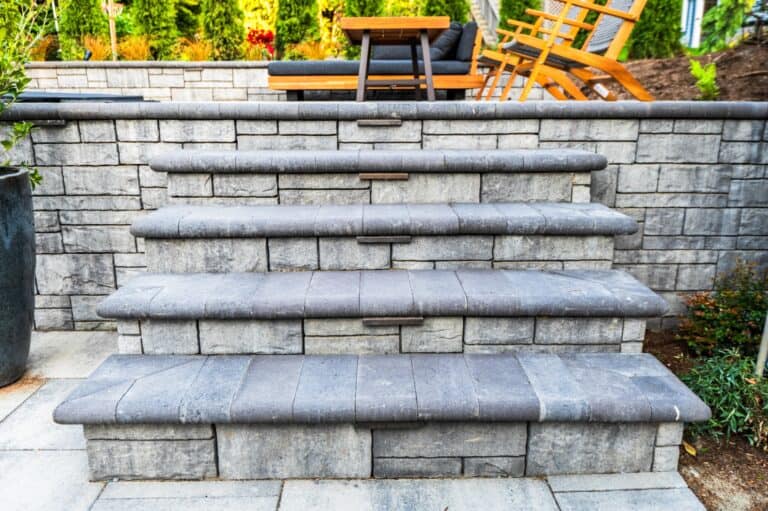
- Completed projects, not renderings. 3D renderings show what a designer imagined. Photos show what a crew built. Both have value, but if you’re evaluating construction quality, you need photos of finished work — ideally from multiple angles and in different seasons.
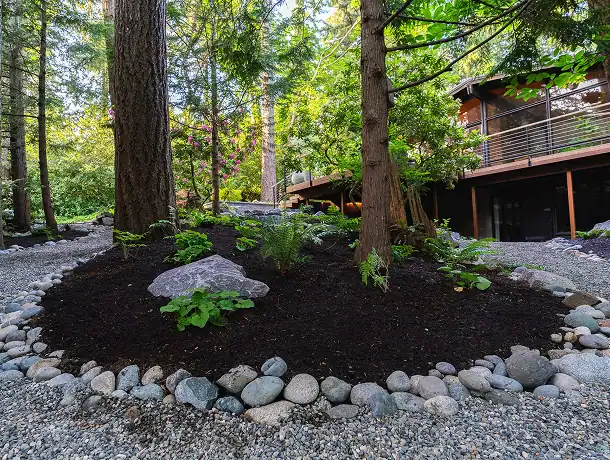
- Projects in the Seattle climate. A beautiful portfolio of desert landscaping in Arizona tells you nothing about how this company handles clay soils, shade gardening, stormwater management, and the specific plant palette that thrives west of the Cascades. Look for projects in cities you recognize — Kirkland, Redmond, Woodinville, Sammamish.
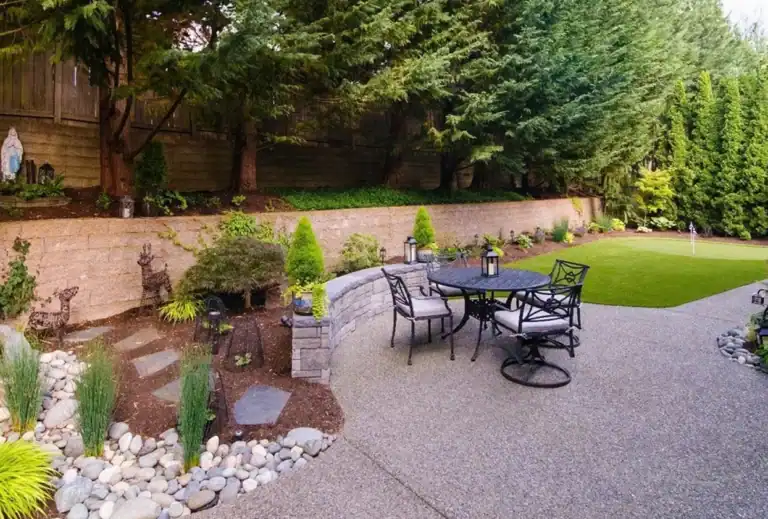
- Projects similar in scope to yours. If you’re planning a full backyard renovation with retaining walls, a patio, and a complete planting design, a portfolio of mow-and-blow maintenance work isn’t relevant. Scale matters. Evaluating a landscape portfolio means matching the work shown to the work you need done.
- Before-and-after pairs. These tell you more than finished photos alone. The transformation reveals how the company handles challenging starting conditions — steep slopes, poor drainage, overgrown sites, or existing structures that needed removal.
### What Credentials Actually Mean Something?
Not all certifications are created equal. Some require years of documented experience, continuing education, and peer review. Others require filling out a form and paying a fee.
Credentials that indicate verified expertise in the landscape industry:
- ISA Certified Arborist — Requires documented experience, a proctored exam, and continuing education. Relevant for any project involving mature trees.
- Certified Professional Horticulturist — Demonstrates knowledge of plant science, soil management, and regional growing conditions at a professional level.
- Washington State Landscape Architect License — A licensed professional bound by state regulation and professional ethics standards.
- Certified EcoPRO (WSU Extension) — Focused on sustainable landscape practices, stormwater management, and ecological design — particularly relevant in King County where stormwater regulations affect most residential projects.
- Master Pruner (Plant Amnesty) — Specific to proper pruning technique and tree care. A niche credential, but one that separates companies who understand plant health from those who just own chainsaws.
At Classic, our team holds credentials across all five of these areas — not because certifications sell projects, but because the knowledge behind those credentials directly affects the quality of the work. A company doesn’t need every credential on this list, but it should hold at least one that requires continuing education and can be independently verified.
What Should the Contract Include Before You Sign?
The contract is the last checkpoint, and it’s where everything either comes together or falls apart. A handshake agreement or a one-page estimate with “sign here” at the bottom is not a contract — it’s a liability waiting to happen.
### Essential Contract Elements
Detailed scope of work. Not “landscape renovation” — a line-item description of what’s being built, what materials are specified, what’s included, and what’s excluded. If the proposal says “patio” but doesn’t specify the material, dimensions, base preparation method, or edge treatment, that’s a gap that will cost you money later.
Timeline with milestones. When does work begin? What are the major phases? When is the expected completion date? What happens if the timeline slips due to weather, permitting delays, or material availability? A good contract addresses all of these.
Payment schedule tied to milestones. A reasonable payment structure might look like 10-15% at signing, 30-40% at material delivery, additional payments at completion of major phases, and a final retention (typically 10%) held until a walkthrough confirms the work meets specifications. Be cautious of any contractor who wants 50% or more upfront before work begins.
Change order process. How are additions or modifications handled once work starts? A well-written contract specifies that all changes require written approval and a signed change order with the cost impact documented before the work proceeds.
Warranty terms. What’s covered, for how long, and what’s excluded? At Classic, we provide a 1-year plant guarantee — if a plant we installed fails within the first year under normal conditions, we replace it. Hardscape and structural warranties vary by element and should be spelled out in writing.
Dispute resolution. How are disagreements handled? Mediation, arbitration, or litigation? This clause matters most when everything else has gone wrong, and it’s the clause no one reads until they need it.
What's the Real Risk of Skipping These Steps?
The risk isn’t theoretical. In the Seattle and Eastside market, where residential landscape projects routinely range from $25,000 to $150,000+, the gap between a verified contractor and an unverified one is measured in thousands of dollars and months of headaches.
Unregistered contractors who disappear mid-project. Insurance gaps that leave homeowners liable for jobsite injuries. Verbal agreements that can’t be enforced when the final bill is $30,000 over the estimate. These aren’t rare edge cases — they’re patterns that play out across the region every construction season.
The six checkpoints outlined here — registration, insurance, references, portfolio, credentials, and contract — take a few hours of your time total. On a project worth $50,000 or more, that’s the highest-return due diligence you’ll do. The contractor who welcomes this scrutiny is the one who’s been through it before and has nothing to hide. The one who deflects or delays is giving you your answer.
If you’re comparing contractors for a project in Bellevue, Kirkland, Redmond, or anywhere across the Eastside, and this checklist feels like the right next step — Classic is happy to walk through every one of these items with you. We’ve been doing this since 1985, and the documentation is always ready.