- Low-bid landscape contractors most commonly cut base preparation, drainage, soil amendment, and plant material quality — the invisible work that determines whether a project lasts 3 years or 30 years in Seattle's clay soils and wet winters.
- Problems from low-bid work typically surface 12-36 months after installation, well past the point where the original contractor can be held accountable without a written warranty.
- Corrective and repair work costs 60-200% of what proper original construction would have cost, meaning the total investment (original bid plus repairs) almost always exceeds a mid-range bid that included the work done correctly.
- Three bids from qualified contractors typically cluster within 10-15% of each other — a bid 25-40% below the cluster is not a better deal, it is a different (and smaller) scope of work.
- The lowest bid is reasonable for simple, execution-focused projects — but concentrates risk on anything involving structural elements, significant investment, or long-term plant performance.
- Always require a written scope of work with material specifications, drainage approach, permitting responsibility, and warranty terms before comparing any bids on price.
Where Do Lowest-Bid Contractors Actually Cut Corners?
The lowest bid does not come from nowhere. When one proposal is 25-40% below the others, the contractor has removed something to get there. The question is what. In our experience, the cuts follow a remarkably consistent pattern across the greater Seattle area.
Base preparation and drainage
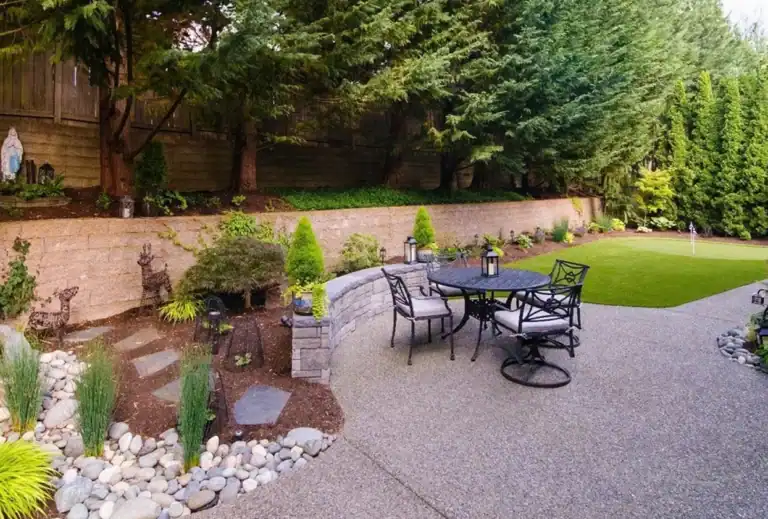
This is the most common and most expensive shortcut. A properly built paver patio in Greater Seattle, from Kirkland to Sammamish and Issaquah, requires a minimum 6-inch compacted gravel base with appropriate drainage fabric. That base preparation is invisible once the pavers go down. A low-bid contractor can cut the base to 3-4 inches, skip the drainage fabric, or compact inadequately, and the finished patio looks identical on installation day. The difference shows up 12 to 24 months later as settling, shifting, and water pooling.
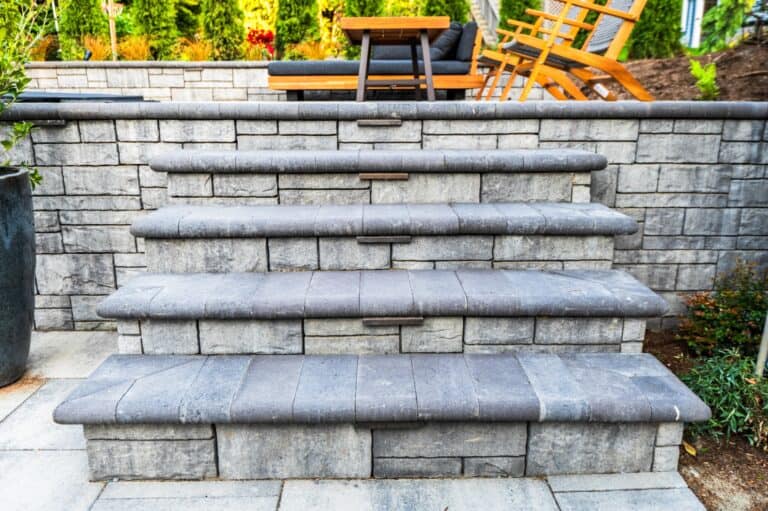
The same pattern applies to retaining walls. A wall that requires engineered backfill and perforated drain tile gets built with native soil backfill and no drainage. It looks fine at the one-year mark. By year three, hydrostatic pressure behind the wall — Seattle’s clay soils retain water like a sponge — starts pushing the wall outward. By the time the homeowner notices the lean, the wall needs to be torn out and rebuilt. The repair costs 120-150% of what a properly built wall would have cost originally, because demolition and disposal add to the expense.
Plant material quality
A $15 retail-grade shrub and a $35 nursery-grade specimen of the same species look similar in a 5-gallon pot. The difference is root structure, provenance, and how that plant was grown. Nursery-grade stock grown for the landscape trade has a denser, more fibrous root system and is typically grown in conditions closer to its destination environment. Retail-grade stock is grown for visual appeal at point of sale, not long-term landscape performance.
Low-bid contractors overwhelmingly source retail-grade material because the per-plant cost difference multiplied across a $30K-$80K project represents thousands in savings. In Classic’s observation, plant replacement rates on low-bid projects run roughly double what we see on projects using specified nursery-grade stock — particularly for Japanese maples, rhododendrons, and native conifers that are staples of Greater Seattle landscapes.
Soil amendment and preparation
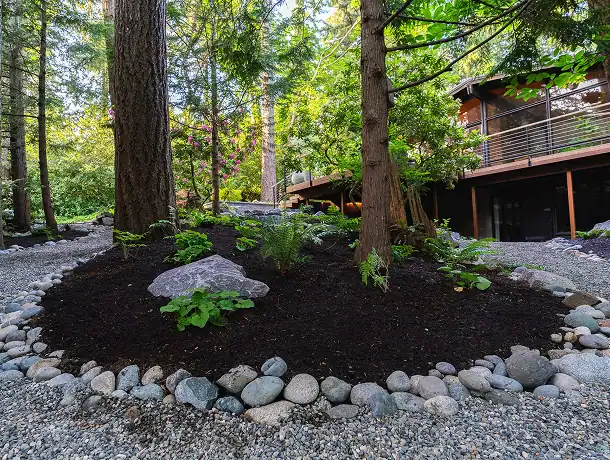
West of the Cascades, the native soil in most residential areas is a heavy clay with a pH typically between 5.5 and 6.5, according to WSU Extension soil surveys. Most ornamental plantings perform best in amended soil that improves drainage and organic content. Proper soil preparation for a planting bed involves removing or amending the top 12-18 inches — blending compost, fine bark, and sometimes sand to create a growing medium that roots can actually penetrate.
Low-bid proposals frequently skip soil amendment entirely or limit it to a thin 2-3 inch topdressing that looks good at planting but provides no meaningful root-zone improvement. Plants go into native clay, establish slowly, and become more vulnerable to root rot — a persistent problem in the wet winters that define the Seattle area from November through March.
Permitting and engineering
Greater Seattle municipalities — Bellevue, Kirkland, Redmond, Sammamish — require permits for retaining walls over 4 feet, significant grading changes, and work near critical areas or easements. Permit fees and the engineering drawings they require add $2,000-$8,000 to a project, depending on scope and jurisdiction. A low-bid contractor who doesn’t include permitting in the proposal is either planning to skip it or planning to surprise the homeowner with the cost later.
Unpermitted work is not just a regulatory technicality. It creates title issues when you sell the property, eliminates any structural warranty, and — if the work fails — leaves the homeowner with no recourse. King County and Greater Seattle cities have become increasingly active in enforcement, and neighbors report unpermitted construction more frequently than most homeowners expect.
What Does the Failure Timeline Actually Look Like?
Problems from low-bid work rarely appear immediately. If they did, homeowners would catch them during the project and demand correction. The pattern is subtler and slower.
Months 1-6: Everything looks fine
The patio is level. The plants are green. The retaining wall is straight. The homeowner feels good about their decision and may even feel vindicated for choosing the lower-priced option. This period is the most dangerous, because it creates confidence in a result that has not yet been tested by a full cycle of Seattle weather.
Months 6-18: First signs
Pavers start showing minor settlement — a dip here, a slight gap there. One or two plants that seemed healthy at installation fail to leaf out in spring, or come back noticeably weaker. A retaining wall develops a hairline gap where two blocks meet. The homeowner notices but rationalizes: weather, normal settling, maybe that plant just didn’t make it. These are not random events. They are the early symptoms of the shortcuts taken during construction.
Months 18-36: Pattern becomes clear
This is when the original savings evaporate. The paver patio that saved $4,000 now needs $6,000-$8,000 in releveling or partial rebuild. The retaining wall that saved $5,000 on engineering and proper backfill needs $12,000-$18,000 in reconstruction. Four or five dead plants need replacement at $200-$500 each installed — and the replacements going into the same unamended soil face the same odds.
In Classic’s experience, the total corrective cost at the three-year mark typically exceeds the original project bid — not just the savings from the lower bid, but the entire original investment. The homeowner has effectively paid twice.
Why Does the Lowest Bid Exist in the First Place?
This is worth understanding without cynicism. Not every low-bid contractor is cutting corners deliberately. Several structural factors push bids down.
Overhead differences
A one- or two-person crew operating out of a truck has dramatically lower overhead than a design-build company with designers, project managers, a materials yard, insurance, workers’ compensation, and warranty reserves. That overhead difference is real and legitimate — it is also why the crew can offer a lower price for a scope that looks similar on paper but includes none of the management, design, or accountability infrastructure.
Experience with local conditions
A contractor who has been building in the Seattle area for 20+ years has learned — often through expensive lessons — what clay soils, heavy rainfall, and freeze-thaw cycles do to shortcuts. A newer contractor or one from outside the region may genuinely not know that a 4-inch base is insufficient for Greater Seattle conditions. The bid is low not because they are dishonest, but because they are underestimating the site conditions.
Scope ambiguity
The most common source of bid discrepancy is not price — it is scope. Two bids that both say “install paver patio” may describe radically different projects. One includes 6-inch base, polymeric sand, edge restraint, and drainage integration. The other includes the pavers and labor. Both contractors may be pricing their scope accurately. The problem is that the scopes are not the same, and most homeowners do not have the technical background to recognize the difference without asking specific questions.
How Do You Compare Bids Without Defaulting to Price?
Price comparison only works when you are comparing the same scope. Here is how to make bids genuinely comparable.
Require a written scope of work
Every bid should include a line-item scope: base depth, material specifications (paver brand and style, stone type, plant sizes and cultivars), soil amendment plan, drainage approach, and permitting responsibility. If a bid says “install retaining wall” without specifying wall type, engineered backfill, drainage method, and whether engineering and permits are included, it is not a bid — it is a guess.
Ask about plant sourcing
Where will the plants come from? Wholesale nursery stock specified by the designer, or whatever is available at the retail garden center that week? This single question exposes more about a contractor’s approach than almost anything else. A contractor who specifies plants by cultivar and sources them through wholesale relationships is building a landscape designed to perform for decades. A contractor who picks up plants the morning of installation is building one designed to look good at walkthrough.
Ask about warranty
What exactly is guaranteed, for how long, and in writing? A verbal promise that “we’ll come back if anything goes wrong” is not a warranty. A written guarantee backed by a business entity — Classic offers a 1-year plant guarantee, for example — gives you recourse if the work does not perform as promised.
Ask for references on projects 3+ years old
This is the question that separates contractors with a track record from those who cannot demonstrate long-term results. Any contractor can point to a project that looks great at completion. The question is whether their work still looks great after three Seattle winters. If a contractor cannot provide references from projects completed three or more years ago, that tells you something important about either their longevity or their confidence in their own work.
What Does It Cost to Fix Low-Bid Work?
Repair work is almost always more expensive per unit than original construction, for straightforward reasons. Demolition and disposal come first. Access is often more difficult because the landscape around the failed element has matured. And the new contractor is working with someone else’s mistakes rather than a clean site.
In Classic’s experience across Greater Seattle repair projects:
- Paver patio releveling or rebuild: 60-80% of the cost of building it correctly the first time — and the result is rarely as clean as a ground-up installation
- Retaining wall reconstruction: 120-150% of proper original construction cost, driven by demolition, disposal, and the need for engineering that should have been done initially
- Plant replacement in unamended soil: $200-$500 per plant installed, and unless the soil is amended during replacement, the new plants face the same conditions that killed the originals
- Drainage correction after the fact: 150-200% of incorporating drainage during original construction, because excavating around existing hardscape and plantings is vastly more complex than building drainage into the original plan
The math is consistent: corrective work costs more than doing it right the first time, and the total spent — original bid plus repairs — exceeds what a properly scoped mid-range bid would have cost.
When Is the Lowest Bid Actually the Right Choice?
Honesty matters here. There are situations where the lowest bid is perfectly reasonable.
Simple, execution-focused projects — a straightforward fence replacement, a sod installation on flat ground, a basic planting bed refresh where the homeowner is specifying the plants — do not require the management infrastructure, design expertise, or engineering that complex projects demand. For these scopes, a capable crew with good references at a competitive price may be exactly the right fit.
The risk concentrates on projects with structural elements (retaining walls, grading, drainage), significant investment ($30K+), or long-term performance requirements (plantings that need to mature over 5-10 years). These are the projects where the difference between bids reflects a real difference in what you are getting — and where the lowest price almost always means the lowest investment in the invisible work that determines whether the project lasts.
How Do You Know If a Bid Is Fair Without Being the Cheapest?
Three bids from qualified contractors will typically cluster within 10-15% of each other. If you get three bids and two are within that range while one is 25-40% lower, the outlier is not offering a better deal — it is offering a different scope.
The middle of the cluster — not the cheapest, not the most expensive — is usually the most reliable indicator of what the project actually costs when done to standard. A bid at the top of the range may include premium materials or design services. A bid at the bottom of the cluster may reflect efficiency or lower overhead. A bid well below the cluster is missing something.
If this sounds like what your property might be dealing with — whether you are comparing bids now or looking at work that did not hold up — we are happy to take a look.