- Design-build integrates design and construction under one company, eliminating the translation gap between what's drawn and what's built — this matters most on projects with significant drainage, grading, or structural work.
- Hiring a designer and contractor separately gives you creative independence and competitive bidding, but puts you in the project manager role — coordinating communication, evaluating substitutions, and mediating disagreements.
- The most common failure in the separate model isn't bad design or bad construction — it's information loss between the two, where design intent doesn't fully transfer to the build team.
- For residential projects in the $25K–$150K range on Greater Seattle properties with complex site conditions (slopes, clay soils, drainage), design-build typically produces more cohesive results with fewer coordination headaches.
- If you hire separately, invest in construction administration from your designer (10-15% of construction cost) — it's the most cost-effective way to protect the design intent during building.
Design-build means one company handles both the design and the construction. Hiring separately means you engage a landscape designer (or landscape architect) to create the plan, then hire a contractor to build it. Both approaches can produce excellent results. Both can also produce expensive headaches. The difference usually comes down to project complexity, budget range, and how much coordination you’re willing to manage yourself.
After 40 years operating as a design-build firm — and after being called in to finish projects where the separate-hire approach broke down — we have a clear perspective on when each model works and when it doesn’t. We’ll try to present both sides honestly, even though we obviously have a stake in one of them.
How does design-build actually work?
In a design-build model, the same company that designs your landscape also builds it. The designer and the construction crew work under the same roof, share the same project history, and communicate directly — not through you.
At Classic Landscaping, that means the designer who walks your property in Kirkland, evaluates the drainage, selects the plants, and draws the plan is the same person who briefs the construction crew, visits the site during building, and makes adjustments when the excavation reveals glacial till two feet down instead of the expected four.
The core advantage: continuity. When the designer knows the crew and the crew knows the designer, information doesn’t get lost in translation. The designer knows what the crew can execute well. The crew understands the design intent — why the patio curves here, why the drainage routes there, why this specific tree was placed at this specific angle.
The accountability advantage. If something goes wrong — a retaining wall that doesn’t match the design, plants that were substituted without approval, a drainage line that was missed — there’s one company responsible. You don’t get caught between a designer who says “that’s not what I drew” and a contractor who says “that’s not what we were told.”
How does hiring separately work?
In the separate model, you hire a landscape designer or landscape architect to create the design, then solicit bids from landscape contractors to build it. The designer may or may not be involved during construction — some designers offer construction administration (visiting the site periodically to verify the work matches the plan), while others hand off the drawings and move on.
The core advantage: independence. You choose the best designer for the design and the best builder for the construction, independently. If you have a designer whose aesthetic you love but who doesn’t have a construction team, this is the path. It also allows you to bid the construction competitively across multiple contractors.
The oversight advantage. Having an independent designer review the contractor’s work creates a check-and-balance that doesn’t exist when the same company does both. The designer’s loyalty is to the design (and to you), not to the construction budget.
Where does each model tend to succeed?
Design-build works best when:
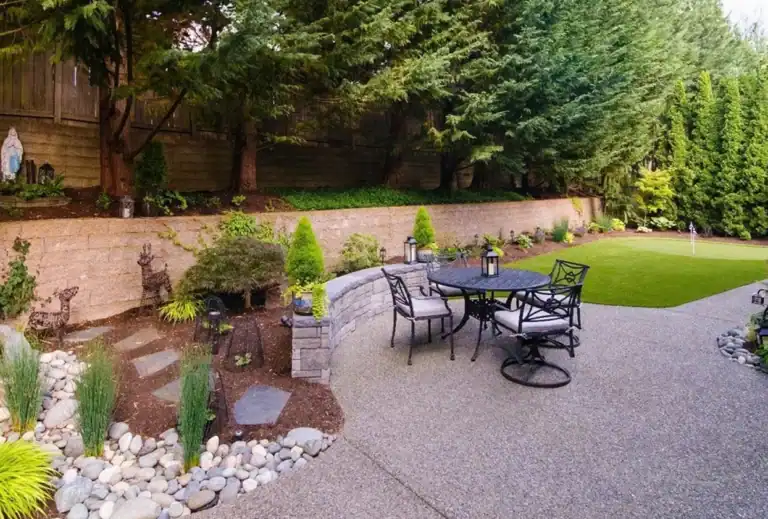
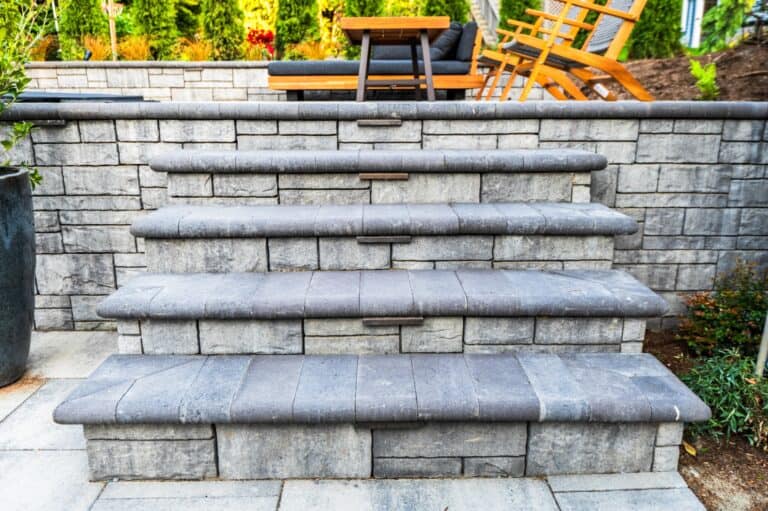
The project involves significant site work. Drainage, grading, retaining walls, slope stabilization — these are situations where design decisions and construction realities intersect constantly. On our Kenmore lakeview project, the retaining wall engineering, drainage strategy, and planting plan were interdependent. Separating the design from the build would have required constant coordination between three parties (designer, engineer, contractor) instead of one integrated team.
The budget is in the $25,000–$150,000 range. This is the sweet spot for residential design-build. The project is complex enough to benefit from integrated management but not so large that it requires a licensed landscape architect for regulatory reasons.
Speed matters. Design-build compresses the timeline because design and construction planning overlap. The crew can begin site prep while the designer finalizes planting details. In a separate model, the design must be 100% complete and bid-ready before any contractor engagement begins — adding weeks or months.
The homeowner wants a single point of contact. If you’d rather not manage the relationship between your designer and your contractor — mediating disagreements, relaying information, making judgment calls about whose interpretation is correct — design-build removes that burden.
The budget is in the $25,000–$150,000 range. This is the sweet spot for residential design-build. The project is complex enough to benefit from integrated management but not so large that it requires a licensed landscape architect for regulatory reasons.
Hiring separately works best when:
You have a specific designer whose work you admire. Some landscape architects and designers produce exceptional work but don’t have construction capabilities. If you’ve found someone whose design philosophy aligns with yours, hiring them independently and finding a qualified contractor to build their plan is a valid approach.
The project is primarily design-driven. A formal garden, a highly stylized Japanese-influenced landscape, or a property where the design concept is the primary value — these projects may benefit from a designer who specializes in that aesthetic, even if they don’t build.
The project requires a licensed landscape architect. In Washington state, projects involving public spaces, certain commercial properties, or work within critical areas may require a licensed landscape architect’s stamp. Many landscape architects operate design-only practices and work with contractors they’ve vetted.
You want competitive bidding. Having a complete design package that you can send to multiple contractors for bids gives you price transparency. You’re comparing apples to apples because every contractor is pricing the same plan. In a design-build model, the design and construction are bundled, which can make it harder to evaluate whether the pricing is competitive.
Where does each model tend to break down?
The design-build risk: limited design perspective
Because the designer and the builder work for the same company, there’s an inherent tension. The designer may (consciously or not) constrain the design to what they know the crew can build efficiently, rather than pushing the creative boundary. The most innovative design ideas sometimes come from designers who aren’t thinking about construction logistics.
At Classic, we manage this by hiring designers with independent training — landscape architecture, permaculture, ecological design — and encouraging them to design the best solution first, then figure out how to build it. But the tension exists, and it’s worth acknowledging.
The separate-hire risk: the translation gap
This is where we’ve seen the most expensive failures. A designer creates a beautiful plan. A contractor bids on it. The contractor wins the bid partly by interpreting ambiguous details in the plan in the cheapest way possible. The homeowner doesn’t realize this until the patio surface looks different than expected, the retaining wall is built with different materials than specified, or the planting sizes are smaller than the plan indicated.
Specific examples we’ve encountered:
- A contractor who interpreted “natural stone patio” as thin flagstone on a sand base instead of the full-depth mortared installation the designer intended — saving $8,000 on the bid but producing a surface that shifted and cracked within two years.
- Plant substitutions made without consulting the designer — the contractor installed whatever the nursery had in stock that week, including species that weren’t suited to the site’s sun exposure.
- A drainage plan that was in the design but not explicitly called out in the bid scope — the contractor priced only what was listed in the bid, and the drainage was “value-engineered” out.
These aren’t dishonest contractors — they’re contractors interpreting a set of drawings without the context of the design conversations. The information that lives in the designer’s head — why this material was chosen, why the drainage routes this way, why this specific cultivar matters — doesn’t always make it into the drawings.
Evaluating Landscape Companies?
We're happy to answer your questions — even if you're still comparing options.
Talk to Our TeamThe coordination cost most homeowners don't expect
When you hire separately, you become the project manager. You’re the one relaying questions from the contractor to the designer and answers back. You’re the one who has to evaluate whether the contractor’s proposed substitution is acceptable or compromises the design intent. You’re the one mediating when the contractor says something can’t be built as drawn and the designer disagrees.
This coordination role is manageable for homeowners who enjoy project management and have the time to be responsive. For homeowners who expected to hand over the project and check in periodically, it’s often the most frustrating aspect of the separate model.
What does each model cost?
Design-build pricing
Design-build firms typically charge one of two ways:
- Design fee + construction cost. A separate design fee ($2,000–$8,000 depending on project scope) covers the design phase. Construction is priced separately. If you proceed with construction, the design fee is sometimes credited toward the construction cost.
- Bundled pricing. The design and construction are quoted as a single project price. The design cost is embedded in the overall number.
The total project cost in a design-build model tends to be comparable to or slightly lower than the separate model for the same scope — because the design is developed with the construction budget in mind from the start, reducing the redesign cycles that happen when an independent designer’s vision exceeds the construction budget.
Separate-hire pricing
- Design fees: $3,000–$15,000+ depending on the designer’s reputation, the project scope, and whether construction administration is included.
- Construction administration (optional): 10-15% of construction cost for the designer to visit the site periodically and verify the work matches the plan.
- Construction bids: Competitive bidding can produce lower construction costs, but the lowest bid isn’t always the best value — as we discussed in our article on why the cheapest bid usually isn’t the cheapest outcome.
The total cost of the separate model can be lower (if competitive bidding drives construction costs down) or higher (if redesign cycles, change orders from translation gaps, and construction administration fees add up).
How do you decide?
Ask yourself three questions:
1. How complex is the site work? If your project involves drainage, grading, retaining walls, or significant slope work — which describes most Greater Seattle properties in Bellevue, Kirkland, Sammamish, and Woodinville — design-build reduces the risk of coordination failures between the plan and the build.
2. Do you have a specific designer you want to work with? If yes, hire them and find a contractor they’ve worked with before. An existing designer-contractor relationship mitigates many of the translation-gap risks.
3. How involved do you want to be in project management? If you want to hand off the project and check in at milestones, design-build is the lower-friction option. If you enjoy being involved in decisions and don’t mind the coordination role, hiring separately gives you more control.
There’s no universally correct answer. We’re a design-build firm because we believe integration produces better outcomes for the kind of projects we take on — residential renovations in the $25K–$150K range with significant site work. But we’ve seen the separate model work well when the designer-contractor relationship is strong and the homeowner is engaged in the coordination.
For Greater Seattle projects in the $25K-$150K range with drainage, grading, or structural complexity, integrates discovery, design, build, and plantings under one fixed-price proposal — eliminating the translation gaps that cause most of the material substitutions and drainage omissions we see in separate-hire failures.
The worst outcome is hiring separately without understanding the coordination role you’re taking on. If you choose that path, invest in construction administration from your designer — it’s the most cost-effective insurance against translation-gap problems.
The Bottom Line
Ask yourself three questions:
1. How complex is the site work? If your project involves drainage, grading, retaining walls, or significant slope work — which describes most Greater Seattle properties in Bellevue, Kirkland, Sammamish, and Woodinville — design-build reduces the risk of coordination failures between the plan and the build.
2. Do you have a specific designer you want to work with? If yes, hire them and find a contractor they’ve worked with before. An existing designer-contractor relationship mitigates many of the translation-gap risks.
3. How involved do you want to be in project management? If you want to hand off the project and check in at milestones, design-build is the lower-friction option. If you enjoy being involved in decisions and don’t mind the coordination role, hiring separately gives you more control.
There’s no universally correct answer. We’re a design-build firm because we believe integration produces better outcomes for the kind of projects we take on — residential renovations in the $25K–$150K range with significant site work. But we’ve seen the separate model work well when the designer-contractor relationship is strong and the homeowner is engaged in the coordination.
The worst outcome is hiring separately without understanding the coordination role you’re taking on. If you choose that path, invest in construction administration from your designer — it’s the most cost-effective insurance against translation-gap problems.