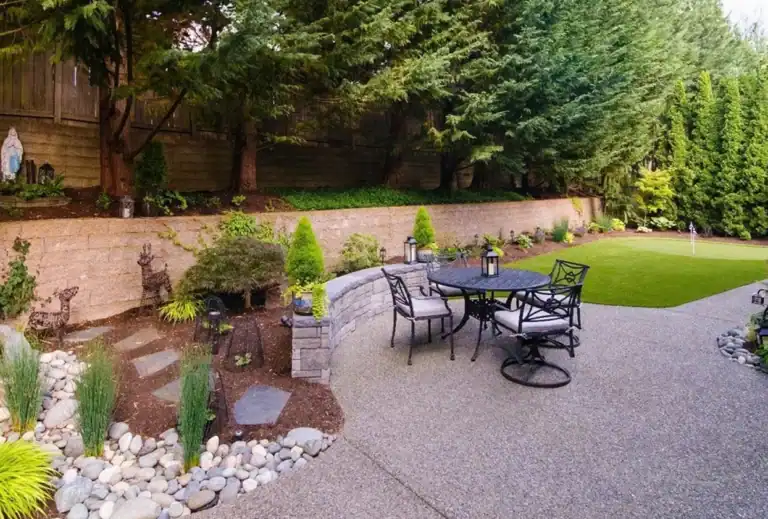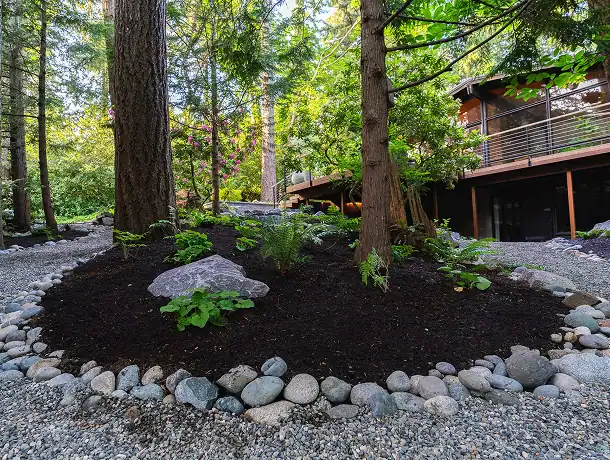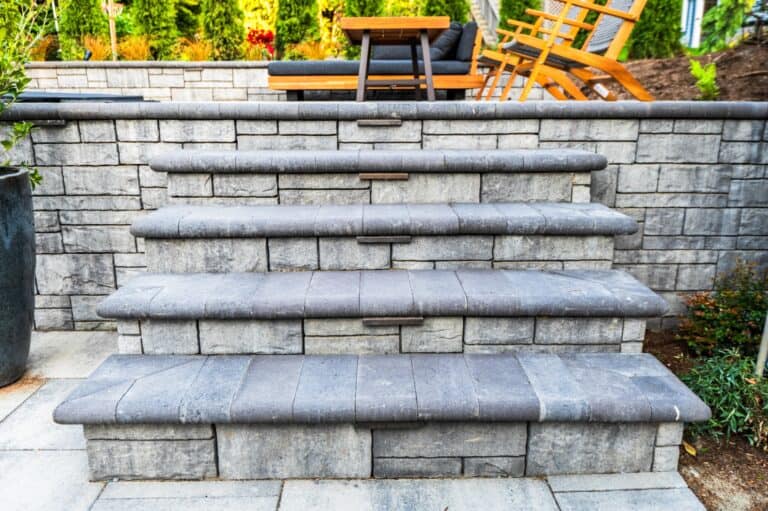
- A landscape crew executes physical work — a landscape company also designs, permits, sources, coordinates multiple trades, and guarantees the finished result.
- Crews are a reasonable choice for single-trade, permit-free projects under $15K–$20K where the homeowner has a clear plan and can manage the process.
- The gap between a crew and a company becomes most visible — and most expensive — on projects involving permitting, drainage engineering, multi-trade coordination, or investments above $25K.
- A single missed coordination point on a $100K project can cost weeks of delay and thousands in rework — that's the management layer a company provides.
- Not every business with a logo and a website operates as a full company — asking about design process, team structure, and credentials reveals the difference.
- Match the complexity of your project to the capability of your contractor before committing to a scope of work, not after discovering gaps mid-construction.
A landscape crew can install plants, lay pavers, build a fence, and grade a slope. A landscape company can do all of that — but it can also design a cohesive plan, pull permits, engineer drainage, source specific materials through established suppliers, coordinate phased construction across multiple trades, and guarantee the finished result. The distinction is not about skill. Plenty of crews do excellent physical work. The distinction is about what happens around the physical work — the design, the management, the sequencing, the accountability — and whether your project is complex enough that those layers matter. For a straightforward planting bed refresh or a simple paver walkway, a capable crew may be exactly what you need. For a $50K–$150K project involving retaining walls, drainage systems, permitting, and a design that needs to function as a unified whole, the management layer a company provides is what keeps the project on track.
What Can a Landscape Crew Actually Do Well?
This is not a criticism of crews. A skilled landscape crew — and there are many good ones operating across Greater Seattle — can handle a wide range of work competently:
- Plant installation from a provided plan or a homeowner’s selections
- Sod and lawn installation with proper grading and soil prep
- Basic hardscape — paver patios, simple retaining walls under 4 feet, gravel paths
- Fence construction — cedar, composite, or chain link
- Cleanup and removal — overgrown beds, old plantings, debris hauling
- Mulching, edging, and bed preparation
For these scopes, a crew with references and a track record is a reasonable choice. The work is largely execution-focused. It does not require engineering, permitting, design iteration, or multi-phase coordination. The homeowner knows what they want, the crew knows how to build it, and the project timeline is measured in days, not months.
Where crews tend to run into limits is not in the quality of their hands-on work — it’s in the infrastructure around it.
Where Does the Gap Show Up on a Complex Project?
The gap between a crew and a company becomes visible at specific points in a project. Understanding where those points are helps you decide which type of contractor fits your project.
Design and planning
A crew typically works from a homeowner-provided sketch or a verbal description. A landscape company develops a design based on site analysis — existing grades, drainage patterns, soil conditions, sun exposure, root zones of mature trees, setback requirements, and HOA or municipal restrictions. The design integrates hardscape, softscape, grading, irrigation, lighting, and drainage into a plan where every element accounts for its neighbors.
On a complex project, the absence of this integrated design is where problems compound. A retaining wall built without accounting for the drainage plan behind it fails within a few years. A patio graded independently of the surrounding landscape sends water toward the foundation. Plants selected from a nursery catalog rather than specified for site-specific conditions — soil pH, canopy shade, root competition — underperform or die within two seasons.
Permitting and regulatory compliance
Many Greater Seattle municipalities — Kirkland, Bellevue, Sammamish, Redmond — require permits for retaining walls over 4 feet, significant grading, drainage modifications, and work near sensitive areas. A landscape company handles permit applications, engineered drawings, and the approval timeline as part of its scope. A crew generally does not. That means either the homeowner navigates the permitting process themselves, or the work proceeds without permits — which creates liability, complicates future property sales, and risks a stop-work order mid-project.
Material sourcing
A crew typically sources materials from retail suppliers or whatever is available at the wholesale yard that week. A company specifies exact materials — a particular basalt for a wall, a specific cultivar of Japanese maple, a paver with a known 50-year freeze-thaw rating — and sources them through supplier relationships built over decades. On a $100K project, material selection is not cosmetic. It determines how the project ages, how it performs structurally, and whether replacements are available when a section needs repair in ten years.
Multi-trade coordination
A complex residential landscape project often involves grading contractors, masons, electricians (for lighting), irrigation specialists, and planting crews — sometimes working simultaneously, always working in a sequence where one trade’s output becomes the next trade’s starting condition. A design-build company manages this sequence. A crew handles its own scope and expects the homeowner to coordinate the rest.
This is the coordination point where the most expensive problems occur. In Classic’s experience across more than 3,000 Greater Seattle landscapes, a single missed handoff between trades on a $100K project — the electrician trenching through a drainage line, the mason starting before the grade is finalized, the irrigation crew working before the hardscape is set — can cost weeks of delay and thousands in rework. That’s not a hypothetical. It’s a pattern we see on projects that come to us after a homeowner tried to coordinate trades independently.
Warranty and accountability
A crew’s guarantee is typically verbal or limited to their specific scope. A landscape company provides written guarantees — Classic offers a 1-year plant guarantee, for example — and has an entity behind the promise. If something fails, there is an organization to come back to, not an individual who may have moved on to other work.
What Does a Landscape Company's Structure Actually Look Like?
Not every company that calls itself a “landscape company” operates with the infrastructure described above. When you’re evaluating who to hire, it helps to understand what a fully staffed company looks like versus a crew operating under a company name.
At Classic, the structure includes:
- In-house designers with a degree in landscape design or landscape architecture who develop every project plan
- A design manager (Will Rak) who is a licensed landscape architect and a Master Pruner
- A hardscape construction manager (Eric Lemus, over 20 years in the industry, 10+ with Classic) who oversees structural elements — retaining walls, patios, steps, drainage infrastructure
- Employed installation crews who work for Classic year-round — not assembled per project from day-labor pools
This is not a typical structure for a crew, and it’s not a typical structure for every company that advertises landscape services. Asking the right questions early — about credentials, about who designs versus who builds, about how trades are coordinated — is how you distinguish between the two before you sign a contract.
How Do You Know Which One Your Project Needs?
The decision is not about which option is “better” in the abstract. It’s about whether your project’s complexity justifies the management layer a company provides.
A crew is likely sufficient when:
- The scope is a single trade (planting only, hardscape only, cleanup only)
- No permits are required
- You have a clear plan or design already in hand
- The budget is under $15K–$20K
- The timeline is days to a couple of weeks
- You are comfortable managing the project yourself
A company is likely necessary when:
- The project involves multiple trades that must be sequenced
- Permits are required (walls over 4 feet, grading, drainage, shoreline adjacency)
- No design exists yet, and the project requires one
- The investment is above $25K
- Drainage, grading, or engineering is part of the scope
- You want a single point of accountability for the entire result
- You do not want to serve as the project manager
The honest answer is that many homeowners in Greater Seattle start by calling a crew for what they think is a simple project, discover mid-process that the scope is more complex than expected — the grade is wrong, the drainage needs engineering, the city requires a permit they didn’t anticipate — and end up either pausing the project or hiring a company to finish what the crew started. That transition mid-project is almost always more expensive and more disruptive than starting with the right structure.
What About the "Crew Operating as a Company" Problem?
One pattern worth mentioning, because it accounts for a significant portion of the red flags homeowners encounter when hiring a landscaper: some contractors present as companies but operate as crews. They have a website, a logo, maybe an LLC filing. But behind the branding, there is one person managing everything, no in-house design capability, no employed crews, and no infrastructure for permitting, engineering, or multi-trade coordination.
This is not inherently dishonest — many of these operators are skilled craftspeople who are growing their businesses. But for a homeowner evaluating a $75K proposal, the distinction matters. Questions about credentials, team structure, and process reveal whether you’re hiring a company with the infrastructure your project demands or a crew with a company’s branding.
The tell is usually in the design process. If the “company” doesn’t have a designer, doesn’t walk through a site assessment, doesn’t discuss drainage or permitting proactively, and wants to start building within a week of your first conversation — what you’re looking at is a crew, regardless of the logo.
Why Does This Distinction Matter More as Project Size Increases?
On a $5K planting job, the stakes of a coordination failure are low. If the wrong plants show up, you swap them. If the spacing is off, you adjust. The cost of error is measured in hundreds of dollars.
On a $100K design-build project, the stakes are fundamentally different. A retaining wall built 6 inches off the engineered specification can fail structurally. A drainage system installed before the grading plan is finalized may need to be excavated and rebuilt. An irrigation system trenched through a root protection zone can kill a mature tree worth more than the irrigation system itself. A permit violation can result in a stop-work order that delays the project by months.
Each of these represents a coordination failure — a gap between what was planned and what was executed, or a gap where no plan existed at all. The management layer that a company provides exists specifically to prevent these gaps. It’s not overhead on a simple project. It’s insurance on a complex one — and the cost of that management layer is almost always less than the cost of a single significant coordination failure.
Classic has been building landscapes across Greater Seattle since 1985. In that time, we’ve seen every version of what happens when a project outgrows its contractor. The homeowners who have the smoothest experience are the ones who match the complexity of their project to the capability of their contractor — and ask the right questions before the first shovel goes in the ground.