
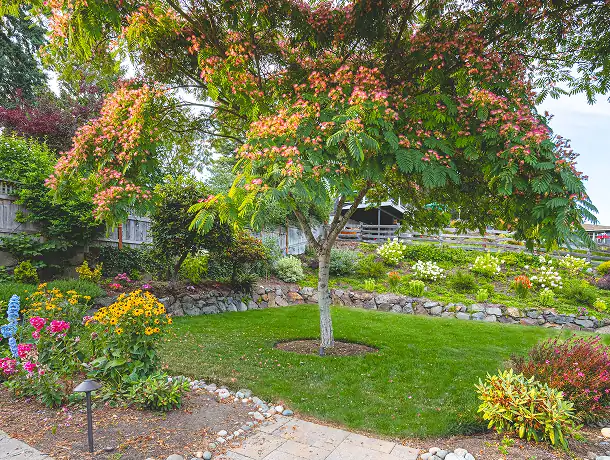
A complete fall cleanup leaves a Pacific Northwest yard ready for the wet season — planting beds clean and freshly mulched, drainage paths clear for the rain that’s coming, perennials cut back to the right height by species, and the lawn at its fall mowing standard. The scope is real work — six to ten hours on a typical quarter-acre property, not thirty minutes of leaf blowing — and the visible result is a property that holds its composition through November and December and emerges in spring on schedule. Across Greater Seattle, fall cleanup is the most-booked stand-alone enhancement of the year, and the one that delivers the cleanest visible payoff: a yard that looks finished going into winter, rather than caught mid-transition.
What does a real fall cleanup actually include?
The work that needs to happen between leaf drop and first hard freeze:
Leaf removal — vacuumed, not blown into beds. The professional standard is collection: vacuum truck, hand-rake into tarps, or both. Blowing leaves into planting beds (the most common mow-and-blow approach) just moves the problem under your shrubs, where the leaves trap moisture against the crowns and harbor disease through winter. Removed leaves get composted off-site or municipally collected.
Planting bed cleanup. Spent annuals pulled, perennial foliage cut back where appropriate (some perennials should stay standing through winter — see below), fallen branches removed, accumulated debris from summer cleared. Beds get a quick weed pass while the soil is still workable.
Perennial cutback — selectively. Standard practice cuts back hostas, daylilies, peonies, and most herbaceous perennials. But several common Pacific Northwest perennials should stay standing through winter: ornamental grasses (provide visual interest and winter habitat), sedum (the seed heads feed birds), echinacea, rudbeckia, and many natives. A good cleanup distinguishes between species, not just cuts everything to the ground.
Mulch refresh. A 1-2 inch top-dressing of fresh mulch on planting beds before winter rains start. The fresh mulch insulates plant crowns through freeze cycles, suppresses winter weed germination, and gives the property a finished look heading into the off-season.
Drainage grate and downspout clearing. This is the most-skipped task with the worst consequences. Drainage grates clogged with leaf debris cause January flooding in Bellevue and Kirkland clay soils every year. Downspout extensions check for proper routing away from the foundation. The full pre-winter drainage check is covered in the month-by-month Seattle landscape maintenance guide.
Final mow. Lawn comes down to fall mowing height (3-3.5 inches), edges get a final trim, equipment gets cleaned before storage.
Gutter check. Not technically a landscape task, but a real cleanup crew will note clogged gutters if they’re visible — water cascading off a clogged gutter undoes everything you just did to the planting beds below.
Equipment winterization. Pottery brought inside or covered, garden tools stored properly, irrigation system blown out before first freeze (we’re often within two weeks of needing this when fall cleanup happens).
What's the difference between fall cleanup and leaf blowing?
The two services share one visible task — leaves leaving the lawn — but they’re different scopes of work. Leaf blowing relocates leaves off the turf, often onto planting beds or to a property corner, and the crew is on-site for thirty to forty-five minutes.
Fall cleanup is the broader transition work that prepares the yard for the wet season:
- Vacuum collection removes leaves from the property, so beds and turf both stay clear of decomposing organic mat through winter
- Bed cleanup pulls spent annuals and clears summer debris so the beds start spring as defined planting space rather than reset projects
- Selective perennial cutback by species — some get cut to the ground, some stay standing through winter for structural interest and bird habitat
- Mulch refresh insulates plant crowns through freeze cycles and gives the property a finished look heading into the off-season
- Drainage grate and downspout clearing keeps water moving through the system during the heaviest rain months
- Final mow at fall height completes the lawn’s transition into dormancy at the right cut
The visible difference between a yard that’s had a real cleanup and a yard that’s had a leaf-blowing visit is most obvious in March, when the cleaned yard has held its planting beds intact and is already showing early growth, while the leaf-blown yard is doing remediation work to recover from the winter.
When is the right time for fall cleanup?
The optimal window is the ten to fourteen days after the dominant leaf drop in your specific microclimate.
That timing varies by canopy:
- Maple-dominant properties drop earliest — mid to late October across most of Greater Seattle. Bigleaf maple drops first, Japanese maples follow.
- Oak-dominant properties drop latest — early to mid November, sometimes extending past Thanksgiving.
- Mixed canopy properties have a longer drop window — sometimes scheduling two cleanups (one early November, one late November) makes more sense than trying to time one visit.
The signal we watch: when the bulk of leaves have come down and the trees are at roughly 20% of their fall foliage, that’s the window. Schedule cleanup at peak leaf accumulation and you’re vacuuming a quarter of what will eventually drop. Schedule too late and you’re working in wet, packed leaf mat that’s already started decomposing.
Across the cities we serve, the cleanup season runs roughly November 1 through December 10 most years. Properties at higher elevation (Sammamish plateau, Issaquah Highlands) tend to drop earlier; lower-elevation lakefront properties drop later.
What's the cost difference between DIY and hiring a cleanup crew?
For a typical quarter-acre Greater Seattle property with moderate canopy, a full fall cleanup runs roughly four to six hours of work for one experienced person with proper equipment.
DIY cost (assuming you already own equipment):
- 4-6 hours of your Saturday and Sunday
- Disposal of yard waste (most yards generate 8-15 cubic yards of leaf material in fall — a lot to bag and curbside)
- Risk of missing the drainage grate task — the one that costs the most when skipped
- Limited ability to vacuum efficiently — most homeowners blow leaves to a central pile and then bag, which is the slow way
Professional cleanup cost:
- Typical quarter-acre quote: $400-$800 depending on canopy density and scope
- Larger properties (half-acre plus): $800-$1,500
- Vacuum truck handles disposal directly — no curbside bags to manage
- Crew completes the work in a single visit during the right window
- Drainage grates and downspouts get checked as part of the standard scope
For homeowners who want the fall weekend back and the assurance that the work got done right, professional cleanup is one of the higher-value enhancement purchases of the year. The work is genuinely seasonal — there’s no spreading it out — and getting it scheduled before the available crew windows fill up matters.
Across our Landscape Enhancements work, fall cleanup is the most common stand-alone fall enhancement we book. It pairs naturally with bulb planting or final tree planting if those are also on your list — a single crew visit can handle multiple fall tasks efficiently.
What separates Classic's fall cleanup from other crews?
Three operating standards shape how Classic Landscaping approaches fall cleanup:
Vacuum truck for primary leaf collection. Hand-blowing and bagging is slow, generates more disposal volume than necessary, and inevitably distributes leaves into places they shouldn’t be (planting beds, neighbors’ yards). The vacuum truck pulls leaves directly into a contained hopper for clean off-site disposal. The visible difference is immediate and the property looks finished, not just less leafy.
Drainage grates checked as a standard, not an upcharge. Every Greater Seattle cleanup includes verifying drainage grates and downspouts are clear before the crew leaves. The grates clogged with leaf debris are the single biggest cause of mid-winter standing water complaints, and they take three minutes per grate to check during the cleanup visit.
Selective perennial cutback by species. The crew doesn’t cut everything to the ground. Ornamental grasses stay standing for winter interest and habitat. Sedum seed heads stay for bird food. Echinacea and rudbeckia stay for goldfinch winter visits. The cutback decisions are species-specific, not crew-default.
The broader seasonal maintenance approach frames fall cleanup as one milestone in a year-round care calendar that includes spring prep, summer maintenance, fall enhancements, and winter watch.
Should you book fall cleanup early or wait?
Book early. Fall cleanup crew availability fills up by mid-October in most years — by the time the leaves are actually dropping and the work is obviously needed, the well-equipped crews are already booked out for the season.
Booking a fall cleanup in August or early September is the right move. The crew schedules the visit for the right window based on your specific canopy mix, you’re confirmed for the season, and you don’t end up scrambling in November when every neighbor is also calling.
For new clients, the August conversation also gives the crew time to walk the property and confirm scope — that conversation is faster and cheaper than trying to negotiate it the week of when other crews are also competing for site visits.